Cattle Guards on a Montana Back Road
Riding Montana's vast network of back roads on your ATV or UTV is an incredible experience, offering unmatched access to stunning landscapes and remote areas. But anyone who spends time exploring these routes, especially those winding through ranch land or open range, will quickly encounter a unique, often rattling, feature: the cattle guard. These seemingly simple structures can be a source of anxiety or even a hazard if you're not prepared, and knowing how to navigate them safely is key to a smooth and enjoyable ride. This guide will walk you through everything you need to know about cattle guards, from why they're there to how to cross them without a hitch, keeping both you and your machine safe.
Understanding What Cattle Guards Are and Why Montana Uses Them
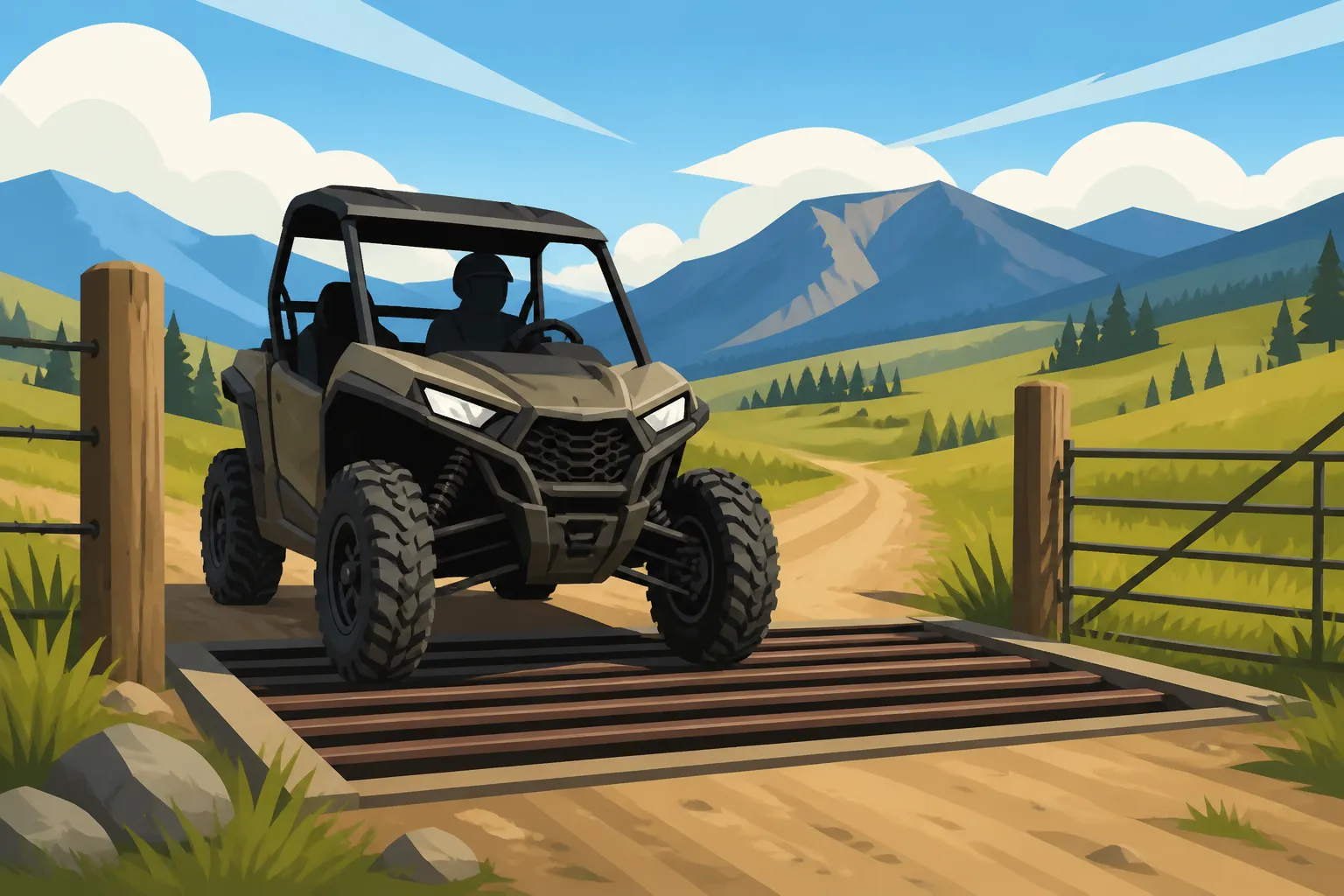
Cattle guards are essentially a series of parallel bars, often made of metal or concrete, set into the roadway, designed to create a visual and physical barrier that livestock won't cross. They replace traditional gates, which, as any rancher will tell you, are constantly left open by human traffic, allowing cattle to wander off. In Montana, where ranching is a way of life and open range laws are still prevalent in many areas, cattle guards are an indispensable part of the rural landscape. They allow continuous vehicle traffic without the need to stop, open, and close gates, while still effectively keeping cows, horses, and sheep contained within their designated pastures.
You'll encounter cattle guards on a wide variety of roads here. They are common on private ranch roads, preventing livestock from reaching public highways or neighboring properties. Many county roads, particularly in more rural sections, will feature them, especially where public right-of-way crosses private grazing land. You might even find them on some Forest Service or Bureau of Land Management (BLM) roads that traverse grazing allotments. Their presence is a constant reminder that you are often riding through working landscapes, and they signify the importance of respecting the local agricultural practices. When you see one, it's not just a bump in the road; it's a testament to Montana's unique blend of public access and private land stewardship.
Safe and Smooth Navigation Across Cattle Guards on Your OHV
Crossing a cattle guard in an ATV or UTV isn't inherently dangerous, but it does require a bit of technique and a healthy dose of caution. The key is to approach them with respect, understanding that they are designed to be an obstacle.
First and foremost, slow down significantly as you approach any cattle guard. Treat it like a speed bump, but with more potential for trouble. Take your foot off the gas and be ready to brake. You'll often see signs indicating "Cattle Guard Ahead," but not always, so stay vigilant, especially when riding unfamiliar [Riding a Gravel Road Into Town]. As you get closer, assess the condition of the guard. Look for any loose or broken bars, large gaps, excessive mud, ice, or snow that might make traction tricky. These conditions can turn a minor bump into a major headache, potentially causing you to lose control or damage your machine.
For ATVs, try to hit the guard as straight as possible, with your weight centered. A gentle, steady throttle might help keep momentum, but don't blast across it. Let your suspension do its job. Avoid sharp turns while you are on the grates, as this can easily cause a tire to slip into a gap or the machine to lurch unpredictably. UTVs offer a bit more stability due to their four wheels and wider stance, but the same rules apply: drive straight, maintain a firm grip on the steering wheel, and avoid sudden acceleration or braking on the guard itself. A good set of tires with appropriate tread can also make a difference in how your machine handles the uneven surface of the bars. Components like heavy-duty A-arms or reinforced suspension from a brand like SuperATV can also give you a little more confidence knowing your machine can handle the repeated impacts of rough backcountry terrain, including those occasional cattle guards that aren't perfectly smooth.
| Action Item | Do | Don't |
|---|---|---|
| Approach Speed | Slow down well in advance, be prepared to stop. | Maintain cruising speed, hit it fast. |
| Direction | Drive straight and centered over the bars. | Turn sharply on the grates, cross diagonally. |
| Inspection | Glance at the guard for damage, ice, or mud before crossing. | Assume all guards are in perfect condition. |
| Throttle Control | Maintain a gentle, steady throttle or coast across. | Accelerate hard or brake suddenly while on the guard. |
| Body Position (ATV) | Center your weight, stand slightly if comfortable for better absorption. | Lean heavily to one side, sit rigid and stiff. |
| Steering (UTV) | Keep hands firm on the wheel, maintain a straight line. | Let go of the wheel, attempt to navigate complex turns on the guard. |
| Bypassing | Use a designated bypass gate if available and marked for public use. | Drive around the ends of the guard, potentially entering private land. |
Protecting Your Machine and the Land Around Cattle Guards
Beyond safely navigating the cattle guard itself, it's important to consider the potential for damage to your machine and, critically, to the land and property you're traversing. Repeatedly hitting cattle guards at speed can take a toll on your ATV or UTV. The continuous jarring can stress suspension components, wheel bearings, and even crack frames over time. It's a cumulative effect, and while your machine is tough, it's not indestructible. Check your tire pressure before heading out on these [Montana Rules on Private Ranch Roads]; sometimes a slightly lower pressure can absorb some impact, but always stay within your manufacturer's recommendations. For riders who frequently tackle rough, unmaintained roads, investing in aftermarket protection like skid plates or A-arm guards—many of which are available from trusted brands like SuperATV—can offer invaluable peace of mind, shielding vulnerable undercarriage components from unexpected blows, whether from rocks or a less-than-perfect cattle guard crossing.
It's equally, if not more, important to understand the role cattle guards play in land management. They are there to keep livestock where they belong. Under no circumstances should you try to bypass a cattle guard by driving around its ends, unless there's a clearly marked public access bypass gate. Driving around the ends of a cattle guard is often considered trespassing, can damage fences, and, most importantly, could allow cattle to escape. This is a huge disservice to the landowners and can lead to significant problems for them. Remember that you are a guest on these roads, whether they are public or private, and respecting property boundaries and land use is paramount. Being found off-trail or bypassing a cattle guard could lead to fines or worse, so be sure to understand [Montana Trespass Rules Along Roads]. The long-term ability to ride these beautiful Montana back roads relies on the responsible behavior of all riders.
The Broader Picture: Ranching Etiquette and Back Road Respect
Navigating cattle guards isn't just about technique; it's about understanding and respecting the wider context of Montana's rural landscapes. The presence of cattle guards is a constant reminder that these are working lands, often shared by ranchers, wildlife, and outdoor recreationists. Many of these roads pass by active ranch houses, barns, and fields where families live and work. When you're out on your OHV, remember that you are a visitor in their backyard. This means practicing good etiquette, such as slowing down when you pass occupied ranch buildings and being mindful of noise levels, especially with aftermarket exhausts. [Muffler and Exhaust Noise Limits in Montana] outlines regulations, but courtesy goes a long way.
Montanans value a shared sense of community and mutual respect. Riding these back roads is a privilege, not a right, especially when you're on routes that provide access through or near private lands. Observing common courtesies like giving way to ranch vehicles or horse riders, and of course, never disturbing livestock, helps maintain positive relationships between riders and landowners. If you encounter a gate that has been left open, and you know it should be closed (which is generally the case if there isn't a cattle guard or it's a bypass gate), it's good practice to close it behind you. This small act can make a big difference to a rancher. Think of it this way: your positive actions reflect well on the entire OHV community and help keep these scenic [Montana Rules on Private Ranch Roads] accessible for everyone in the future. Just like ensuring your machine is well-maintained and ready for the trail, having essential recovery gear like a high-quality winch from SuperATV on your UTV or ATV is a good idea. While you probably won't be winching over a cattle guard, it's the kind of practical preparedness that shows you're a responsible rider ready for Montana's rugged backcountry.
Also, be aware that while these are "back roads," they are still roads where laws apply. [Sheriff Enforcement on Montana Back Roads] is a reality, and wardens can and do check for proper registration and safe operating practices. Always be prepared to present [What a Montana Warden Asks a Rider For] if stopped. Your behavior reflects on all OHV enthusiasts, and responsible riding helps preserve access to these incredible areas. Keep in mind that [Montana Speed Limits for OHVs on Roads] apply, even on unpaved routes, and riding responsibly not only keeps you safe but also helps you avoid conflicts with landowners and law enforcement. A little common sense, combined with a good understanding of local customs and the functionality of features like cattle guards, goes a long way to ensuring every ride is a great one. Don't forget to ride slowly past [Riding Slowly Past Ranch Houses] as a sign of respect.
Disclaimer
This article is for general informational purposes only and does not constitute professional advice. Laws, prices and regulations vary by location and change over time. Consult a qualified professional for guidance on your specific situation.