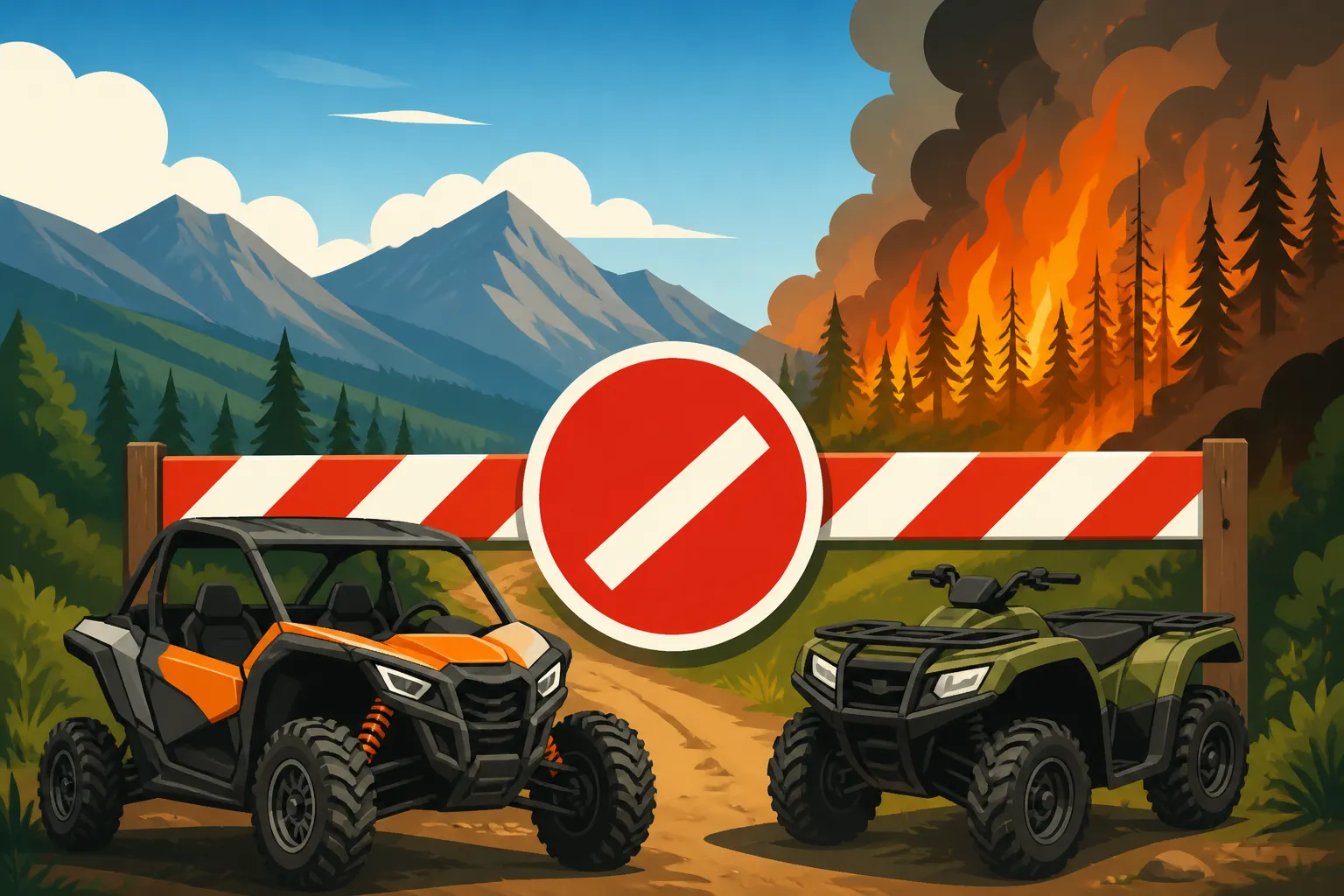
Montana Road Closures During Fire Season
There's nothing quite like planning a fantastic ATV or UTV ride through Montana's breathtaking landscapes, only to have your hopes dashed by a "ROAD CLOSED" sign. During Montana's fire season, this is a very real and frustrating possibility that can derail even the best-laid plans. This guide is here to help you understand why roads close during fire season, how to find critical information, and how to adapt your adventures to stay safe and legal.
Understanding Montana's Fire Season and Its Impact on OHV Access
Montana, with its vast national forests, Bureau of Land Management (BLM) lands, and incredible backcountry, is a dream destination for ATV and UTV enthusiasts. We envision wide-open spaces, towering pines, and epic views. But a significant portion of the year, particularly from late spring through late fall, brings with it a very real and serious concern: wildfire season. This isn't just about a few smoke plumes in the distance; it's a period where the very landscape becomes highly susceptible to fire, and the risk can dramatically alter your riding plans.
The typical fire season in Montana tends to ramp up in July and August, sometimes stretching well into September or even October, depending on drought conditions and early snowfalls. These are often the same months when many of us are itching to hit the trails, soak up the summer sun, and explore the high country. This unfortunate overlap creates a direct conflict for off-highway vehicle (OHV) riders, as fire danger levels directly influence access to the roads and trails we love. It's a tricky balance between wanting to enjoy the land and needing to protect it, and that often means road closures are a necessary, albeit inconvenient, reality.
Why Roads Close During Fire Season
When a wildfire ignites in Montana's wildlands, it triggers a cascade of actions designed to protect human lives, property, and natural resources. Road closures are a primary tool in this effort, serving multiple critical functions. Sometimes, a road is closed simply because it's directly in the path of a spreading fire, making it incredibly dangerous for anyone to be there. Imagine riding along, enjoying the scenery, only to suddenly find yourself enveloped in smoke with flames advancing quickly – it's a terrifying scenario that closures aim to prevent.
Beyond the immediate danger, roads are frequently closed to facilitate firefighting operations. These areas become active work zones, bustling with fire engines, dozers, hand crews, and aircraft. Allowing public vehicles into these areas would not only endanger riders but also impede the vital work of suppressing the fire. It’s a logistical nightmare to have recreational vehicles mixing with heavy fire equipment, especially on narrow, winding forest roads. These closures create clear zones where firefighters can operate safely and efficiently, focusing on the blaze without worrying about public interference or having to conduct rescues of stranded motorists.
Furthermore, closures are often implemented for public safety even if the fire isn't directly on a road. Smoke can dramatically reduce visibility and air quality, making driving and breathing difficult. Falling trees, weakened by fire or wind, pose a serious hazard. Even after a fire is contained, areas can remain unstable for weeks or months due to erosion, potential flash floods during rain, and dangerous "snags"—burnt trees that can fall unpredictably. In some cases, preventative closures might even be enacted during periods of extreme fire danger, even without an active fire, to reduce the chance of human-caused ignitions, which sadly account for a significant portion of wildfires. These closures are not arbitrary; they are carefully considered decisions made by land managers and incident commanders with safety as the paramount concern.
The Overlap of Fire Danger and Prime Riding Season
It’s a cruel irony that some of the most beautiful times to ride your ATV or UTV in Montana – when the days are long, the skies are blue, and the mountain air is warm – are precisely when the fire danger is at its peak. Summer in Montana is a magnificent season, drawing countless outdoor enthusiasts, including us OHV riders, to its vast expanses. The dry, hot weather that makes for comfortable riding also bakes the forests and grasslands, turning them into a tinderbox. This creates a difficult dilemma for anyone planning a backcountry adventure: how do you reconcile your desire to explore with the imperative to stay safe and responsible during fire season?
This unavoidable overlap means that vigilance becomes a year-round requirement, but especially from July through September. Even if your machine is equipped with a properly functioning spark arrester, which is required on most public lands, there's always a risk. A hot exhaust pipe resting on dry grass for a moment too long, a forgotten campfire ember (even though campfires are often banned during fire season), or even sparks from a chain dragging on the road can ignite a devastating blaze. The responsibility falls on every rider to be aware of current conditions and respect the temporary restrictions put in place. It can be incredibly disappointing to have a long-awaited trip canceled or rerouted, but understanding that these measures are designed to protect both people and the very landscapes we cherish helps put the inconvenience into perspective. It's not just about missing a ride; it's about preserving the future of riding in Montana for everyone.
How to Find Up-to-Date Road Closure Information in Montana
One of the biggest frustrations for OHV riders during fire season is the uncertainty. You don't want to drive hours to a trailhead only to find a locked gate. The key to mitigating this frustration is proactive research and knowing where to find reliable, real-time information. This isn't the time to rely on hearsay or outdated maps. Officials work hard to update the public, but it’s up to us to seek out and understand that information before we load up the rig and hit the road.
Always assume that conditions can change rapidly. What was open yesterday might be closed today due to new fire starts, increased fire activity, or shifting winds. A quick check of official sources the night before and even again on the morning of your trip can save you a lot of wasted time, fuel, and disappointment. It's about being a responsible outdoor recreationist and ensuring your safety and the safety of others.
Key Resources for Fire and Closure Data
When you're trying to figure out if your favorite Montana riding spots are accessible, you need to go directly to the source. There are several vital resources that provide the most current and accurate information regarding wildfires and associated road closures. First and foremost is InciWeb (Inciweb.nwcg.gov), the National Incident Information System. This site is a goldmine, providing detailed information on large, active wildfires across the country, including specific incident updates, maps, and official closure orders issued by various agencies. If there's a significant fire impacting public lands, it's almost certainly on InciWeb.
Beyond InciWeb, you'll want to check the websites of the specific land management agencies for the area you plan to visit. For example, if you're eyeing trails in the Lolo National Forest or the Custer Gallatin National Forest, their respective Forest Service websites are crucial. Similarly, if your destination is on Bureau of Land Management (BLM) land, consult the BLM Montana/Dakotas website. These sites will often have dedicated sections for alerts, warnings, and current closures. The Montana Department of Natural Resources and Conservation (DNRC) also provides statewide fire information, particularly for state-managed lands. For localized road closures, especially on county roads leading to trailheads, contacting the local county sheriff's office or checking their online announcements can be beneficial. Many riders also find value in mapping applications like onX Offroad, which frequently pull in real-time closure data as overlays, allowing you to visually see restricted areas. Before you head out with your new SuperATV winch or tire upgrade, make sure the roads leading to your adventure are actually open by checking these resources.
Interpreting Closure Orders and Maps
Finding the information is only half the battle; understanding it is the other. Official closure orders are legal documents, and while they can sometimes be a bit dense, it’s vital to read them carefully. Look for specific road names, route numbers, and clearly defined geographic boundaries. A closure might apply to an entire forest or just a specific ranger district. It might be a complete "area closure" encompassing all trails, roads, and dispersed camping within a boundary, or a more limited "road closure" affecting only certain access points. Pay close attention to the effective dates—some closures are temporary, with an anticipated end date, while others are "until further notice," meaning they'll remain in effect until conditions significantly improve and the order is rescinded.
Maps provided with these closure orders are your best friend. They visually depict the affected area, making it much easier to understand the scope of the restriction. Don't just glance at it; zoom in and trace your planned route against the closure boundary. Be aware that sometimes maps can be simplified, so always cross-reference with the written description in the order. It's also worth noting that these fire-related closures are distinct from standard seasonal closures that may be indicated on a Motor Vehicle Use Map (MVUM). While an MVUM shows what's generally allowed, a fire closure takes precedence and can override usual access. [Checking Montana Trail Status Before You Drive] involves looking at all these layers of information. If you're unsure, a quick, polite call to the relevant ranger station or land management office can clarify details, though be mindful that they are often extremely busy during fire season.
Planning Your Montana OHV Trip Around Fire Season Restrictions
Dealing with fire season road closures means that flexibility becomes your best riding accessory. While it's frustrating to have a planned trip derailed, Montana is a vast state, and understanding how to adapt your plans can still lead to incredible adventures, even when parts of the backcountry are temporarily off-limits. The goal is to still have a fantastic time, but safely and responsibly, without adding to the burden on already stretched resources.
This means having contingency plans, being open to exploring new areas, and sometimes, adjusting your expectations for what a "perfect" ride looks like. It’s about being a problem-solver and embracing the adventurous spirit of the wild west, even if that means a slight detour from your original route. Remember, land managers are working to protect the natural resources that we all enjoy, and respecting their decisions helps ensure those resources will be there for future rides.
Adjusting Your Route and Destination
The beauty of Montana is its sheer size and diversity. If your primary riding area, perhaps a beloved route in the Bitterroot National Forest, is under a fire closure, don't despair. Start looking at alternatives. Can you shift your focus to a different part of the state? For example, if Western Montana is experiencing high fire danger, perhaps an area further east, like parts of the Little Belt Mountains or the Big Snowy Mountains, might have lower fire risk and open roads. Different elevations also play a role; sometimes lower-elevation forest roads might be closed, while higher alpine routes are still accessible, or vice-versa. Always check specific conditions for the exact area.
Another strategy is to explore different types of riding areas. While federal lands might be restricted, some state lands or even designated private OHV parks (with proper permits and permissions) could offer options. Don't overlook the potential for [Montana OHV Rules for Ranch Machines] if you have connections to private landowners who allow riding. This might not be the epic backcountry journey you envisioned, but it can still be a great day out on the machine. If your usual backcountry loop is closed, maybe it’s time to explore a different region or even consider a dedicated OHV park if available, ensuring your SuperATV accessories don't go unused. Always have a Plan B, and even a Plan C, ready to go, and be prepared to switch gears if conditions dictate.
What to Do if You Encounter an Unexpected Closure
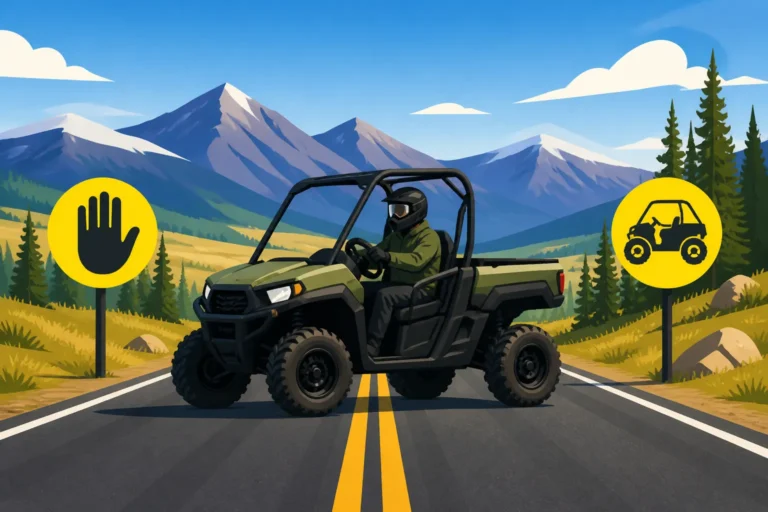
Despite all your best planning and research, you might still occasionally encounter an unexpected road closure sign or a locked gate. Maybe conditions changed rapidly overnight, or an incident occurred that wasn't immediately updated online. When this happens, the most important thing to remember is to turn around. Do not try to bypass the closure, move signs, or attempt to find an alternative route through the closed area. These closures are put in place for very serious reasons, including your safety and the safety of emergency personnel.
Trying to sneak around a closure can put you directly into harm's way, leading you into active fire zones, areas with falling trees, or directly into the path of heavy firefighting equipment. It also creates a massive headache for fire personnel who then have to divert resources to locate and remove you. Respect any officials or law enforcement present at closure points; they are simply doing their job to keep everyone safe. If you find a closed road that wasn't on your radar, don't let frustration get the better of you. It's often for your safety or the safety of the crews battling blazes. Turning around is the only correct response, even if it means missing out on a planned ride with your new SuperATV light bar. Take it as a sign to explore a different area or save that particular trail for another, safer season. Communicating what you've found to other riders you encounter heading in the same direction can also be a helpful courtesy.
The Serious Consequences of Ignoring Fire Season Road Closures
It's easy to dismiss a "Road Closed" sign as a mere inconvenience, especially when the weather is beautiful and you've traveled a long way to ride. However, ignoring these closures, particularly during fire season, carries extremely serious consequences. These aren't just minor rules; they are critical safety measures backed by law, and violating them can have devastating personal, legal, and environmental repercussions. It's not just about a possible fine; it's about potentially endangering lives and causing irreversible damage to Montana's cherished wildlands.
We all want to enjoy our machines, whether it's riding on [Montana Rules on Forest Service Roads] or [Montana Rules on BLM Roads], but that enjoyment comes with a responsibility to uphold the rules that protect these areas. The risks involved far outweigh the thrill of a forbidden ride. Land managers and law enforcement don't take these violations lightly, and neither should riders. Understanding the full scope of potential penalties and dangers helps reinforce why adherence to closures is absolutely essential.
Penalties and Fines for Violation
If you choose to ignore a road or area closure during fire season, you are breaking the law, and the penalties can be severe. Fines for violating closure orders on federal or state lands can be substantial, often ranging into hundreds or even thousands of dollars. These aren't like minor parking tickets; they reflect the seriousness of endangering public safety and interfering with emergency operations. In some cases, especially if your actions impede firefighters or place them at risk, you could face criminal charges, not just civil penalties.
Beyond the immediate financial hit, there's the terrifying possibility of being held liable for fire suppression costs if your presence in a closed area, or an action you take, somehow leads to a fire or exacerbates an existing one. Fire suppression costs can quickly escalate into the millions of dollars, and you could be on the hook for a significant portion, or even all, of it. Imagine facing a lawsuit for a fire that scorched thousands of acres because you decided to drive around a closure sign. Additionally, repeated violations could lead to losing your riding privileges on public lands indefinitely, something no rider wants. [Fines for an Unregistered Machine in Montana] are one thing, but interfering with fire suppression is on a completely different level. There are also specific [Montana Resource Damage Citations] for going off designated routes, which often occurs when trying to circumvent a closure.
Safety Risks and Environmental Impact
Ignoring fire season road closures isn't just about legal ramifications; it's about putting yourself and others in extreme danger. Wildfires are unpredictable and can spread with frightening speed, especially in the variable terrain and winds of Montana. Entering a closed area could mean you become trapped by a fast-moving fire, with limited escape routes and no assistance available, as emergency personnel will be focused on the fire itself. You could encounter heavy equipment operating in low visibility, or find yourself in an area where trees are weakened by fire, presenting a real risk of falling snags. Smoke inhalation is also a serious health concern, and visibility can drop to near zero, making navigation impossible.
From an environmental perspective, the impact of unauthorized access can be devastating and long-lasting. Driving on sensitive ground, especially in areas that are already stressed by drought or have recently burned, can cause significant erosion, damage fragile ecosystems, and spread invasive species. Even well-intentioned actions, like driving on what seems like a safe dirt road, can kick up dust that interferes with ground-level fire suppression efforts or obscure visibility for air attacks. No ride is worth the risk of being caught in an active wildfire or incurring the wrath of a forest service warden. Plus, if your off-road machine is equipped with heavy-duty SuperATV parts, it's designed for legitimate trails, not for busting through fire closures. Ultimately, respecting fire season closures is a vital part of being a responsible steward of Montana's incredible landscapes, ensuring they remain beautiful and accessible for generations of riders to come.
Disclaimer
This article is for general informational purposes only and does not constitute professional advice. Laws, prices and regulations vary by location and change over time. Consult a qualified professional for guidance on your specific situation.