Lodging in Red Lodge for Riders
Finding lodging in Red Lodge for an ATV or UTV trip takes more than choosing a comfortable bed. A room can look close to the mountains but still leave you with a long tow, nowhere to park a trailer, or no legal route to ride from town. This guide helps you compare places to stay, plan for your machine, and check access before you book.
Choose a Red Lodge Base That Fits Your Ride
Stay in town for meals and practical errands
Staying in Red Lodge puts you close to restaurants, groceries, fuel and other basics that can make a riding trip easier. That convenience matters after a dusty day, especially if you do not want to cook at a campsite or drive far for a meal. It can also be useful when your group includes riders and non-riders who want different ways to spend the day.
But being in Red Lodge does not automatically mean you can ride an ATV or UTV from your lodging to a trail. A nearby road may be paved, privately managed, or closed to off-highway vehicles. Before treating a motel, cabin or rental house as a trailhead, confirm the route itself is open to your machine and that riding it is permitted. For a sense of the regional riding context, start with Beartooth Country Riding Near Red Lodge.
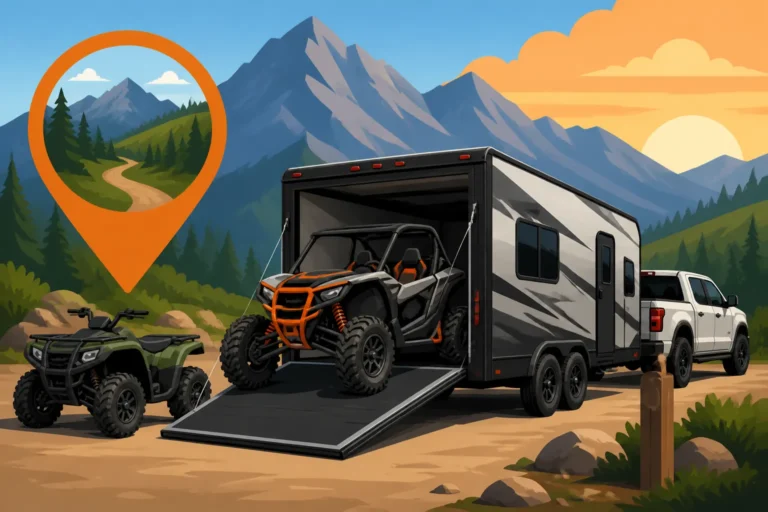
Town lodging may suit you best if you want a comfortable place to return to and are prepared to haul your machine to a legal riding area. Ask about trailer parking before reserving. A standard parking stall may not fit a truck and trailer, and some properties may limit where trailers can be left overnight. Get a clear answer about the full combination, not just the tow vehicle.
Stay outside the busiest part of town for more room
A cabin, rural rental or RV site outside central Red Lodge may offer extra space, a quieter setting or room to maneuver a trailer. Those features can be valuable when you are traveling with multiple machines, a large group or a toy hauler. They are not a guarantee of direct trail access, though. Rural addresses may sit beside private land or roads that are not open to recreational riding.
Ask the host or property manager what “near the trails” means in practical terms. Does it mean a short drive to a designated staging area, a route that requires trailering, or simply a view of the mountains? Confirm whether the access road allows your vehicle and trailer, whether turning around is easy, and whether there is enough level ground to unload safely.
Red Lodge is also a mountain destination where weather, road conditions and seasonal access can shape the day. A convenient place to sleep will not make a high-elevation route suitable or open. Build flexibility into your plans, and check route conditions before driving out with a loaded trailer.
Compare Lodging Types for an ATV or UTV Trip
Hotels and motels
Hotels and motels are often a straightforward choice for riders who want a private room, a shower and an easy evening in town. They can work especially well for a short trip, a couple, or a group that plans to spend most of the day riding and does not need an outdoor kitchen or campsite. The trade-off is that parking and machine storage may be limited.
When you call, describe your setup precisely: the number of vehicles, trailer length, number of machines, and whether you need space to unload. Ask whether trailer parking must be arranged in advance and whether there are restrictions on washing or working on a machine. If the answer is unclear, do not assume you can sort it out on arrival. A late check-in with a trailer and nowhere to leave it is an avoidable headache.
Cabins, vacation rentals and campgrounds
Cabins and vacation rentals can be a better fit for families or groups that want a kitchen, shared living space and a place to spread out riding gear. They may also offer outdoor storage or parking, but those details vary from property to property. Read the listing carefully, then confirm the practical points directly with the host. “Parking available” can mean one passenger car, not a truck, trailer and two UTVs.
Campgrounds and RV parks can make sense if you are already traveling with a camper or prefer a more outdoor-focused stay. Check whether the site can accommodate the full length of your vehicle and trailer, and whether the surface is suitable for parking and unloading. Also ask about quiet hours, generator rules and any restrictions on maintaining or washing machines. Those details matter when the group is returning dusty and tired after a long day.
| Lodging option | Often suits | Check before booking |
|---|---|---|
| Hotel or motel | Short stays and riders who want town conveniences | Trailer parking, unloading space and machine rules |
| Cabin or vacation rental | Families, groups and guests who want a kitchen | Exact parking capacity, access road and outdoor storage |
| Campground or RV park | Travelers with a camper or toy hauler | Site length, trailer configuration and unloading space |
| Rural rental | Guests seeking more room or a quieter setting | Road access, turning space and distance to legal staging areas |
No lodging category is automatically the right one. A small motel with confirmed trailer parking may be more useful than a spacious cabin with a narrow driveway. Match the property to your actual equipment and the way you plan to ride.
Confirm Parking, Storage and Trail Access Before You Reserve
Ask detailed questions about trailers and machines
Before booking, give the property the dimensions and arrangement of your setup. Mention whether the trailer is attached to the tow vehicle, whether it needs to be unhitched, and how many machines you are bringing. If you have a toy hauler, explain that too; the overall length and maneuvering needs may be very different from a pickup alone.
Ask whether the parking area is paved, gravel or uneven, and whether it has enough room to turn around. In winter or after wet weather, a steep or soft driveway can be more troublesome than it looks in a listing photo. If security is important to you, ask what storage options are available and whether you can keep machines in a locked area. Do not assume a property has a secure garage or that a trailer can remain attached overnight.
Also ask what you are allowed to do on site. Some hosts may not want guests washing machines, refueling near buildings or making repairs in a driveway. A small leak or a muddy tire can create an unpleasant conversation if expectations were never discussed. It is easier to choose a place that is comfortable with motorized recreation than to negotiate after you arrive.
For broader trip logistics, Montana Trailhead Parking and Staging can help you think through where to leave your vehicle once you reach a riding area. Keep lodging parking and trailhead parking separate in your plan: a property’s permission to park at night does not establish that a nearby public lot is suitable for overnight use.
Verify the route for your machine and the day
Do not rely on a map pin, a social post or a lodging description to confirm that a route is open. Check the official land manager’s route information and the applicable motor vehicle use map. The map helps identify where motorized travel is designated, while current closure information can reveal restrictions that affect a particular trip. Reading a Montana Motor Vehicle Use Map is a useful starting point if you are unfamiliar with these maps.
Route suitability also depends on your vehicle. A road or trail may have a width restriction, surface conditions may be difficult for a full-size side-by-side, or a route may not allow the type of vehicle you plan to bring. Use onX Offroad as a planning aid for viewing route information and organizing a ride, but compare what you see with the relevant official map and land-manager notices. An app should not be treated as permission to ride on a road or trail.
Check conditions again shortly before you leave. Snow, runoff, fire activity, maintenance or other temporary closures can change the day’s options. Checking Montana Trail Status Before You Drive is especially relevant when your plans depend on reaching a particular trailhead. If the intended route is closed, have a legal backup rather than assuming you can improvise on a nearby road.
Plan a Red Lodge Riding Stay That Runs Smoothly
Build the trip around designated riding areas
Red Lodge is a useful base for a mountain-area visit, but a stay in town should not be mistaken for a ride that begins at the hotel door. Work backward from the routes you are allowed to use: identify the trail or road, verify that it fits your machine, find the proper staging location, and then estimate the drive from your lodging. Some groups will decide that staying centrally is worth the tow. Others may prefer a quieter property with simpler trailer logistics.
Be especially careful when interpreting broad descriptions such as “forest roads” or “OHV access.” National forest land includes roads and areas with different designations, and a road being unpaved does not make it open to ATVs or UTVs. The wider overview in Montana’s National Forest Trail Systems can help orient your planning, while route-specific maps and notices should guide the actual ride.
Machine size deserves attention, too. A route suitable for a narrow ATV may not accommodate a wide side-by-side. Check restrictions and the route’s physical character before committing your group to a trailhead. For additional context, see Montana Trails That Suit a 50-Inch Machine, then confirm the exact route against current official information.
Prepare for fuel, weather and a backup day
Mountain riding can use more fuel than a short local loop, particularly when the route is slow, steep or remote. Start with a realistic estimate, carry what is appropriate for your machine, and identify fuel stops without assuming every small community or roadside business will have the fuel you need. Fuel Planning for a Montana Trail Day can help you build this into your preparation.
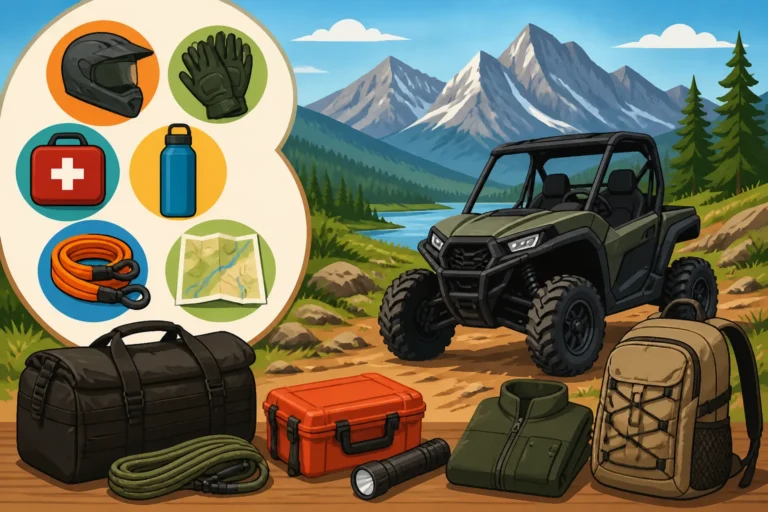
Pack for changing conditions rather than the forecast at the lodging. A sunny morning in town does not guarantee warm weather at elevation, and wind or rain can make a long ride uncomfortable. Bring layers, water, basic repair supplies and a way to navigate if cell service drops. Tell someone where you plan to ride and when you expect to return, especially if you are heading into an area with limited service.
Finally, make a backup plan before the trip. Choose another legal route or a non-riding activity in case weather or closures disrupt the day. That small step can keep a short closure from turning into a stressful scramble with a trailer, a group waiting in the parking lot and no clear alternative.
A good Red Lodge stay is one that fits both your people and your equipment: the beds work, the trailer has a legitimate place to go, and the riding plan is based on routes that are actually open to your machine. Confirm those details before you book, then recheck access shortly before departure.
Disclaimer
This article is for general informational purposes only and does not constitute professional advice. Laws, prices and regulations vary by location and change over time. Consult a qualified professional for guidance on your specific situation.