Lodging in West Yellowstone for OHV Trips
A West Yellowstone OHV trip can get complicated before you even unload: a room may be convenient for town but awkward for a trailer, and a nearby map line may not mean a route is open to your machine. This guide helps you choose a practical base, plan around legal riding access, and avoid common lodging and logistics surprises.
Choose lodging around your riding plan
West Yellowstone is a popular place to stay for trips near Yellowstone country, but the best lodging depends on what you plan to ride and how you’re transporting your ATV or UTV. A hotel room, cabin, campground, and RV site can each work well—if the parking, storage, and route logistics fit your group.
Decide what “close to the trails” means
A place that looks close to a trail on a map may still leave you with a long drive to a legal staging area. Public roads, private land, seasonal closures, and vehicle-width restrictions can all affect the route. Before you book, identify the riding area you actually intend to use, then check its current access rules and the designated place to unload or begin your ride.
West Yellowstone is also a gateway community for Yellowstone National Park, but that does not mean an ATV or UTV can be ridden into the park. Do not plan on taking an OHV onto park roads or trails. Plan your riding around legal routes outside the park, and keep your sightseeing plans separate from your machine-based riding plans.
If you’re still comparing possible bases, Montana Trail Towns Worth a Base Camp can help you think through the tradeoffs between staying in town and choosing a different starting point. For a West Yellowstone trip, consider whether your group values walkable meals and services, quick access to your lodging after a ride, or the space to park and manage a trailer.
Match the lodging style to your group
Hotels and motels can suit riders who want a straightforward place to sleep, shower, and head out again. They may be a good fit when you’re hauling the machine on a trailer and can confirm that the property has appropriate parking. Ask before booking rather than assuming a long trailer or multiple vehicles will fit.
Cabins and vacation rentals can offer more room for families or groups, but check the practical details. Is there a suitable place to park the truck and trailer? Are you allowed to wash muddy equipment? Is there a secure place for riding gear? Does the property have rules about outdoor storage or vehicle noise? A spacious rental can still be a poor fit if the driveway is steep, narrow, or shared.
Campgrounds and RV parks can make sense when your trailer, RV, and machine are all part of the trip. However, a campground isn’t automatically a legal staging area, and having an OHV at your site doesn’t mean you can ride it from the campground into town or onto a nearby road. Check both the property’s rules and the route rules. For more trip-planning context, see Planning a Montana Riding Trip.
| Lodging option | Often works well for | Check before booking |
|---|---|---|
| Hotel or motel | Short stays and riders who want basic convenience | Trailer parking, number of vehicle spaces, and where to store gear |
| Cabin or vacation rental | Families and groups who want more room | Driveway access, outdoor storage rules, and parking for the full rig |
| Campground or RV park | Travelers bringing an RV and trailer | Site dimensions, hookups, vehicle limits, and property rules for OHVs |
| Lodging outside town | Riders prioritizing space or a quieter setting | Drive time to the legal staging area, road conditions, and nearby services |
Check routes, permits, and machine access before you book
The route you intend to ride should guide your lodging choice—not the other way around. A convenient room cannot make a closed road legal, and an app’s route line is not a substitute for official access information. Sort out the riding area first, then choose lodging that works with the drive, trailer, and daily schedule.
Confirm the route is open to your specific machine
Look for the Motor Vehicle Use Map, often called an MVUM, for the forest or public land you plan to visit. It identifies roads and routes designated for motorized use, and the details can include seasonal dates or vehicle restrictions. Confirm that the route is open for the kind of machine you have; a trail suitable for a narrow ATV may not fit a wider side-by-side.
Digital mapping can help you organize a trip, and onX Offroad can be useful for viewing route information and planning a ride. Still, compare what you see in an app with the official MVUM and local closure information. A trail shown on a screen may cross private land, be closed for the season, or have a restriction that matters to your machine.
If your group has several machines, check each one against the route’s limits. A 50-inch machine and a full-size side-by-side may not have the same options. For help understanding the map side of the process, read Finding a Forest’s Motor Vehicle Use Map. Save the official map for offline use where possible, and carry a backup rather than relying on a phone connection in the backcountry.
Work permits and access into the plan
Permit requirements depend on where you ride, where the machine is registered, and whether you’re a Montana resident or visitor. Don’t assume a lodging reservation, rental agreement, or permit from another state covers every trail or road you want to use. Check the rules for the specific riding area and the machine before you leave home.
Visitors bringing their own machines can review Montana’s Non-Resident Temporary Use Permit to understand the permit question for out-of-state riding. If you plan to rent locally, ask the rental shop what it handles and what remains your responsibility. The shop may explain its permitted routes and operating rules, but you should still understand the requirements for your own trip.
Some visitors build a ride around a map pin or an online recommendation and only discover the restriction after unloading. That’s a frustrating way to spend a vacation day. Check permitted access, closures, and staging details before choosing lodging, especially if you’re booking a place based on a short drive to a particular trailhead. Montana Trail Closures in Fire Season is also worth reviewing if your trip falls during a period when fire-related restrictions may affect access.
Plan parking, staging, and daily logistics
With an OHV trip, the lodging question is partly a vehicle question. You may be bringing a tow vehicle, a trailer, one or more machines, riding gear, and possibly an RV. A little planning before arrival can prevent a late-night search for somewhere to park or an uncomfortable conversation at the front desk.
Ask specific questions about trailers and equipment
When you call or message a property, describe your setup clearly. “I have a trailer” can mean anything from a compact single-machine trailer to a long trailer carrying several vehicles. Share the trailer’s approximate length, how many vehicles you’re bringing, and whether you need to leave the trailer attached overnight.
Ask whether the property has a designated area for trailers, whether parking is first-come, and whether there are restrictions on leaving equipment outside. If you’re traveling with a group, ask whether multiple trucks can park together. Get any important arrangements confirmed in writing so there’s less room for confusion when you arrive tired and ready to unload.
For day rides, find out where you can legally stage and unload. Lodging parking is not necessarily a trailhead, and a machine should not be driven on a public street unless the route and vehicle meet applicable rules. Montana Trailhead Parking and Staging offers useful context for thinking through where a ride should begin. If you are towing between town and a remote access point, plan the tow route separately from the ride route.
Build a practical day around distance and services
A short-looking drive can take longer when you’re towing, navigating unfamiliar roads, or dealing with changing conditions. Estimate the drive from your lodging to the legal staging area, then account for loading, unloading, fuel, and a return trip. If your riding area is far from town services, bring what you need for the day rather than expecting to find supplies along the route.
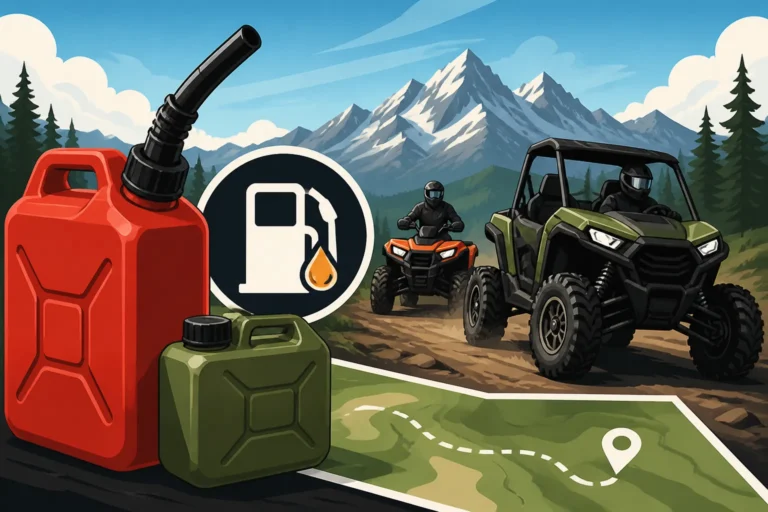
Fuel planning matters because a machine’s range depends on its condition, terrain, load, and riding style. Don’t plan a ride around the most optimistic estimate of how far one tank will go. Start with a full tank when appropriate, know where fuel is available for your tow vehicle, and carry only fuel that can be transported and stored safely. Fuel Planning for a Montana Trail Day can help you think through those details.
Connectivity is another easy thing to underestimate. A map that works in town may be less useful once you leave reliable service. Download route information before you depart, carry a paper map or other backup, and let someone know your plan if you’re heading into a remote area. See Cell Service in the Montana Backcountry for more on preparing for dead zones. If you use onX Offroad, download the areas you need in advance and make sure you know how to access them offline.
Make the stay comfortable for riders and the rest of the group
A good OHV base camp does more than provide a bed. It gives riders a straightforward way to manage equipment and gives non-riding companions options that don’t depend on the machines. Thinking about both groups can make the trip feel like a vacation rather than a series of parking and scheduling problems.
Balance riding time with town time
West Yellowstone has services and visitor activities that can be convenient between rides, but a day spent riding can run longer than expected. Decide ahead of time whether your group will have separate plans, meet for dinner, or take a rest day together. If some travelers aren’t riding, choose lodging that makes it easy for them to relax or get around without needing the OHV.
Keep in mind that a machine should not be treated as a general-purpose ride into town. Street use depends on local rules and the vehicle’s legal status and equipment. When in doubt, leave the machine parked and use a suitable road vehicle for meals and errands. That’s especially helpful if the group is tired after a long day or if the route back to lodging involves public streets.
Also consider noise and cleanup. Returning late with muddy machines, revving engines, or gear spread across a shared parking area can create problems with other guests. Follow property rules, be considerate in close quarters, and ask where staff prefer that you handle equipment. A few simple courtesies help keep lodging options welcoming to riders.
Keep a flexible backup plan
Trail access can change because of weather, maintenance, fire, or land-management decisions. Keep a second legal route or a non-riding activity in mind rather than building the entire trip around one trail. Before driving to the trailhead, check for current closures and conditions through the appropriate land manager. A mapping app is helpful, but an app should not be the final word on whether a route is open.
If the planned route is unavailable, don’t improvise by turning onto an unsigned road or following tire tracks around a closure. A closure may be there for safety, resource protection, or active work. Choose an alternate route that you have confirmed is open, or adjust the day’s plan. This is one reason to keep some flexibility in both lodging and activity schedules.
Finally, check the details that can disrupt a stay: cancellation terms, check-in timing, trailer parking, pet rules if relevant, and whether the property can accommodate the size of your group. For riders who are renting rather than hauling a machine, Renting a Machine in West Yellowstone can help you think through that option. Whether you rent or bring your own, confirm what paperwork and equipment are required before you head out.
Disclaimer
This article is for general informational purposes only and does not constitute professional advice. Laws, prices and regulations vary by location and change over time. Consult a qualified professional for guidance on your specific situation.