Wildlife You Meet on a Montana Trail
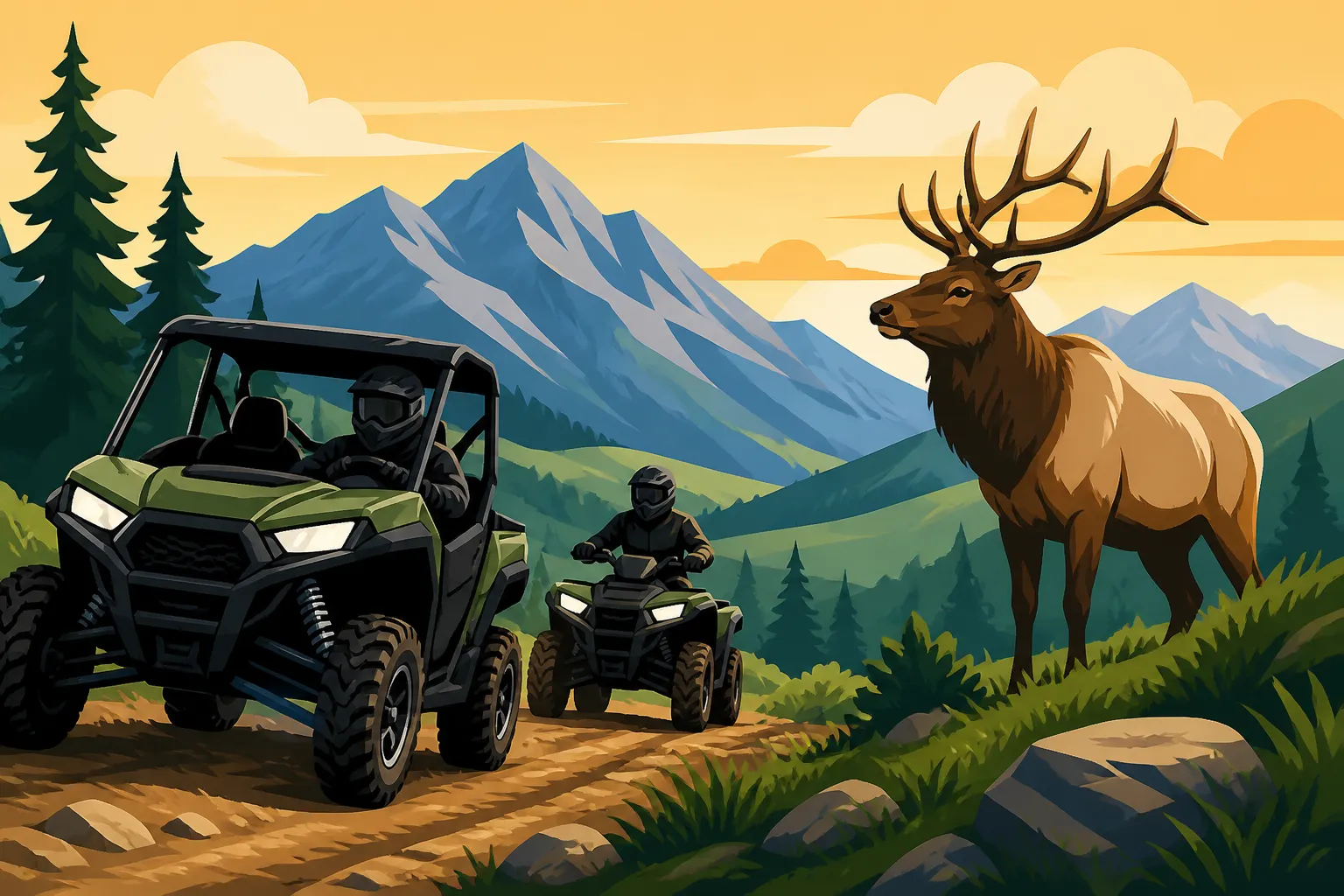
A Montana trail can go from quiet to unpredictable in seconds when an elk steps out of the timber or a bear appears near a bend. Wildlife encounters are part of riding here, but speed, dust, and engine noise can make them harder to manage. This guide explains what you may see, how to respond, and how to plan a ride that gives animals room.
Wildlife you may encounter on Montana trails
The animals you see depend on where you ride, the season, the time of day, and the habitat around the route. A forest trail near the Flathead Valley offers different possibilities from a grassland route east of Billings. Even on a familiar trail, wildlife sightings are never guaranteed.
| Wildlife | Where you might encounter it | Practical response |
|---|---|---|
| Deer and elk | Forest edges, meadows, brush, and road crossings | Slow down, leave room, and watch for animals following behind |
| Moose | Wetlands, willow thickets, creeks, and lake edges | Keep a substantial distance and never approach for a closer look |
| Bears | Forested country, berry patches, carcasses, and remote trail corridors | Do not approach; be ready to leave the area calmly |
| Bighorn sheep and mountain goats | Rocky slopes, cliffs, and high-country terrain | Give them space and avoid blocking their escape route |
| Bison | Some areas near Yellowstone and other specific habitats | Stay well back and do not try to pass close beside them |
| Birds and smaller animals | Almost anywhere, including open roads and trail edges | Reduce speed and avoid swerving suddenly |
Deer and elk can appear without warning
White-tailed deer, mule deer, and elk may cross a trail quickly, especially near dawn and dusk. They may also stand at the edge of a clearing, watching a machine approach. A rider who is focused on ruts or a steep descent can miss an animal until it is close.
Give yourself extra time to react in wooded stretches, near meadows, and wherever tracks or fresh droppings suggest frequent animal activity. If an animal crosses ahead, slow down and look for others. Elk and deer often travel in groups, and a single animal may be followed by another crossing from the same direction.
Avoid following wildlife along the trail or trying to move closer for a photo. An animal that appears calm can bolt suddenly, and a fast-moving animal may cross into the path of another rider in your group. Keep the engine noise low when practical, and wait for the animal to move away before continuing.
Moose and bears call for extra caution
Moose are often found near wetlands, streams, ponds, and willow stands. They can be difficult to spot in thick brush, and their size makes a close encounter especially risky. If you see a moose, stop well back, give it a clear route away from you, and do not ride toward it or attempt to pass close by.
Bears may be encountered in wooded areas and other habitat, but no trail or region can promise a sighting—or promise that you will not see one. Avoid approaching a bear, a cub, or a carcass. If you notice a bear ahead, do not crowd it or block its way out. Give it space and follow current wildlife-safety guidance for the area.
For a deeper preparation checklist, read What Grizzly Country Asks of a Rider and Riding Safely in Grizzly Country. Bear spray is a personal safety tool, not a reason to take closer risks. Carry it where you can reach it, learn how it is used before the trip, and follow the product directions.
High-country animals need room to escape
Bighorn sheep and mountain goats may appear on rocky slopes or near high-elevation routes. They can seem comfortable on steep ground, but a machine approaching from below may leave them with fewer safe escape options. Stop at a distance and let them choose where to go.
Bison are not a routine sight on most Montana riding routes, but riders near the Yellowstone region and other specific habitats should be prepared to encounter them. Treat a bison as a powerful wild animal, not as a roadside attraction. Do not approach, surround, or try to squeeze past one.
Smaller animals and birds also matter. A grouse may burst from brush, or a small mammal may dart across the trail. Sudden swerves can cause a rollover or collision, especially on a narrow track. Slow down where visibility is short rather than trying to react at the last second.
How to respond when wildlife is on the trail
A wildlife encounter can be startling, particularly when there are several machines in a group. The safest response is usually to reduce speed, stop at a safe distance, and give the animal time and room to move. Avoid revving the engine, surrounding it, or using the group to push it off the trail.
Stop at a safe distance and keep the group together
When someone spots an animal, signal the riders behind you and slow gradually. Do not brake hard in a way that surprises the following machine. Choose a stable place to stop, then make sure riders behind you know what is happening.
Keep the group compact without crowding the animal. Riders who are spaced far apart may encounter the same animal one by one, creating repeated disturbances. A lead rider can let the group know whether to wait, turn around, or continue only after the route is clear.
If the animal is close, avoid sudden movements and loud reactions. Do not get off the machine to walk closer. A passenger should remain seated and follow the driver’s lead unless the group needs to move away from an immediate hazard.
Do not feed, chase, surround, or block wildlife
Feeding wild animals can make them associate people and machines with food. That can put the animal and future visitors at risk. Keep snacks and garbage secured, and never toss food toward an animal to draw it closer or distract it.
Do not chase an animal for a photograph or to clear the route. A machine can stress wildlife even when the rider believes the animal is moving away. Chasing may also lead an animal onto another trail, road, or steep slope where it is more vulnerable.
If an animal does not move, do not try to squeeze between it and a barrier, a group of young, or its apparent escape route. Wait, back away if you can do so safely, or choose another route. A short delay is far better than forcing a close pass.
Know when to turn around
Sometimes the route is not safe to continue. A moose standing near a narrow crossing, a bear that is not moving away, or a group of animals blocking a steep section may make turning around the sensible choice.
Before you ride, identify alternatives and know how much fuel and daylight you have. A route-planning tool such as onX Offroad can help you review mapped roads and trails before leaving, but a map does not replace local closures, posted signs, or on-the-ground judgment. Keep a paper map or another backup if you are riding where cell service may be limited.
If you need to leave, do not rush into a tight maneuver on unstable ground. Check the trail behind you, communicate with the group, and turn around only where there is room to do it safely. Planning this possibility in advance helps prevent the pressure of “we have to keep going” from driving a poor decision.
Plan a wildlife-aware Montana ride
Good wildlife awareness begins before the engine starts. Choose a route that matches your group’s experience, check for seasonal conditions, and make sure everyone understands what to do if an animal appears. A little preparation is especially helpful when riding with children or people new to Montana trails.
Match your route and timing to the conditions
Trail conditions and wildlife activity can change through the year. Snowmelt, fire closures, seasonal access rules, and local conditions may affect which routes are open and appropriate. Before a ride, review official land-manager information and local notices rather than assuming a trail is open because it appeared on a map.
Use Montana Trails Open in June and Montana Trails Open in July as starting points for thinking about seasonal access, then confirm current conditions for the specific area. A route that is suitable in dry weather may become difficult or damaging after rain or snowmelt. Lower visibility, mud, and limited stopping space can also make it harder to respond calmly to an animal.
Dawn and dusk can bring more wildlife activity, but they also reduce visibility for riders. If you ride during those hours, travel at a speed that lets you stop within the distance you can see. Consider carrying lights and reflective gear that suit the conditions, and avoid letting a schedule push the group into riding faster than is comfortable.
Prepare for remote conditions and limited service
Some Montana routes lead far from towns, fuel, and reliable cell coverage. Tell someone where you plan to ride and when you expect to return. Carry water, basic first aid supplies, appropriate clothing, and any safety equipment you may need for the terrain and wildlife in the area.
A navigation app such as onX Offroad may help you understand route options and identify your general location, but do not depend on a phone signal being available. Download or save useful map information before leaving service, and carry a backup navigation method. For more backcountry planning advice, see Cell Service in the Montana Backcountry and What to Carry on a Remote Montana Ride.
Keep food and scented items secured when stopping, especially if you take a break away from developed facilities. Do not leave rubbish behind. At a trailhead or campsite, follow posted food-storage rules and any instructions from the land manager.
Ride at a speed that leaves time to react
Speed that feels comfortable on an open road may be too fast on a narrow, wooded trail. Slow down where brush blocks your view, around blind corners, near water, and wherever wildlife could emerge from cover. Leave enough space between machines to avoid dust and to give each rider a clear view of the trail.
A lead rider can call out hazards, but every rider remains responsible for watching the route. Do not assume the person ahead will spot an animal first. Dust can hide a crossing, and a rider who brakes or turns unexpectedly may create a second hazard behind them.
For more route-planning context, Montana Trail Difficulty Ratings can help you think about terrain before choosing an outing. A mapped route can show where you intend to go; onX Offroad may also be useful for reviewing route options in advance. Check the applicable land manager’s rules and closures separately, and be prepared to change plans if conditions or wildlife make the route unsuitable.
Common wildlife-riding mistakes to avoid
Even experienced riders can make poor choices when an encounter is unexpected. The most common problems are not usually a lack of courage or skill; they come from hurry, curiosity, or assumptions about how an animal will behave. A simple group plan makes it easier to avoid those mistakes.
Treating a sighting like a photo opportunity
It is natural to want a close photograph, especially if you have traveled a long way to ride. But walking or driving toward an animal can make it feel cornered. Use a zoom lens if you have one, remain at a safe distance, and leave if the animal changes direction or shows signs of agitation.
Do not ask another rider to position a machine as a barrier or use the group to hold an animal in place. That is not a safe way to get a photograph. It can also disrupt the animal’s movement and create danger for everyone on the trail.
Assuming an animal will move because a machine is coming
Wildlife does not always react predictably to engine noise. An animal may freeze, move toward the trail, or turn suddenly. Slow down early and leave enough room to stop. If the route is narrow and the animal remains in place, waiting or turning around may be the safest choice.
Never rely on speed to pass through a gap before an animal moves. That approach gives you little room to respond if it steps into the trail. The same caution applies when riding near livestock on ranch roads: animals may move unpredictably, and the route may cross working land. See Open Range Cattle on a Montana Trail for more on riding around cattle.
Forgetting that wildlife can appear in familiar places
A rider may travel the same trail repeatedly and still encounter an animal at a new location. Weather, food, water, seasonal movement, and human activity all affect where animals may be. Familiarity with a route is useful, but it is not a guarantee that the trail is clear.
Make a habit of scanning ahead and along the sides of the route, particularly in areas where vegetation limits sightlines. Keep the group informed about animal sightings and avoid sharing precise locations in ways that might draw crowds toward sensitive wildlife. The best encounter is often the one where riders notice the animal, give it space, and leave the area undisturbed.
Disclaimer
This article is for general informational purposes only and does not constitute professional advice. Laws, prices and regulations vary by location and change over time. Consult a qualified professional for guidance on your specific situation.