Hot Springs You Can Ride Near
A Montana ride followed by a hot soak sounds like an easy win, until you discover the spring is reached by a paved highway, a private driveway, or a road where your ATV is not allowed. This guide explains how to pair nearby riding areas with Montana hot springs, what to check before setting out, and how to keep the ride and the soak on the right side of access rules.
What “Ride Near a Hot Spring” Means in Montana
Plan on riding nearby, not straight to the pools
A hot spring may sit close to a forest road or trail on a map without being reachable by ATV or UTV. The last stretch could be a public highway, private property, a footpath, or a road closed to motorized use. Even where a trail passes nearby, there may be no legal route from that trail to the hot spring entrance.
Treat “ride near” as a two-part outing: ride on routes that are specifically open to your machine, then travel by a street-legal vehicle or on foot to the soaking spot as permitted. Don’t ride across a resort parking lot, trailhead, campground, or private road unless the owner or posted rules expressly allow it. The distinction can be easy to miss when you’re excited to get to the water, but it matters.
Before planning a route, identify the land manager and check the map for the exact road or trail you intend to use. Montana’s National Forest Trail Systems is a useful starting point for understanding how riding areas fit into the wider network. For individual forest roads and trails, consult the current Motor Vehicle Use Map and follow its seasonal restrictions and vehicle designations.
Check permits, route access, and seasonal conditions
A route’s presence on a navigation app does not automatically mean it is open to motorized travel. Forest roads may be closed to public vehicles, limited to certain vehicle types, or open only during a specific season. A trail may also have width restrictions that rule out a full-size side-by-side even when narrower ATVs are permitted. Use Reading a Montana Motor Vehicle Use Map to understand why the official map matters, then confirm conditions before you leave.
Visitors should also check permit requirements for the machine and the land they plan to ride on. Montana’s requirements can differ for residents and non-residents, and riding on public land is not the same as simply driving a machine on private property. If you’re visiting from another state, review Montana’s Non-Resident Temporary Use Permit and confirm what it covers. Do not assume a registration from home replaces every Montana trail or land-use requirement.
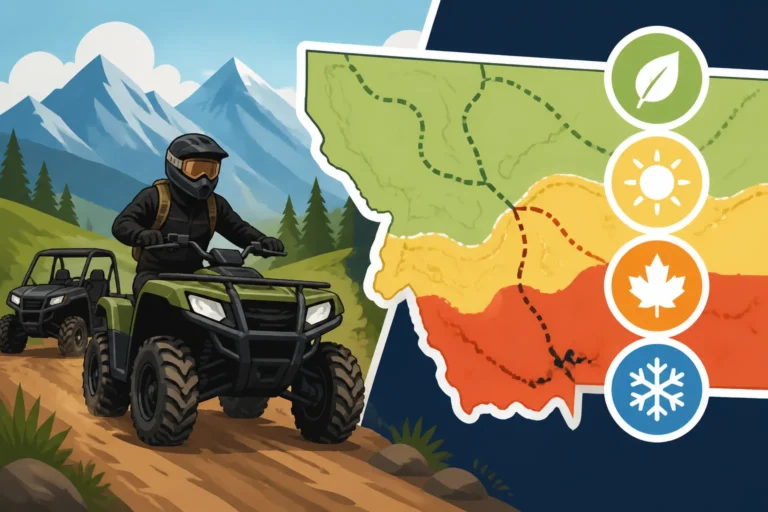
A practical planning routine is to check the route, permit rules, weather, and road status together. That’s especially important in spring and early summer, when snowmelt, mud, or seasonal closures can make a route impassable or off-limits. Checking Montana Trail Status Before You Drive can help you build that check into your trip instead of discovering a closure at the trailhead.
Montana Hot Springs and Nearby Riding Areas
The pairings below are starting points, not claims that a motorized trail runs to the water. In each case, confirm the legal route and arrange a separate, permitted way to reach the soaking facility.
| Hot spring area | Nearby ride-planning focus | Important access check |
|---|---|---|
| Lolo Hot Springs | Lolo Pass and nearby Lolo National Forest routes | Verify the specific forest road or trail is open to your machine |
| Elkhorn Hot Springs | Pioneer Mountains and the Polaris area | Check seasonal road access and trail width before bringing a UTV |
| Fairmont Hot Springs | Riding areas around the Butte and Anaconda region | Plan a separate road transfer; do not assume resort access is an OHV route |
| Quinn’s Hot Springs | Forest and backroad riding around the Paradise area | Confirm land ownership, route permission, and how you’ll reach the resort |
Lolo Hot Springs and the Lolo Pass area
Lolo Hot Springs is west of Missoula along U.S. Highway 12, making it a natural soak stop for a trip in the Lolo Pass region. The surrounding national forest has a network of roads and recreation opportunities, but that does not mean every road is open to OHVs or connects legally to the hot springs. Choose a designated riding route first, then plan a separate drive to the hot springs.
The Lolo Pass area can tempt riders to string together roads based on what looks connected on a screen. Take time to compare your intended route with the official map, and be clear about where you’ll park and how you’ll travel the final stretch. If you use onX Offroad to explore possible route connections, compare what it shows with the land manager’s current map and posted signs. A digital line is a planning aid, not permission to ride.
Weather and visibility can change quickly in mountain terrain, and conditions may differ between the valley and higher elevations. Build in time to turn around if the route is rougher, wetter, or more restricted than expected. What Grizzly Country Asks of a Rider is worth reviewing before a ride in western Montana, where wildlife awareness belongs in the plan alongside fuel, clothing, and navigation.
Elkhorn Hot Springs and the Pioneer Mountains
Elkhorn Hot Springs is near Polaris in southwest Montana, in a region where mountain scenery and winding roads make a soak-and-ride trip appealing. The Pioneer Mountains offer plenty of reasons to plan extra carefully: routes vary in surface and difficulty, weather can change, and a road that works for a smaller ATV may not suit a wide side-by-side.
Use the hot springs as a destination for after the ride rather than assuming you can drive an OHV directly to the facility. Check the route to the riding area, confirm where you can legally stage or park your machine, and keep the ride separate from any public-road travel unless your machine and the road meet the applicable requirements. If your route includes a seasonal road, confirm it is open before hauling a machine a long distance.
The area is a better fit for riders who are comfortable adjusting plans when a route is closed or a pass is still affected by snow. Keep a second, shorter ride option in mind and avoid treating a narrow line on a map as proof that a full-size UTV will fit. For a broader overview of trip logistics, Planning a Montana Riding Trip can help you think through staging, route length, and what to carry.
Fairmont Hot Springs and the Butte-Anaconda region
Fairmont Hot Springs sits in the Butte and Anaconda area, where it can work well as a recovery stop after a separately planned day of riding. The region has multiple recreation destinations, but they are not necessarily connected to the resort by an OHV-legal route. Plan the riding portion and the soak portion as separate legs, and use a street-legal vehicle or another lawful option to travel between them.
If you’re considering nearby riding areas such as Pipestone, check the current access information for that specific area and the machine you plan to bring. Trail width, posted restrictions, closures, and staging arrangements can affect whether a route is suitable. Avoid riding on highway shoulders or connecting roads just because the destination appears close; Montana road access depends on the road, local rules, and the machine’s legal status.
This pairing works best when your group is comfortable with a little extra transport planning. For example, one person can drive the tow vehicle to the soak while the group finishes a loop, or everyone can return to the staging area before heading to Fairmont. For broader guidance on where routes are open, start with Where to Ride an OHV in Montana and verify details for the exact riding area you choose.
Quinn’s Hot Springs and the Paradise area
Quinn’s Hot Springs is near Paradise, between Plains and Thompson Falls. The surrounding region offers forested landscapes and backroads, but access is not uniform: a road may cross private land, have restrictions, or be open to some vehicles but not others. Map your ride around confirmed public routes and treat resort access as a separate destination.
Before heading out, identify who manages each part of your route. A road that looks like a convenient connector may be private, and permission to enter one parcel does not necessarily grant access across the next one. If your group wants to ride from a cabin or campground, ask the property owner about the specific route rather than relying on a vague “there are trails nearby.”
Cell coverage can be inconsistent in rural and mountainous areas, so download maps and save the route before leaving service. onX Offroad can be useful for organizing a planned ride and reviewing route options, but cross-check the route against official maps, current closure notices, and signs on the ground. Set a turnaround time, share your plan with someone who is not riding, and leave enough daylight for the return.
How to Plan a Legal Ride and a Relaxing Soak
Build the route around official access information
Start with the riding area, not the hot spring. Decide which roads or trails are open to your machine, then work out how you’ll get from the staging area to the soaking location. This order helps prevent a common mistake: selecting a spring first, then trying to connect it to a ride using roads that are not open to OHVs.
Check vehicle width as well as general access. A trail may allow motorcycles or narrow ATVs but exclude a full-size side-by-side. Also look for seasonal restrictions, gates, and separate rules for public roads. If the ride involves Forest Service roads, Montana Rules on Forest Service Roads is a helpful reminder that road access is not one-size-fits-all.
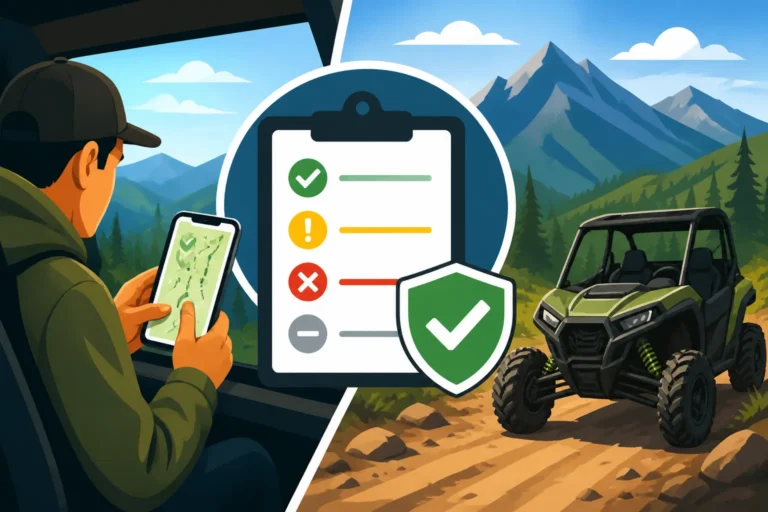
Use more than one source to prepare. Compare the land manager’s map and current notices with your navigation app, and pay attention to signs at the route entrance. If official information conflicts with an app or an old trip report, follow posted restrictions and seek clarification from the relevant land manager before riding.
Plan the practical details before you leave
A ride followed by a soak can take longer than it sounds. You may need to unload, complete a loop, return to the trailer, change clothes, and drive to the hot spring. Add time for fuel stops, slower travel on rough roads, and unexpected closures. Montana Trailhead Parking and Staging can help you think through where your tow vehicle and trailer can safely wait while you ride.
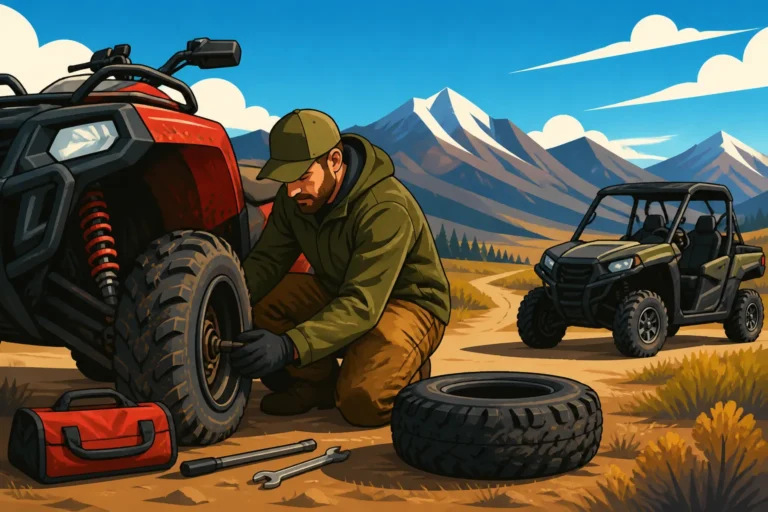
Pack for the ride and the soak separately. For the ride, bring water, food, layers, a first-aid kit, basic repair supplies, navigation, and enough fuel for the planned route with a reserve. For the soak, bring a towel, dry clothes, footwear that can handle a wet changing area, and any personal items the facility allows. Keeping the two sets of gear in separate bags makes the transition easier and keeps wet items away from riding equipment.
If you’re visiting from out of state, make permit and registration checks part of the preparation rather than a last-minute stop. Montana Rules for Visiting Riders offers a useful starting point, but confirm the rules for the exact land and route you intend to use. For rental machines, ask the shop which routes are allowed and whether your planned ride is within the rental agreement.
Choosing the Best Hot Spring Pairing for Your Group
Match the ride to the least experienced rider
A hot spring is a fun finish, but it should not pressure anyone into a ride beyond their comfort level. If someone in your group is new to OHV riding, choose a shorter, straightforward route with a clear turnaround point. A ride that leaves everyone relaxed is a better lead-in to a soak than a difficult trail that becomes a test of patience or equipment.
Discuss machine width, passenger needs, and riding experience before settling on a route. A trail that’s manageable for a small ATV may feel tight or unsuitable in a wide UTV. Keep the group together, agree on a pace, and identify a meeting point in case riders become separated. Avoid letting the more experienced riders set a pace that leaves beginners struggling to keep up.
Also be realistic about the time of day. If the group is still on the trail late in the afternoon, the hot spring may need to wait. A safe return, enough daylight, and a machine in good condition should come before keeping a soaking reservation or sticking to a packed itinerary.
Have a backup plan for closures and changing conditions
Weather, fire restrictions, road work, and seasonal access can change a ride plan. A useful backup could be a shorter route closer to the staging area, a different riding area, or a soak-only visit. Keep the backup specific: know where you’ll park, what route remains open, and how you’ll reach the hot spring without depending on an unverified connector.
Check conditions again shortly before departure, especially for trips into higher elevations or forest roads. Save contact information for the land manager or local visitor office when available, and tell someone your intended route and expected return time. If you find a gate, closure notice, or conditions that look unsafe, turn around rather than trying to find a way around it.
The best Montana hot-spring ride is one where the access is clear, the route fits the machine, and the group has enough time to enjoy both parts of the day. Keep the trail and the soak as separate destinations unless you have confirmed a legal connection, and you’ll avoid many of the frustrations that can turn an appealing plan into a scramble.
Disclaimer
This article is for general informational purposes only and does not constitute professional advice. Laws, prices and regulations vary by location and change over time. Consult a qualified professional for guidance on your specific situation.