Taking a Montana Machine to Idaho
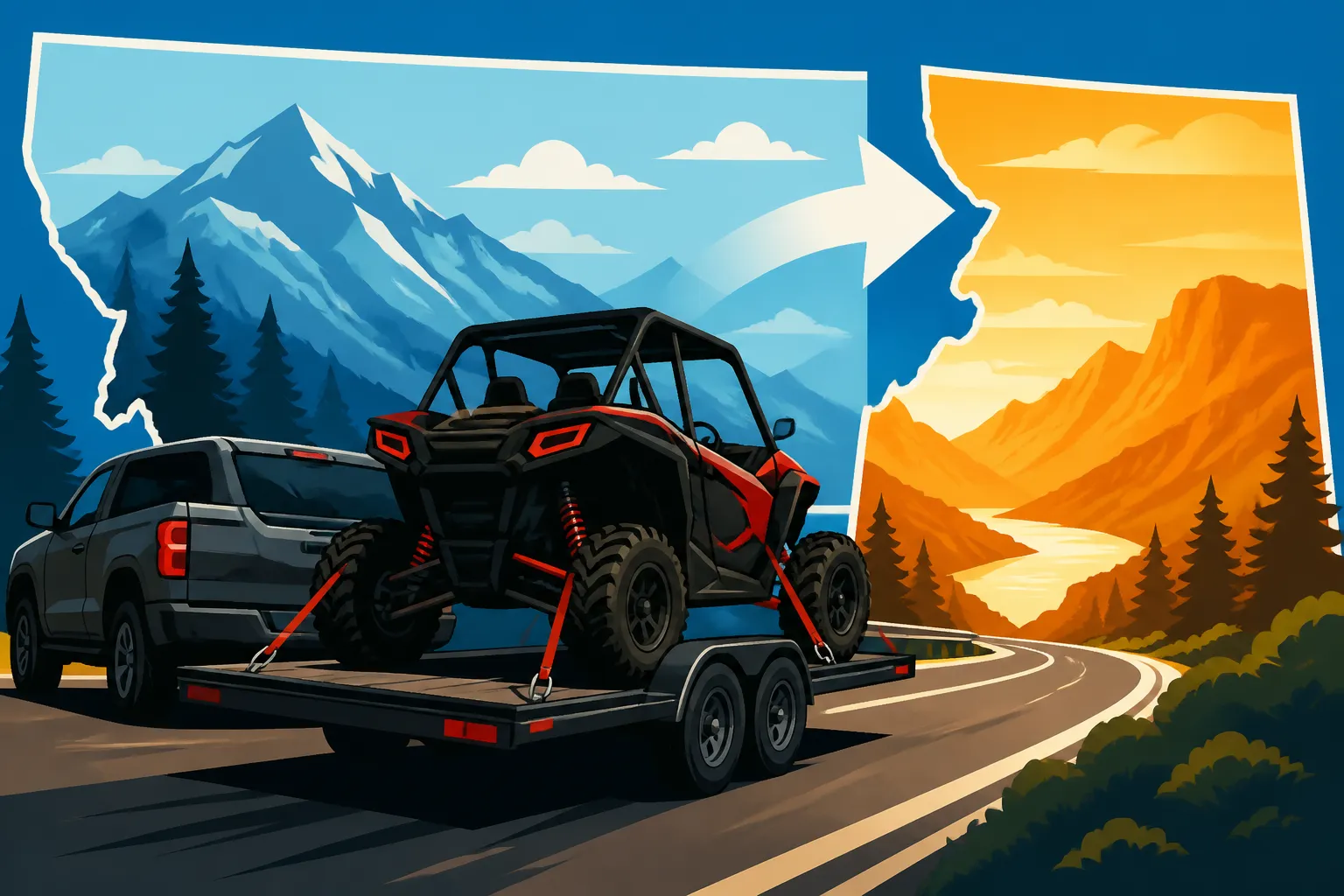
Taking a Montana ATV or UTV into Idaho can be as simple as loading it onto a trailer, but a Montana registration does not automatically settle Idaho’s riding requirements. The key is to check the machine’s status, the kind of land and roads you plan to use, and whether Idaho requires an additional permit for your situation.
What Montana registration does and does not prove
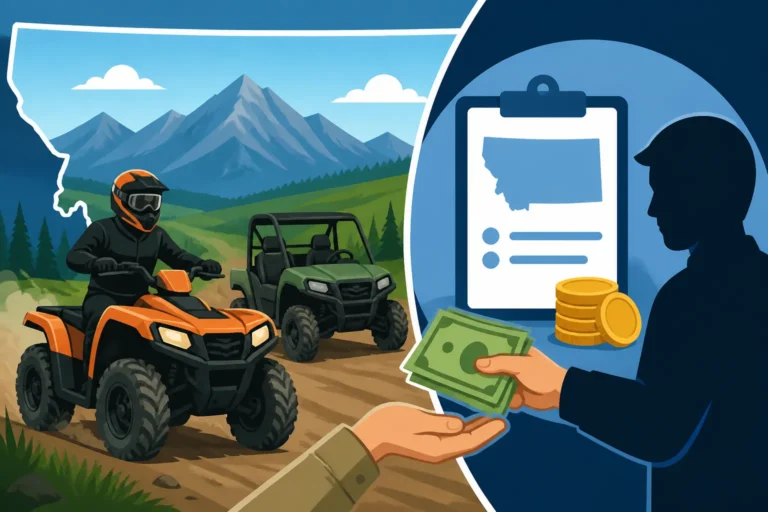
Your Montana paperwork helps identify the machine and show its registration or ownership status. It does not, by itself, confirm that the machine meets every requirement for riding in Idaho. Idaho can apply its own rules to out-of-state OHVs, including rules about registration, user permits, equipment and where the machine may be operated.
That distinction matters whether your machine has a Montana registration decal, a Montana title, or both. A title is evidence of ownership; it is not a trail permit. Likewise, a Montana registration does not automatically grant access to every Idaho trail or road.
Montana’s registration and trail-pass systems also serve different purposes. Before leaving, check which documents apply to your machine and your Montana riding plans. What Montana Riders Need Before They Ride explains the Montana side, while Why Reciprocity Ended for Montana Riders gives context for why riders should not assume a Montana credential will be accepted across state lines.
| What you have | What it generally shows | What it does not guarantee in Idaho |
|---|---|---|
| Montana title | A record of ownership | Permission to ride or proof that Idaho requirements are met |
| Montana registration or decal | The machine is registered under Montana rules | Automatic exemption from Idaho registration or permit rules |
| Montana trail pass | A Montana riding credential for the uses it covers | Access to Idaho trails |
| Idaho-required permit or registration | Compliance with the applicable Idaho requirement | Permission to use a closed route or a road that does not allow OHVs |
For a trip, treat Montana paperwork as part of your documents, not as a substitute for checking Idaho’s requirements. The question is not only whether the machine is registered at home. It is also whether the Idaho rule for the planned use recognizes that registration or calls for a separate credential.
Check Idaho requirements before you load up
Idaho’s OHV requirements depend on the machine and where you intend to ride. Public trails, roads, state-managed areas and federal lands may have different conditions. A permit that covers one type of use should not be assumed to cover another.
For an out-of-state machine, check with the Idaho Department of Parks and Recreation about whether the machine needs Idaho registration or a nonresident OHV certificate for your planned riding. Ask specifically whether a Montana registration qualifies for an exemption. Do not rely on what a friend recalls, what a seller said, or a decal from a previous trip; requirements and exemptions can change.
The same distinction applies to permits issued by land managers. An Idaho OHV credential may satisfy a state requirement, but it does not necessarily open a trail that is closed, authorize off-route travel, or replace a separate requirement for a particular area. Montana Permit Rules on Public Land covers why a permit and permission to ride a specific route are separate questions on the Montana side; the same practical caution is useful when planning an Idaho trip.
Confirm the requirement for your machine
Before you contact the relevant Idaho agency, gather the details that help identify your situation:
- Whether the machine is an ATV, UTV, dirt bike or another type of OHV
- Whether it has a Montana title and current Montana registration
- Whether it will be trailered to Idaho or ridden on public roads
- Whether you plan to use Idaho state trails, federal land, local roads or a mix
- Whether the machine will be operated by you or another rider
Describe the planned use plainly. For example, ask whether an out-of-state UTV with current Montana registration needs an Idaho nonresident certificate to operate on public trails. If you also intend to ride on a public road, ask that as a separate question. Road use can involve additional rules and is not automatically authorized by a trail permit.
Keep a note of the answer and where you confirmed it. If the machine is registered in a business’s name or carries a less typical registration, mention that detail rather than assuming it makes no difference.
Buy or arrange any required credential in advance
If Idaho requires a permit or registration for your machine, find out how to obtain it and how it must be displayed or carried. Some credentials may be available through official online services or authorized vendors; confirm current instructions with the state agency. Allow time to complete the process before your ride, especially if you are traveling to a remote trailhead with limited phone service.
Do not assume that a Montana trail pass covers Idaho use. Montana’s nonresident permit, for example, applies to the Montana use described by Montana’s rules; it is not an Idaho permit. Montana’s Non-Resident Temporary Use Permit explains the limits of that Montana credential. If you are also riding in Montana before or after Idaho, check each state’s requirements separately.
Plan for the place you will ride
A valid permit does not make every route legal. Idaho access depends on the land manager’s rules, route designation and any seasonal or temporary closure. Before you set out, identify the specific trail system or road network, then confirm that it is open to your machine’s width and type.
This is especially important for a side-by-side. A route suitable for a narrow ATV may not be open to a wider UTV. Pay attention to posted width limits, vehicle restrictions, closures and rules about staying on designated routes. If a route crosses land managed by different agencies, check the rules for each part rather than relying on one general map.
Separate trail riding from road riding
A machine permitted on a trail is not necessarily legal on an Idaho road. Public-road use may depend on the road authority, local ordinances, the machine’s equipment and registration status, and the specific connection you want to use. A route that appears to link two trail segments may include a road where OHVs are prohibited.
Check local road rules before planning a fuel stop or a ride through town. Look for posted restrictions and confirm whether the road authority allows OHVs on that segment. Do not treat a short distance on pavement as automatically permitted because the trail crosses the road or because the machine has a Montana plate.
If your plan includes a road section, verify the road-use requirements separately from the trail requirements. Bring any documents or equipment the applicable rules call for, and change the route if you cannot confirm that the road is open to your machine.
Check closures and seasonal conditions
A route that is generally open may have a seasonal closure, maintenance restriction, fire-related closure or other temporary limit. Check current notices from the agency that manages the area shortly before travel. A map can help with planning, but it may not show a closure issued after the map was produced.
Also consider practical conditions: snow, mud, high water, smoke and trail damage can affect whether a route is safe or passable even when it is legally open. Stay on designated routes and turn around if conditions make continued travel unsafe or likely to damage the trail.
Prepare the machine and paperwork for the trip
Once you have confirmed Idaho’s requirements and chosen a route, make the paperwork easy to access. Carry your Montana registration documents and any title or proof of ownership that is useful for your situation, along with the Idaho credential required for the trip. Keep documents protected from water and dirt; a small waterproof document pouch can help, including options sold through retailers such as Amazon.
Make sure the registration information matches the machine. Before departing, compare the VIN on the paperwork with the VIN on the machine. If the number is hard to locate, Where a Side-by-Side Hides Its VIN may help you find it. A mismatch can complicate a roadside check or a conversation with an agency, so resolve an obvious paperwork error before traveling where possible.
A practical pre-trip checklist:
- Confirm the machine’s Montana registration is current and gather its paperwork.
- Ask Idaho’s parks and recreation agency whether the Montana registration qualifies for any exemption or whether an Idaho credential is required.
- Obtain any required Idaho permit or registration and follow the instructions for displaying or carrying it.
- Check access rules for the exact trail system, including vehicle-width restrictions and closures.
- Confirm road-use rules separately if your route includes public roads or town streets.
- Compare the VIN on the machine with the documents and carry the required equipment.
- Recheck trail and closure information before driving to the area.
Keep the machine’s documents with the person responsible for it, not buried in luggage or left in a vehicle at a distant parking area. If someone else will operate the machine, make sure that rider knows where the paperwork is and understands which routes are permitted.
For riders who regularly cross state lines, it helps to think in terms of separate state checklists rather than a single registration that follows the machine everywhere. Does Any State Honor Montana Registration? addresses that broader issue. Reciprocity can be limited, and an answer for one state does not settle the rules for another. The safe approach for Idaho is to confirm the current requirement directly, carry the applicable credential, and follow the rules of the land manager and road authority for the route you actually ride.
Disclaimer
This article is for general informational purposes only and does not constitute professional advice. Laws, prices and regulations vary by location and change over time. Consult a qualified professional for guidance on your specific situation.