Montana Permit Rules at a State Park
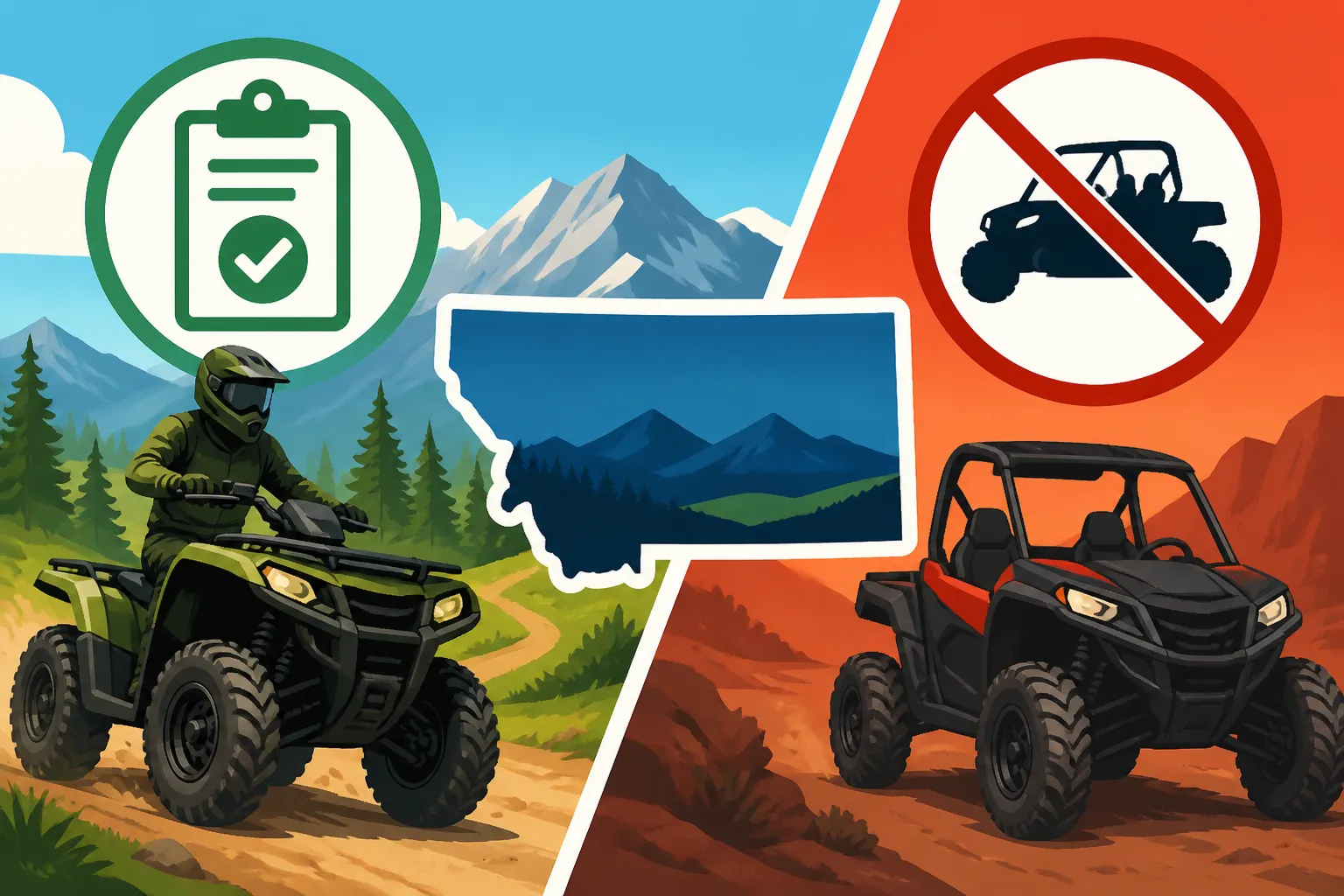
Montana state parks do not all offer the same kind of ATV or UTV access, and a permit does not make a closed route legal to ride. Before you unload, confirm that motorized use is allowed at that park, which routes are open, and what registration or trail permit your machine needs.
A permit does not guarantee riding access
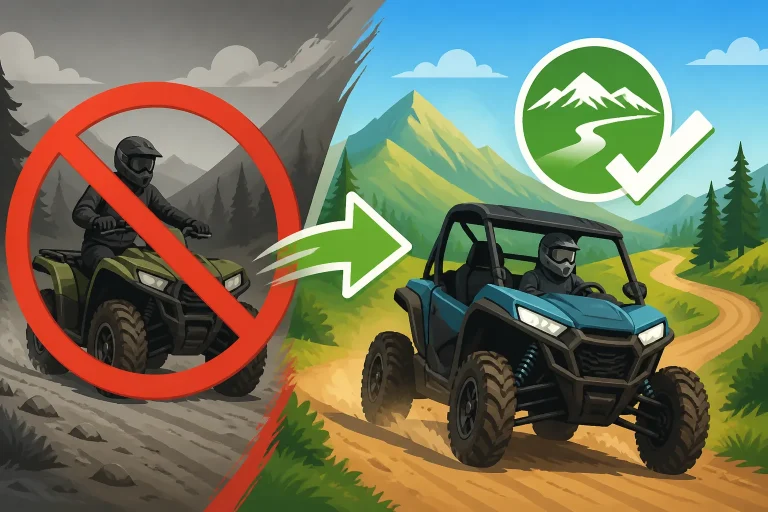
The first question is not which permit to buy. It is whether the park allows your ATV, UTV, dirt bike, or other off-highway vehicle on the route you plan to use.
Montana state parks have different facilities and rules. A park may have roads open to ordinary vehicles but no off-highway routes for recreational riding. Another may allow motorized use only on designated roads or trails. Access can also vary by season, trail conditions, construction, fire restrictions, or other temporary closures.
Treat these as separate checks:
- Park access: Does the park allow your type of machine on the specific road or trail?
- Machine credentials: Does your machine need registration, a trail pass, or a nonresident permit for that use?
- Route conditions: Is the route currently open, and are there restrictions on vehicle type, width, or use?
A valid permit or registration addresses only the credentials question. It does not authorize off-trail riding, entry onto a closed route, or use of a route that is not open to motor vehicles. If you are unsure, contact the park or check its current official information before riding.
This matters especially when a route appears on a map or begins at a state park trailhead. A trailhead’s location does not necessarily mean the route is open to OHVs. Read the route’s signs and posted rules, and do not assume that a road open to cars is also open to an ATV or UTV.
For broader background on the different documents Montana riders may need, see What Montana Riders Need Before They Ride. If your question is specifically about permits for public land beyond a state park, Montana Permit Rules on Public Land explains why access rules and permit requirements should be checked separately.
Which Montana permit or registration may apply
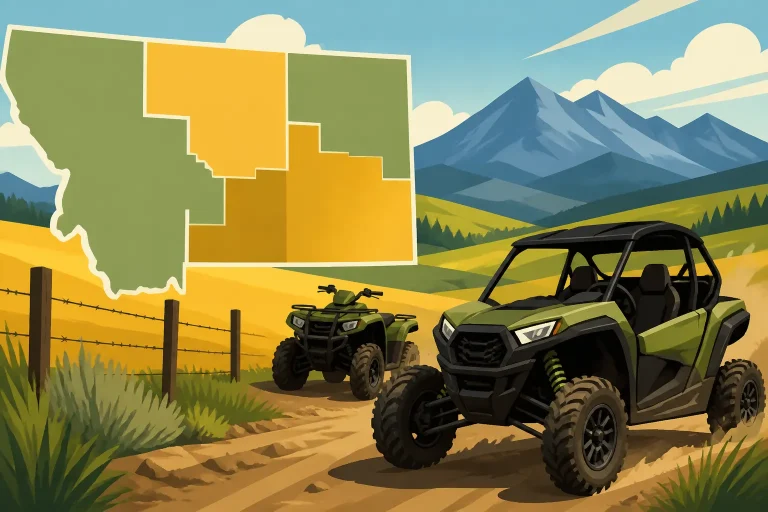
The required credential depends on the machine, the rider’s residency, and where and how the machine will be used. A Montana resident and a visitor may follow different permit paths, and a machine used on a public trail may have different requirements from one used only on private property.
Montana’s permit system can include permanent OHV registration and a resident trail pass, or a temporary-use permit for a nonresident. These terms are not interchangeable. The details can also depend on whether the vehicle is an ATV, UTV, dirt bike, or another kind of machine and whether it is being operated on a route open to OHVs.
| Your situation | What to check | Important distinction |
|---|---|---|
| Montana resident riding an OHV | Current registration and trail-pass requirements for the machine and route | A registration does not make every park road or trail open to riding |
| Visitor bringing an OHV into Montana | Nonresident permit requirements and whether they apply to your planned public-land use | A permit is not permission to ride a closed or restricted route |
| Machine already registered in another state | Montana requirements for nonresidents and any separate requirements in the home state | Do not assume an out-of-state registration replaces a Montana permit |
| Machine used on a route inside a state park | Park-specific motorized-access rules, route status, and applicable machine credentials | Park rules and statewide permit rules are separate checks |
| Machine used only on private land | Whether public-land permit rules apply, plus the landowner’s permission and any other relevant requirements | Private-land permission does not transfer to public routes |
For visitors, Montana’s Non-Resident Temporary Use Permit covers the nonresident permit question in more detail. The key practical point is to verify whether the requirement applies to your machine and the public route you intend to ride, rather than relying on a general statement that you are “just going to a state park.” If your trip includes other public lands, check those routes too.
Montana residents should confirm whether their machine’s registration and trail-pass status are current. The resident requirements are explained in Montana’s Resident OHV Trail Pass. If you are comparing a pass with permanent registration, Trail Pass Credit Toward Permanent Registration can help clarify how those credentials relate.
A machine that is registered in another state does not automatically settle the Montana permit question. Reciprocity is limited, and a visitor should not assume that a home-state plate or registration is accepted as a substitute for Montana’s public-land requirements. See Does Any State Honor Montana Registration? for the wider reciprocity issue, and confirm the rules for the particular machine and trip.
There may also be a park entrance or facility charge, separate from the OHV permit or registration. These charges serve different purposes. Paying an entrance fee does not replace required OHV credentials, while holding a trail permit does not necessarily cover every park admission or facility charge. Check the park’s current information for any access fees and payment arrangements.
How to check a state park before you unload
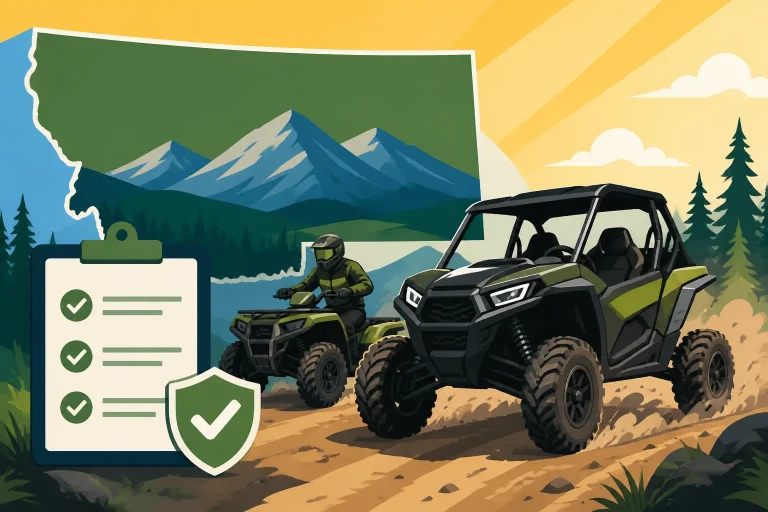
A quick check before the trip can prevent a wasted drive and an avoidable citation. Use the park’s official information for the current route rules, then confirm any permit question with the relevant state office or park staff.
- Name the exact park and route. “Riding near a state park” is too broad to confirm access. Identify the trail, road, or riding area you expect to use.
- Look for motorized-use information. Confirm whether OHVs are allowed at all and whether the route is designated for motorized use. Look for restrictions on machine type, width, or other vehicle characteristics.
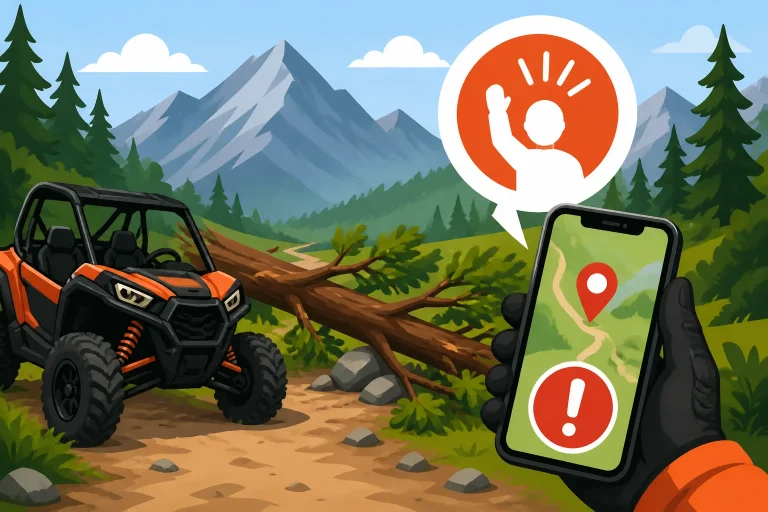
- Check current closures and seasonal conditions. A route that is normally open may be closed temporarily. Confirm the status close to your trip, especially after storms, during fire restrictions, or when seasonal closures may apply.
- Match your machine to the permit rules. Check whether you need Montana registration, a resident trail pass, or a nonresident temporary-use permit. Do not rely on the requirements for a different machine or rider.
- Ask if the information is unclear. Contact the park or the appropriate Montana agency and describe your machine, residency, and planned route. A clear question is more useful than asking only whether “ATVs are allowed.”
- Follow signs when you arrive. Posted signs and temporary notices can give important route-specific instructions. If they conflict with an old map or an online description, stop and verify before continuing.
A trail map can help with navigation, but it is not always proof that a route is open to OHVs. Maps may show roads or trails used by other visitors, or may not reflect a recent closure. For routes on public land, Finding a Forest’s Motor Vehicle Use Map explains how to check whether a road or trail is designated for motorized use. A park’s own rules still apply when the route is within park boundaries.
If your plans include a state park and nearby forest or other public land, check each area separately. The park may have one set of route restrictions, while an adjoining land manager has another. A route that crosses a boundary can change rules partway through, so note where the boundary falls and whether your permit covers each portion.
Common mistakes and what to carry
The most common mistake is treating a permit as a general riding pass. Montana’s permit system and a park’s access rules answer different questions. A permit may satisfy a statewide credential requirement, but it does not open a trail that the park has closed or reserved for nonmotorized use.
Other avoidable errors include:
- Assuming every state park has OHV trails. Check the specific park and route rather than choosing a destination based on the state-park label.
- Confusing admission with an OHV permit. A park entrance payment, where required, is separate from machine registration or a trail permit.
- Assuming an out-of-state plate settles the issue. Verify Montana’s requirements for nonresidents instead of relying on your home-state credentials.
- Relying on an old map or a search result alone. Confirm the route’s current status with official park or land-manager information.
- Riding beyond a designated route. Do not leave the marked road or trail to get around a closure, reach a viewpoint, or shorten the route.
- Forgetting that a trip can cross land-management boundaries. Check the requirements and closures for every part of the route.
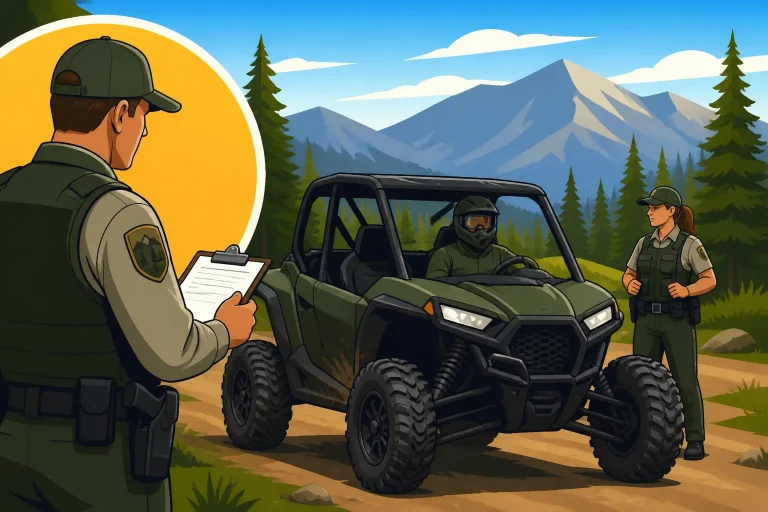
Bring the documents or proof of compliance that apply to your machine and trip, and keep them accessible. What you should carry can depend on the kind of credential and how it was issued. Do You Carry Paperwork on a Montana Trail? discusses the practical question of carrying documentation, while What a Montana Officer Asks For covers the kinds of information an officer may request during a stop.
Before leaving home, write down the park contact information, the name of the route, and the official source where you checked its status. If staff confirm access by phone or email, keep a note of the date and the instructions you received. That note does not override a later closure or posted restriction, but it can help you explain what you checked if details are unclear.
When you cannot confirm that a route is open to your machine, do not unload and ride on the assumption that it is allowed. Choose a route with clear motorized-use designation or wait for confirmation. A little checking is easier than dealing with a citation, a closed gate, or damage to a trail that is not meant for motorized use.
Disclaimer
This article is for general informational purposes only and does not constitute professional advice. Laws, prices and regulations vary by location and change over time. Consult a qualified professional for guidance on your specific situation.