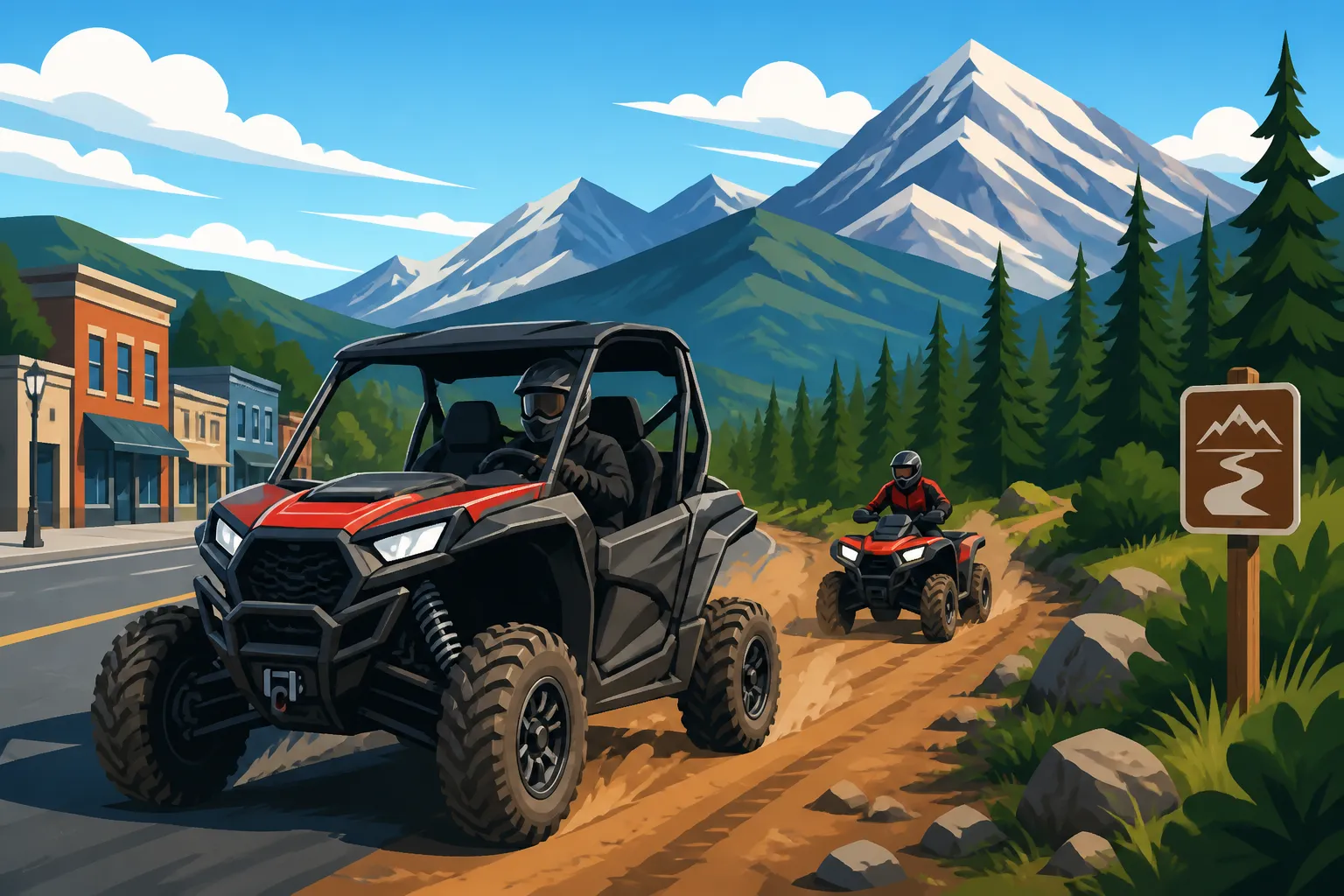
Riding Town to Trailhead in Montana
One of the biggest frustrations for ATV and UTV enthusiasts in Montana is having to trailer their machines sometimes just a mile or two down the road to get to a trailhead. It feels like such a waste of time and effort! This comprehensive guide is here to unravel the complexities of legally riding your off-highway vehicle (OHV) from town right to the dirt, ensuring your Montana adventures start right from your doorstep or lodging.
Understanding Montana's OHV Road Access Landscape
Montana is an incredible state for OHV riding, but navigating its road access rules can feel like trying to solve a puzzle with missing pieces. You might see locals riding their side-by-sides through town and wonder why your rig can't do the same. The truth is, Montana's approach to OHV road access isn't a simple statewide mandate; it's a dynamic blend of state law, county decisions, and individual city or town ordinances. This often leads to confusion, making it crucial to understand the layers of regulation that govern where you can and cannot ride your ATV or UTV on public roads. It's not just about what kind of machine you have, but where you are riding it.
The Patchwork of Montana Road Laws: State, County, and Municipal Authority
At the heart of Montana's OHV road access lies a tiered system of authority. The state sets the overarching framework, defining what an OHV is and outlining basic equipment requirements for any machine operating on public land or roads. However, the real "gotcha" comes at the county and municipal levels. State law generally prohibits OHVs from operating on primary and secondary highways (think U.S. Highways and State Highways), but it grants individual counties the power to open county roads, and cities and towns the authority to permit OHVs on their streets. This creates a fascinating, albeit sometimes frustrating, patchwork. One small town might welcome OHVs with open arms, allowing full street access, while its neighbor just a few miles down the road might prohibit them entirely. It means you can't assume that because one place allows it, all places do. It really requires local knowledge or careful research before you even load up the trailer.
This decentralized approach means that your ability to ride from a gas station in Philipsburg to a Forest Service road depends entirely on what the Granite County Commissioners and the town council of Philipsburg have decided. They are the ones who assess local conditions, traffic safety, and community sentiment. For instance, a county might open a gravel road that connects to a popular trail system, understanding its recreational value, but keep a busier paved county road closed due to safety concerns. Similarly, a small town that thrives on trail tourism might pass an ordinance allowing OHVs on most of its streets, perhaps even designating parking areas, while a larger city might restrict them to only crossing major thoroughfares. This is why knowing the specific ordinances for your chosen riding area is paramount; a general understanding of state law simply isn't enough to stay out of trouble.
Why "Street Legal" Isn't a Simple Yes or No
When you hear someone talk about making their OHV "street legal" in Montana, it's often a conversation loaded with nuance. Unlike some states where a blanket conversion kit and a new license plate make your machine good to go almost anywhere, Montana's system is more conditional. The term "street legal" in Montana typically refers to equipping your OHV with the necessary safety gear required by state law, such as headlights, taillights, brake lights, mirrors, and a horn. Many riders turn to aftermarket providers like SuperATV for these kinds of upgrades, ensuring their machines meet these baseline requirements. However, having all the right equipment doesn't automatically grant you permission to ride on every road.
The "street legal" status primarily addresses the machine's compliance with state safety standards for road operation, not necessarily the legal right to operate on every specific road. This is where the county and municipal ordinances come into play again. You can have a fully equipped UTV, complete with turn signals and a windshield, but if the town you're in hasn't passed an ordinance allowing OHVs on its streets, you're still out of luck. Conversely, some small towns or counties might have less stringent equipment requirements for their specific permitted roads, or they might define "street legal" slightly differently within their own ordinances. It's a critical distinction that many riders overlook, leading to unintended violations. Always remember that while state law defines what a machine should have to be road-ready, local jurisdictions decide where that road-ready machine can actually go.
Getting Your Machine Ready for the Road Section
Alright, so you've done your homework and found a Montana town or county that welcomes OHVs on certain roads. That's a huge first step! Now, let's talk about getting your machine physically and legally prepared for that transition from dirt to asphalt. This isn't just about avoiding a ticket; it's about safety, both for you and for other road users. Driving an OHV on a public road, even a quiet county road, means operating it alongside larger, faster vehicles, and often, without the same level of protection. So, making sure your machine is up to snuff is paramount.
Essential Equipment for Road-Legal OHVs in Montana
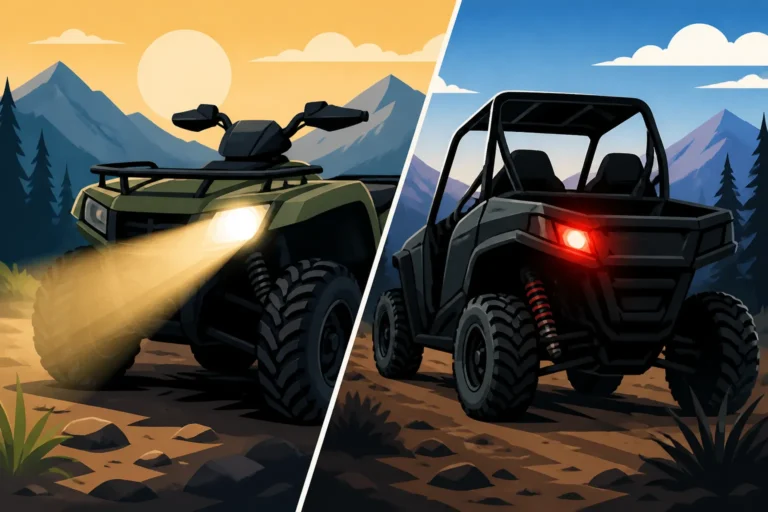
To operate your OHV on any public road in Montana, even those specifically opened by county or municipal ordinance, your machine needs to meet certain minimum equipment standards. These are generally consistent with what you'd expect for any vehicle sharing the road. First and foremost, you need proper lighting: at least one headlight that illuminates at least 50 feet ahead, and at least one taillight visible from 500 feet to the rear. Brake lights are also crucial, clearly indicating when you're slowing down. Many riders will upgrade their stock lighting to brighter, more durable options, often finding comprehensive kits from brands like SuperATV that make this conversion simpler. You can find more detail on this in [What Montana Requires on an OHV Road Ride].
Beyond lighting, you'll need at least one rearview mirror, properly mounted to give you a clear view of traffic behind you. A horn or other audible warning device is also a must, to alert other drivers or pedestrians if needed. For those riding at night or in low visibility, reflectors are also a good idea. While not always explicitly required for every road-legal OHV scenario, a windshield is often a smart addition for comfort and protection from road debris, and turn signals, though sometimes optional depending on the specific ordinance, significantly enhance safety by clearly communicating your intentions to other drivers. Making sure all these components are functional and correctly installed isn't just about compliance; it's about being seen and being able to react appropriately in a mixed-traffic environment.
Registration, Titling, and Insurance Requirements
Before you even think about hitting a paved road, your OHV needs to be properly registered and titled in Montana. This is the foundation of legal operation. In Montana, OHVs are registered at your local county treasurer's office. You'll need to bring your proof of ownership, such as a manufacturer's certificate of origin (MCO) for a new machine or a Montana title from a previous owner for a used one. For more information on this process, check out [Montana County Treasurer OHV Registration]. Once registered, you'll receive a registration decal that needs to be displayed prominently on the rear of your machine, typically on the left side. Proper placement is covered in [Montana OHV Decals and Rear Placement]. Remember, this registration is what allows you to ride on designated trails and, crucially, on the specific roads that are open to OHVs.
Beyond registration, insurance is a non-negotiable requirement for any OHV operating on public roads. Montana law requires liability insurance for any motor vehicle driven on public roadways, and this includes OHVs when they are allowed on county or city streets. This protects you in case of an accident where you are at fault, covering damages or injuries to other parties. While you might only consider basic liability, many riders opt for more comprehensive coverage that also protects their own machine against theft, damage, or other incidents, especially given the investment in a modern side-by-side or ATV. It’s always a good idea to discuss your options with an insurance provider to ensure you have adequate coverage, which we detail further in [Insuring an ATV in Montana]. Don't ever skip this step; riding uninsured on a public road is a huge risk, both legally and financially.
Navigating Montana Towns with Your OHV
Once your OHV is equipped and registered, the next hurdle is understanding how to actually ride through a Montana town. This is often where riders run into the most confusion, as city and town ordinances can be very specific and vary wildly from one community to the next. What's perfectly fine in one small trail-adjacent town might be strictly prohibited just a few miles away in another. It's not enough to simply know that some towns allow OHVs; you need to know if your specific destination does, and under what conditions.
Finding Which Montana Towns Allow OHV Street Use
The critical first step is research. You cannot assume that all towns in Montana permit OHV use on their streets, even if they are in a popular recreation area. Many small, rural towns, especially those that serve as gateways to popular trail systems, have recognized the economic benefit of allowing OHVs on their streets and have passed ordinances to permit such use. These towns often want riders to be able to fuel up, grab a bite to eat, or even stay overnight without having to load and unload their machines from a trailer every time they want to move around town. You might find this information posted on the town's official website, at local businesses like gas stations or convenience stores, or by calling the local sheriff's office or city hall. Some communities even put up signs at their city limits indicating OHV access rules.
A great way to approach this is to identify your desired riding area and then look up the specific towns you plan to pass through. For example, West Yellowstone is famous for its OHV-friendly atmosphere, with specific routes designated for side-by-sides. Red Lodge also has a reputation for being welcoming to motorized recreation. However, these are often the exceptions rather than the rule in more populated areas. Don't be shy about asking locals, either. Business owners in these trail towns are usually well-informed and happy to share details about local OHV regulations, as they benefit from rider traffic. A quick phone call before you hit the road can save you a lot of hassle and potential fines.
Permitted Routes and Parking in Trail-Friendly Communities
Even in towns that do allow OHV street use, it's rare that you can just ride anywhere you please. Most ordinances will designate specific streets or routes that are open to OHVs, often avoiding main highways or heavily trafficked commercial districts. The goal is usually to allow access to essential services (gas, food) and direct routes to trailheads, while minimizing conflicts with other traffic and maintaining safety. These permitted routes might be marked with special signs, or they might be clearly outlined in the municipal ordinance itself. You need to pay attention to these details, as straying off a designated route could still land you a ticket.
Parking is another consideration. Just like a car, you can't just leave your side-by-side anywhere. Some towns with high OHV traffic may have designated OHV parking areas, especially near trailheads or downtown business districts. Otherwise, you'll need to follow standard parking regulations, which means not blocking sidewalks, driveways, or fire lanes. When you pull up to that gas station or cafe, be mindful of how much space your machine takes up and park considerately. Remember, you're an ambassador for the OHV community, and showing respect for local rules and residents helps keep these street access privileges available for everyone. Brands like SuperATV also offer compact storage solutions and accessories that can help you secure your gear while parked in town, reducing clutter and preventing items from becoming hazards.
Riding Montana County Roads to the Trailhead
County roads are often the vital links that connect towns to the vast network of Montana's public lands and OHV trails. While state highways are generally off-limits to OHVs, county roads are where most of the legal town-to-trailhead riding will happen. These roads vary immensely, from wide, well-maintained gravel arteries to narrow, dusty two-tracks that feel more like trails themselves. Understanding the rules and expectations for these roads is crucial for a safe and enjoyable journey.
Speed Limits, Lanes, and Safety on County Roads
When you transition from a town street to a county road, the general rules of the road still apply, but with some specific considerations for OHVs. Unless otherwise posted, county roads in Montana typically have a prima facie speed limit of 55 mph, though in many areas, particularly on unpaved or winding roads, the safe operating speed for any vehicle is much lower. For OHVs, it's almost always prudent to ride below the posted speed limit, especially on gravel or dirt roads where traction can be unpredictable, and dust can significantly reduce visibility for you and others. [Montana Speed Limits for OHVs on Roads] is a helpful resource here. You'll need to stay to the right side of the road, just like any other vehicle, and be prepared for oncoming traffic, even on seemingly remote routes.
Safety is paramount on county roads. Most OHVs simply aren't built to handle collisions with full-size vehicles at higher speeds, and even a minor fender-bender can have serious consequences. Always use your headlights and taillights, even during the day, to enhance your visibility. Wear appropriate safety gear, including a helmet, especially if you're riding a machine without a full roll cage and seatbelts. Keep an eye out for wildlife, which is abundant in Montana, and be particularly cautious around blind curves or hillcrests. You are sharing these roads with locals who often drive large ranch trucks, delivery vehicles, and other OHVs, so maintain vigilance and respect for everyone's right to use the road.
Special Considerations for Ranching and Rural Areas
Montana's county roads often traverse private ranch lands and agricultural properties, creating a unique set of circumstances for OHV riders. You might encounter slow-moving farm equipment, cattle drives, or open range livestock that wander freely across the road. Always slow down significantly and give a wide berth to any animals or agricultural machinery you encounter. It's a sign of respect for the local way of life and a practical safety measure. Ranchers are often working hard, and they appreciate it when recreationists are mindful and courteous. Dust is another major concern in these areas; riding too fast on a dry gravel road can create a massive dust cloud that obscures vision for vehicles behind you or for oncoming traffic. Reduce your speed to minimize dust, especially when passing homesteads or other vehicles.
Many county roads in rural Montana might not have clear shoulders, or they could be quite narrow. Be prepared to pull over safely if a larger vehicle needs to pass you, especially if you're on a blind section of road. It's a common courtesy and helps keep traffic flowing. Also, be aware of designated "stock driveways" or areas where livestock are known to cross. These areas may not always be clearly marked, but local knowledge or observant riding can help you identify them. Remember, these roads are not just recreational pathways; they are essential transportation routes for residents and industries. Showing respect for the land, the people, and the working nature of these rural roads goes a long way in fostering good relationships between recreationists and the local community.
Safety and Etiquette for Mixed-Use Riding
Riding your OHV on public roads means sharing the space with all kinds of other vehicles, people, and even animals. This isn't the same as tearing down a dedicated trail. It requires a different mindset, prioritizing safety, courtesy, and a keen awareness of your surroundings. Being a good ambassador for the OHV community is crucial for maintaining and expanding access to these town-to-trail connections.
Sharing the Pavement with Cars, Trucks, and Livestock
One of the biggest adjustments when riding your OHV on a road is sharing it with full-size vehicles. Cars and trucks are faster, heavier, and drivers may not always expect to see an OHV on the road, especially in more rural settings. Always assume other drivers don't see you. Make eye contact if possible, and use clear signals (hand signals or turn signals if equipped) for turns or lane changes. Maintain a safe following distance, and if a vehicle behind you is clearly wanting to pass, find a safe place to pull over and let them by. This is not the time for ego; it's about minimizing risk and frustration for everyone.
As mentioned before, Montana's rural roads frequently host livestock. Slow down immediately when you see cattle, horses, sheep, or any other animals on or near the roadway. Give them plenty of space, avoid sudden movements or loud noises that could spook them, and be prepared to stop. Ranchers often move livestock along roads, and they have the right-of-way. Patience and caution are key here. You might also encounter pedestrians, cyclists, or even horse riders on less-traveled county roads. Treat them with the same respect and care you would want shown to you on a trail. Slowing down, giving a wide berth, and a friendly wave can go a long way in creating positive interactions.
Rider Conduct and Noise Concerns in Residential Areas
Your OHV is likely louder than most passenger cars, and that can be a source of frustration for residents, especially in quiet residential areas within towns or along rural county roads. When riding through populated areas, or past homes, be mindful of your engine noise. Avoid unnecessary revving, keep your speed low, and be as quiet and unobtrusive as possible. Many aftermarket exhaust systems, while providing performance benefits, can also increase noise output. If you frequently ride through residential areas, consider whether your exhaust system is excessively loud and if a quieter option is available. This is a common complaint that can lead to local ordinances restricting OHV access.
Beyond noise, your overall conduct impacts public perception. Don't engage in reckless driving, perform stunts, or spin donuts on public roads, even if they seem deserted. This kind of behavior not only endangers yourself and others but also paints the entire OHV community in a negative light. Park considerately, don't litter, and follow all traffic laws, including stop signs and traffic lights. Remember that you are a visitor on these roads, and your respectful behavior can help ensure that road access for OHVs continues to be permitted in the future.
Rules for Young Riders and Passengers on Montana Roads
When riding OHVs on public roads in Montana, the rules regarding young riders and passengers become even more critical than on trails. The increased risk of interaction with other vehicles and the more structured legal environment of public roads mean strict adherence to age, licensing, and safety requirements is essential. This is not an area where you want to take chances.
Age, License, and Safety Course Requirements for Road Use
Montana has specific regulations for who can operate an OHV on public roads. Generally, a rider needs to be at least 16 years old and possess a valid driver's license to operate an OHV on a public street or road where OHV use is permitted. There are sometimes exceptions for younger riders on certain private or designated public lands, but for town-to-trailhead road use, the driver's license rule is key. This means that if your 15-year-old usually drives the UTV on the ranch, they cannot legally drive it down a county road that's open to OHVs unless they have a learner's permit and are accompanied by a licensed adult in accordance with standard driving laws. For more details, consult [Driver's License Rules for Montana Road Riding] and [Montana's Rule for Riders Aged 12 to 15].
In addition to age and licensing, Montana has safety education requirements. Riders under the age of 18 are generally required to complete an approved OHV safety education course to operate an OHV on public lands or trails. While the driver's license may be the primary requirement for road use, having that safety course certificate is still crucial for overall legal operation, especially if your road section leads directly to public trails. Always carry proof of your safety course completion, if applicable, along with your driver's license and OHV registration, as wardens or law enforcement may ask for them.
Passenger Rules and Helmet Laws
When it comes to passengers, the rules often mirror those for street vehicles. Most OHVs are designed for a specific number of occupants, and you should never exceed that manufacturer's stated capacity. Overloading a machine can compromise its stability and handling, making it extremely dangerous on public roads, especially if you have to swerve or brake suddenly. Side-by-sides, with their multiple seats and seatbelts, are generally more conducive to carrying passengers than traditional ATVs.
Helmet laws are also vital. In Montana, all OHV operators and passengers under the age of 18 are required to wear a Department of Transportation (DOT) compliant helmet when riding an OHV on public roads or trails. This is a non-negotiable safety rule. While adults aged 18 and older are not always legally required to wear a helmet on an OHV (depending on the specific scenario and type of machine), it is always highly recommended for maximum safety, especially when sharing roads with full-size vehicles. For a deeper dive into these requirements, see [Montana Helmet Rules for Riders Under 18]. Eye protection is also a smart choice for all riders and passengers, protecting from dust, debris, and insects.
Common Pitfalls and How to Avoid Them
Even with the best intentions, riders can sometimes stumble into common traps when trying to navigate Montana's OHV road access rules. These pitfalls often stem from misunderstandings of local authority, outdated information, or simply forgetting to double-check specific regulations. Avoiding them is key to a smooth and penalty-free ride from town to trailhead.
Misinterpreting Road Signs and Jurisdictions
One of the most frequent mistakes is misinterpreting road signs or assuming that a generic "OHV Permitted" sign applies to all roads in an area. Remember, Montana's system is a patchwork. A sign indicating OHV access on a particular county road does not automatically mean that a state highway it intersects, or a nearby town's streets, are also open. Conversely, a lack of "No OHV" signs doesn't necessarily mean it's allowed. You need to look for signs that explicitly permit OHV use or verify through municipal/county ordinances. Ignoring signs, or relying on assumptions, can quickly lead to an interaction with law enforcement.
Another common misstep is confusing different types of roads. Forest Service roads and BLM roads often have their own rules, which might be more permissive than county roads, but they are still distinct from paved county roads or city streets. Just because you can ride your OHV on a Forest Service road doesn't mean you can ride it on the paved county road to get to that Forest Service road. Always consult local Motor Vehicle Use Maps (MVUMs) for public lands and cross-reference with county and city ordinances for roads outside those boundaries. For insights into these distinctions, check out [Montana Road Rules Riders Get Wrong].
Penalties for Non-Compliance and Unregistered Machines
The consequences of non-compliance can range from a warning to significant fines, impoundment of your machine, or even more serious charges depending on the severity and location of the infraction. Riding an unregistered OHV on a public road, for instance, can result in a fine, and if you're involved in an accident, it could create major insurance complications. [Fines for an Unregistered OHV in Montana] provides more information on this. Operating an OHV without the required equipment, such as proper lighting or mirrors, can also lead to citations. Law enforcement officers, including county sheriffs, city police, and Fish, Wildlife & Parks wardens, have the authority to enforce these regulations.
Furthermore, if you're caught operating an OHV on a road where it's prohibited, you could face trespassing charges if it's private land, or a citation for illegal vehicle operation on public property. Repeated offenses, or particularly egregious violations, could lead to loss of riding privileges or impoundment. The bottom line is that while the rules can be complex, the responsibility falls squarely on the operator to know and follow them. A little bit of upfront research and careful adherence to the law can save you a lot of headache, fines, and potentially costly repairs or legal battles down the road.
Planning Your Town-to-Trailhead Route
Successfully riding from town to trailhead in Montana requires more than just understanding the rules; it demands practical planning. You need to map out your route, ensure you have necessary resources, and prepare for the unique challenges of mixed-use riding. A well-planned trip is a safe and enjoyable trip.
Using Maps and Local Resources for Permitted Routes
Start your planning by acquiring the right maps. For public lands, Motor Vehicle Use Maps (MVUMs) are invaluable. They clearly show which roads and trails are open to specific types of motorized vehicles. However, MVUMs generally only cover federal lands (Forest Service, BLM). For county roads and town streets, you'll need to consult county maps, local city websites, or even call the county commissioners or city clerk's office. Many progressive towns will have maps available online or at local visitor centers that highlight their designated OHV routes. Apps like onX Offroad can also be helpful, often integrating local regulations and MVUM data.
When planning, don't just focus on the shortest distance; focus on the legal distance. It might mean taking a slightly longer route on a designated county road rather than cutting through a prohibited street. Pay attention to road numbers and names, and match them carefully to your resources. It's always a good idea to have a backup plan, too. What if a road is unexpectedly closed? What if you encounter an area that seems ambiguous? Having a paper map alongside your digital tools can be a lifesaver, especially in areas with no cell service.
Fueling Up and Staging Your Ride Responsibly
One of the biggest advantages of riding from town to trailhead is the easy access to fuel and supplies. Before you head out, make sure your OHV's fuel tank is full. Even short road sections can burn more fuel than you expect, and you don't want to run out halfway up a mountain. Many small towns in Montana cater specifically to OHV riders, with gas stations that have plenty of room for your rig, and stores that stock snacks, drinks, and other essentials. Take advantage of these services.
When staging your ride, be considerate of others. If you're starting from a hotel or rental property, ensure your staging area doesn't block traffic or disturb other guests. If you're parking a truck and trailer at a designated trailhead parking area, park efficiently, leaving room for others. Avoid blocking access points or creating congestion. And remember, leave no trace. Pack out everything you pack in, and dispose of trash properly. By planning carefully and acting responsibly, you not only ensure your own adventure is smooth but also contribute to the positive reputation of the OHV community in Montana, helping to preserve and expand access for all.
| Rule Category | On Designated Roads/Streets | Off-Road Trails (Public Land) |
|---|---|---|
| Registration | Required | Required |
| Titling | Required | Required |
| Insurance | Required (Liability) | Recommended (often required for certain use) |
| Headlights/Taillights | Required (on when operating) | Required (on when operating) |
| Brake Lights | Required | Required |
| Mirrors | Required (at least one) | Not typically required |
| Horn | Required | Not typically required |
| Turn Signals | Recommended (often required by local ordinance) | Not typically required |
| DOT Helmet (Under 18) | Required | Required |
| Driver's License (Operator) | Required (16+ generally) | Age/Supervision rules vary, often 12+ with safety cert |
| Safety Course (Under 18) | Often required | Required |
| Spark Arrester | Required (if applicable) | Required |
| Muffler | Required (noise limits apply) | Required (noise limits apply) |
Disclaimer
This article is for general informational purposes only and does not constitute professional advice. Laws, prices and regulations vary by location and change over time. Consult a qualified professional for guidance on your specific situation.