Winter Road Riding in Montana
For many folks who live for the thrill of their ATV or UTV, the arrival of winter in Montana can feel like a sentence of cold storage for their beloved machines. You've invested in a fantastic rig, you love the open air, and the thought of parking it for months while snow blankets the landscape is just plain heartbreaking. But the truth is, with the right preparation and knowledge, those crisp, snowy roads can offer some of the most exhilarating and uniquely beautiful riding experiences Montana has to offer. This guide will walk you through everything you need to know to safely and legally enjoy winter road riding in the Big Sky Country.
The Unique Landscape of Winter Road Riding in Montana
Winter riding in Montana isn't just colder summer riding; it's an entirely different beast, demanding a completely new approach to safety, machine preparation, and route planning. The landscape transforms, revealing a stark beauty but also presenting unique challenges that can catch an unprepared rider off guard.
Snow-Covered Roads Versus Plowed Access
One of the first things you'll quickly discover when contemplating a winter road ride is the vast difference between a snow-covered county road and one that's been regularly plowed. A fresh blanket of snow can look inviting, almost like a pristine canvas, but beneath that beauty lies a layer of uncertainty. An unplowed road might hide deep ruts from previous vehicles, rocks, or even fallen branches that could snag a tire or undercarriage. The snow depth itself can vary dramatically, from a light dusting that merely adds a picturesque touch to drifts that can swallow a side-by-side whole. This is where judgment becomes critical. Is the snow too deep to safely navigate? Will your machine get stuck far from any help?
On the flip side, plowed roads, while offering clearer passage, bring their own set of considerations. They often leave behind a packed snow base that can be incredibly slippery, sometimes even polished to an icy sheen by vehicle traffic. Plow berms at intersections or driveways can be deceptively high and hard, posing a challenge for an ATV or UTV with lower clearance. You might also encounter sanded or graveled sections, which improve traction but can also kick up debris. Understanding these nuances is crucial for both planning your route and adjusting your riding style to match the conditions. You're not just dealing with the road surface; you're dealing with the winter-modified road surface.
The Double Whammy of Ice and Low Visibility
If snow is one of winter's primary challenges, ice is its stealthy, dangerous partner. Black ice, often invisible to the naked eye, can form on shaded sections of roads, over bridges, or in areas where snowmelt refreezes. Hitting a patch of black ice, especially at speed or on a curve, can instantly send your machine into an uncontrolled slide, leading to serious injury. Always assume ice is present, especially in early morning or late evening hours, and adjust your speed and braking accordingly. The danger of ice is something that no amount of machine modification can completely overcome; it requires a heightened sense of awareness from the rider.
Beyond the treacherous traction, winter in Montana often brings with it significantly reduced visibility. Snow squalls can appear suddenly, turning a clear day into a whiteout in minutes. Fog, especially in river valleys or near open water, can be thick and persistent. And let's not forget the shorter daylight hours. Even on a clear day, the sun hangs low, casting long shadows that can obscure hazards, and then it dips below the horizon surprisingly early, leaving you in darkness. This is why proper lighting on your OHV is non-negotiable, and why it's wise to plan routes that can be completed well before sunset, or at least routes you know intimately. [Riding a County Road After Dark in Montana] introduces more risks that need mitigation.
Understanding Seasonal Closures and Their Impact
Not all roads are open year-round in Montana, and this is especially true for many of the scenic byways, forest service roads, and high-country passes that are so popular with OHV riders in warmer months. Winter often brings seasonal closures, sometimes due to deep snow and impassable conditions, and other times to protect wildlife wintering grounds or to prevent road damage from freeze-thaw cycles. These closures are not suggestions; they are legally enforced. Attempting to ride on a closed road can result in fines, resource damage, and even lead to rescue efforts if you get stranded.
It's absolutely essential to check current road conditions and closure notices before heading out. The Forest Service, BLM, and local county road departments typically post this information online or have phone lines you can call. Don't rely on memory or assumptions from previous years; conditions can change. Planning a route that respects these closures ensures your safety and helps preserve access for everyone. Remember, these closures are often put in place for good reasons, and respecting them is part of being a responsible rider in Montana's wild landscapes. [Montana Winter Road Riding Rules] often include these closures.
Preparing Your OHV for Montana's Winter Roads
Just as you wouldn't head out on a summer ride without checking your oil and tire pressure, winter riding demands an even more rigorous approach to machine preparation. Cold weather stresses components differently, and getting stranded in freezing temperatures is far more serious than a breakdown on a sunny afternoon.
Essential Machine Upgrades for Cold Weather
Your standard summer setup simply won't cut it when the mercury drops below freezing. First and foremost, consider a full service, ensuring your engine oil is suitable for cold starts (many opt for synthetic in winter), your coolant is properly mixed to prevent freezing, and your battery is in peak condition. Cold drains batteries faster, and a weak battery can leave you stranded. A battery tender or trickle charger is a smart investment if your machine sits for extended periods.
Beyond the basics, think about comfort and visibility. Heated grips and thumb warmers are game-changers for keeping your hands functional and comfortable, making a massive difference in rider fatigue and control. For UTVs, an enclosed cab with a heater can transform the experience from an endurance test to an enjoyable excursion. Many aftermarket companies, like SuperATV, offer a range of cab enclosures, doors, and heaters specifically designed for popular UTV models. These can make a huge difference, keeping you out of the direct wind and snow. Adding a windshield wiper, if not already equipped, is also a wise move for maintaining visibility through falling snow or slush. Finally, consider a robust winch. Getting stuck in deep snow is a very real possibility, and a reliable winch can be your best friend when help is nowhere in sight.
Tire Choices and Traction Management
Tires are arguably the most critical component for winter road riding. Your aggressive mud tires might be great for slop, but on packed snow and ice, they can be more of a liability than an asset. For optimal winter traction on roads, you'll want tires designed for mixed conditions, possibly with a slightly softer compound that stays pliable in the cold. Some riders opt for dedicated winter ATV/UTV tires, which feature specialized siping and tread patterns that grip snow and ice more effectively.
However, the real game-changer for many Montana winter riders is the addition of traction aids. Tire chains, similar to those used on trucks, can provide phenomenal grip on icy and deeply snowy roads, transforming your machine's capability. Installation can be a bit of a chore, but the peace of mind they offer is often worth it. Another popular option, especially for frequently encountered icy conditions, is studded tires. These metal or carbide studs bite into ice, providing a level of grip unmatched by unstudded tires. Be sure to check local regulations regarding studded tires on public roads, as rules can vary, though [Studded Tires on Frozen Montana Two-Track] generally covers the permissible use. Whether you choose chains or studs, understanding how to install, use, and maintain them is crucial. Always carry a tire repair kit, as flats are still a possibility, and changing a tire in sub-zero temperatures is an experience you'll want to avoid if possible.
Pre-Ride Checks in Sub-Zero Temperatures
Before every winter ride, your pre-ride checks need to be even more meticulous. Start with your fluid levels: oil, coolant, brake fluid, and fuel. Ensure your fuel tank is full to prevent condensation and keep the fuel lines from freezing. Check all lights – headlights, taillights, and brake lights – for proper function. This is critical for visibility, especially with reduced daylight and potential snowfall. Verify your brakes are responsive and not frozen. Check tire pressure, as cold temperatures will cause air to contract, leading to lower pressure.
Beyond the mechanical, pay attention to simple things like cable lubrication. Exposed cables can freeze, leading to sticky throttles or clutch levers. Give everything a good once-over. Are all your accessories securely mounted? Are your winching cables free of kinks and ready for use? Cold temperatures can make plastic brittle, so a quick visual inspection for cracks or loose parts is also a good idea. Take a moment to start your machine and let it warm up thoroughly. This allows fluids to circulate, prevents undue stress on cold engine components, and ensures everything is operating smoothly before you commit to the road. This diligent pre-ride routine is your best defense against unexpected breakdowns in challenging winter conditions.
Legalities and Local Ordinances for Winter Road Use
Riding an OHV on public roads in Montana is already subject to specific laws, but winter conditions can sometimes add another layer of complexity. It's not enough to simply have your machine ready; you also need to ensure you're legally compliant.
Navigating Montana's Road Access Rules in Winter
Montana generally allows OHVs on certain county roads, but this permission comes with caveats. You need to be properly registered with a current decal, and for road use, your machine must meet specific equipment requirements. This includes headlights, taillights, brake lights, mirrors, and a horn. Remember that [Montana Registration for a New Resident] also requires adherence to these rules from the start. In winter, ensuring these lights are clear of snow and ice is paramount for your safety and visibility to other traffic.
Beyond the statewide rules, individual counties and even cities or towns have the authority to establish their own ordinances regarding OHV use on their roads. What's permissible in one county might be prohibited just across the border. This patchwork of rules means you need to do your homework before you ride. Check the websites of the county commissioners or city councils for the areas you plan to explore. This is especially true for winter, as some areas might restrict OHV access more broadly due to snow removal operations or increased pedestrian traffic. Ignoring these local rules isn't just a risk for a ticket; it can lead to negative public perception and potentially even further restrictions for all riders. [Montana Towns That Allow OHVs on Their Streets] often have very specific requirements.
Equipment Requirements for Road-Legal Winter Riding
To legally ride your ATV or UTV on designated public roads in Montana, your machine needs to be equipped with specific safety features, many of which become even more critical in winter.
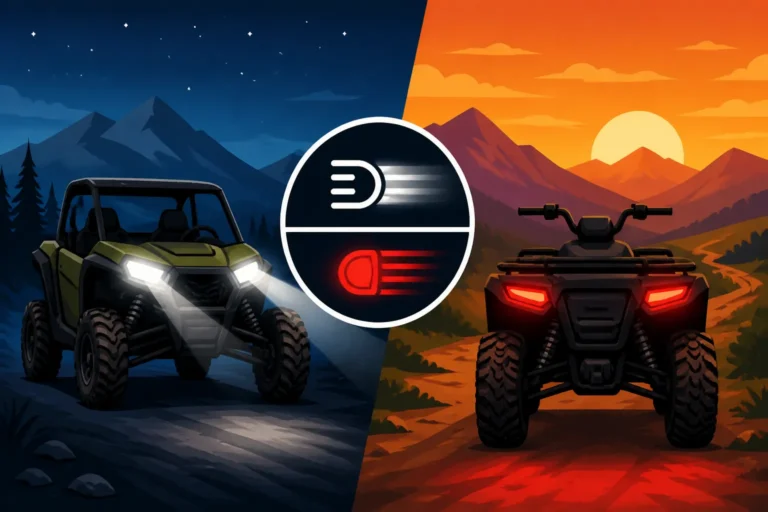
- Lights: You must have at least one headlight (white or amber) and at least one taillight (red), which must be on at all times when operating on public roads, regardless of daylight. In winter's often dim light and heavy precipitation, having bright, functioning lights is crucial. Consider additional LED light bars, like those offered by SuperATV, for enhanced visibility for yourself and to others.
- Brakes: Your machine must have a braking system capable of stopping it effectively. Winter roads with packed snow and ice demand peak performance from your brakes, so ensure they are well-maintained and free from any freezing.
- Mirrors: At least one rearview mirror is required. This is vital for situational awareness, especially if you're riding in a group or need to be aware of other vehicles approaching from behind in low visibility.
- Horn: A working horn is necessary to alert others to your presence.
- Muffler/Spark Arrester: To minimize noise and prevent wildfires, an adequate muffler and spark arrester are required. These are important year-round, but spark arresters are particularly critical even when snow is on the ground, as dry grasses can still ignite. [Mufflers and Spark Arresters in Montana] are a standard requirement.
- Helmet/Eye Protection: While adults over 18 are not mandated to wear a helmet on public roads, it is highly recommended, especially in winter conditions where falls can be more dangerous. Riders under 18 must wear a DOT-approved helmet and eye protection. [Montana Helmet Rules for Riders Under 18] apply universally. For winter, consider full-face helmets with heated shields to prevent fogging.
Understanding County-Specific Winter OHV Rules
While Montana has general statewide rules for OHV road access, it's the county and municipal level where things can get truly localized, especially in winter. Some counties might explicitly allow OHV use on all county roads unless otherwise posted, while others might restrict it to specific routes or during certain times of the year. During heavy snowfall, counties might prioritize snowplow operations, and OHV access could be temporarily suspended on certain roads to facilitate this work and ensure safety.
It's not uncommon for rural counties to be more permissive, while more populated areas or those with specific tourism-related concerns might have tighter restrictions. For instance, a county might issue a blanket order closing all unpaved forest roads during winter to prevent damage from freeze-thaw cycles or to protect wintering wildlife. Some smaller towns might have ordinances dictating where you can fuel up or park your OHV on their main street. Before you hit the trail – or the road, in this case – spend some time on the relevant county and city websites or even make a call to their public works department or sheriff's office. This proactive approach will prevent headaches and help foster a good relationship between riders and local communities. Knowing the rules where you plan to ride is crucial to avoiding a citation and ensuring your winter adventure stays fun and legal. [Sheriff Patrols on Montana OHV Routes] are something to be aware of, so knowing the rules is your best defense.
Rider Safety and Survival in Montana's Winter Backcountry
Montana winters are no joke. The beauty of a snow-covered landscape can quickly turn deadly if you're not prepared for the extreme cold, sudden weather changes, and the inherent isolation of many of the state's back roads. Your personal safety is paramount, second only to the machine's readiness.
Layering for Extreme Cold and Wind
Proper clothing is your first line of defense against hypothermia and frostbite. Forget your cotton hoodies; they absorb moisture and lose all insulating properties when wet. Instead, embrace the power of layers:
- Base Layer: Start with a moisture-wicking base layer, preferably merino wool or a synthetic blend. This pulls sweat away from your skin, keeping you dry.
- Mid-Layers: Add one or two insulating layers, like fleece or down vests/jackets. These trap warm air close to your body.
- Outer Shell: Finish with a waterproof and windproof outer shell. This is critical for blocking the biting Montana wind and keeping out snow and sleet. Look for features like sealed seams and adjustable cuffs.
Don't forget your extremities. Warm, waterproof gloves or mittens (with hand warmers inside) are essential. A good balaclava or neck gaiter will protect your face and neck from windburn and frostbite. Warm, waterproof boots are non-negotiable, and wool socks are far superior to cotton. Even if your UTV has a cab and heater, you'll still need appropriate layers for when you inevitably step out or if your heater fails. Remember, you'll be exerting yourself, so you need layers that you can adjust if you start to overheat, preventing sweat buildup.
Emergency Preparedness Kit Essentials
When you're far from paved roads and cell service in a Montana winter, your emergency kit isn't just a suggestion; it's a lifesaver. This should go far beyond your summer kit.
- Navigation: A reliable GPS device (like a dedicated unit or a phone with offline maps, fully charged with a power bank) is essential, along with a physical map and compass, and the knowledge to use them. Cell service is notoriously spotty in rural Montana.
- Communication: A satellite messenger (like a Garmin inReach or Spot device) is crucial for emergency communication outside of cell service.
- Shelter/Warmth: Emergency blankets, a bivy sack, or even a small tarp can provide critical shelter if you get stranded. A small, portable shovel is invaluable for digging out a stuck machine or creating a snow shelter. A supply of chemical hand and foot warmers can offer hours of relief.
- First Aid: A comprehensive first aid kit, tailored for cold-weather injuries (like frostbite), is a must.
- Tools/Repair: A basic tool kit for your machine, tire repair kit, zip ties, duct tape, and a small air compressor.
- Food/Water: High-energy snacks (nuts, granola bars, jerky) that won't freeze solid, and plenty of water in an insulated container to prevent freezing. Staying hydrated is important even in cold weather.
- Fire Starter: Waterproof matches, a lighter, and some tinder are critical for building a warming fire if needed.
- Illumination: A headlamp with extra batteries is vital for navigating in the dark or working on your machine.
- Signaling: A whistle and a signal mirror can help attract attention if you're in distress.
- Recovery Gear: Even with a winch, carry recovery straps, a snatch block, and shackles. [Recovery Gear for a Montana Shelf Road] is a good resource for specifics.
Remember, the goal is self-sufficiency. Help can be hours away, or even longer, in Montana's winter backcountry.
Group Riding Dynamics and Communication
Riding alone in winter, especially on less-traveled roads, is strongly discouraged. A breakdown, an accident, or getting stuck can quickly become a life-threatening situation if you're by yourself. If you must ride alone, ensure someone knows your exact route and expected return time, and carry a satellite messenger.
The ideal scenario is to ride with a group, ideally two or more machines. This provides safety in numbers and allows for mutual assistance. Establishing clear communication protocols beforehand is key. This could involve two-way radios, hand signals, or designated stops. Maintaining a visual on the rider in front and behind you is critical, especially in snowy or foggy conditions where visibility can change rapidly. If one rider gets stuck or has a mechanical issue, the group can assist, winch out a machine, or even share emergency supplies. Before you head out, have a designated leader and sweep rider, and discuss what to do in case of separation or emergency. This proactive approach ensures everyone in your group understands the risks and knows how to react, making for a safer and more enjoyable winter outing.
Navigating Specific Winter Road Scenarios
Montana's diverse landscape means you'll encounter a variety of road types, each presenting its own set of challenges and opportunities for winter OHV riding. Understanding how to approach each one is key to a safe and successful trip.
Riding Plowed County Roads
Plowed county roads are generally the most accessible for winter OHV riding. These are the arteries that connect small towns, ranches, and rural homes, and they receive regular attention from county road crews. However, "plowed" doesn't mean "dry and clear." As discussed, they often have a packed snow base, which can be slick, or even icy. Approach corners slowly, avoid sudden braking or acceleration, and always be prepared for changing traction. The edges of these roads can have high snow berms, especially near mailboxes or driveways, which might make pulling over difficult.
One significant consideration on plowed roads is other traffic. Cars and trucks will also be using these roads, often traveling at higher speeds than you might be comfortable with on an OHV in snowy conditions. Maintain a safe distance, use your lights, and be highly visible. Consider reflective tape on your machine or bright-colored riding gear. Be courteous and pull over safely to allow faster traffic to pass. Remember, [Montana County Treasurer OHV Registration] ensures your machine is street legal, but courtesy and caution are what truly ensure safety among varied traffic. Watch for black ice, particularly in shaded areas or on bridges, and give yourself ample braking room. Speed limits on these roads apply to OHVs just as they do to cars, and often, winter conditions necessitate traveling well below the posted limit.
Tackling Unplowed Forest Service or Logging Roads
This is where the true adventure of winter OHV riding often begins for many. Unplowed forest service roads, old logging routes, or even lesser-maintained county roads can offer breathtaking scenery and a sense of solitude. However, they also present the greatest challenges. Snow depth can be highly variable and unpredictable. What starts as a light dusting can quickly become several feet deep in drifts, especially in treed areas or canyons. Getting stuck is not a matter of "if," but "when." This is where your winch, recovery gear, and a riding partner become invaluable.
Before venturing onto an unplowed road, assess the snow depth. If it's consistently above your machine's ground clearance, or if you can't see the road surface at all, it might be wise to turn back. Hidden obstacles like rocks, stumps, or fallen timber can easily damage your machine or cause a rollover. Always proceed slowly, scouting the terrain ahead. When possible, follow existing tracks, but be aware they might be packed ice. Tire chains are often essential for these conditions, providing the necessary bite through snow and onto uncertain surfaces. Pay close attention to any signage indicating seasonal closures for wintering wildlife or road conditions; [Montana Rules on Forest Service Roads] are very specific. The reward for navigating these roads is often unparalleled access to pristine winter landscapes, but the risks are significantly higher.
Crossing Highways and Intersections in Winter
Even if you're primarily riding on county roads or forest service routes, you'll inevitably encounter situations where you need to cross or briefly ride on a major highway or at a busy intersection. These moments are high-risk, and winter conditions amplify the danger. Major highways are often plowed and sanded, but they can still have slick spots, and traffic generally moves at much higher speeds.
When approaching a highway crossing, come to a complete stop and visually confirm the absence of traffic from both directions, several times over. Your visibility, and the visibility of oncoming traffic, might be reduced by snow banks, blowing snow, or low sun angle. Use your turn signals well in advance and make your intentions clear. Accelerate smoothly and directly across the highway, avoiding any sudden maneuvers that could lead to a loss of traction. If you must ride briefly on a highway to connect to another road, stay as far to the right as safely possible, maintain your speed, and get off the highway as soon as you can. For intersections, be particularly wary of ice forming from snowmelt refreezing after plows have pushed snow to the sides. Always prioritize safety over convenience. If a crossing looks too risky, consider an alternative route, even if it adds miles. Your life and the lives of others depend on your judgment in these critical situations.
Disclaimer
This article is for general informational purposes only and does not constitute professional advice. Laws, prices and regulations vary by location and change over time. Consult a qualified professional for guidance on your specific situation.