Montana Rules at a Paved Highway Crossing
It's a familiar scenario for many of us who love exploring Montana's incredible backcountry on an ATV or UTV: you're having an amazing ride, the trail ends, and right in front of you is a paved highway, with another fantastic section of trail just on the other side. This moment can often bring a jolt of anxiety or frustration, as you know simply riding down the highway isn't allowed, but you also don't want to pack up and find an entirely new route just to bridge a small gap. This guide is here to unravel the often-confusing regulations surrounding off-highway vehicle (OHV) crossings on paved Montana highways, ensuring you stay legal and safe.
Understanding Montana's Rules for Crossing Paved Highways on an OHV
Montana's sprawling landscape offers incredible opportunities for ATV and UTV enthusiasts, but with that freedom comes the responsibility of understanding where you can and cannot ride, especially when it involves paved public roads. The rules around crossing paved highways with your OHV are very specific, and misunderstanding them can quickly lead to fines or, worse, dangerous situations. It's not about being overly restrictive, but about ensuring the safety of all road users, given the inherent differences between OHVs and highway-legal vehicles.
The Basic Principle: Crossing, Not Traveling
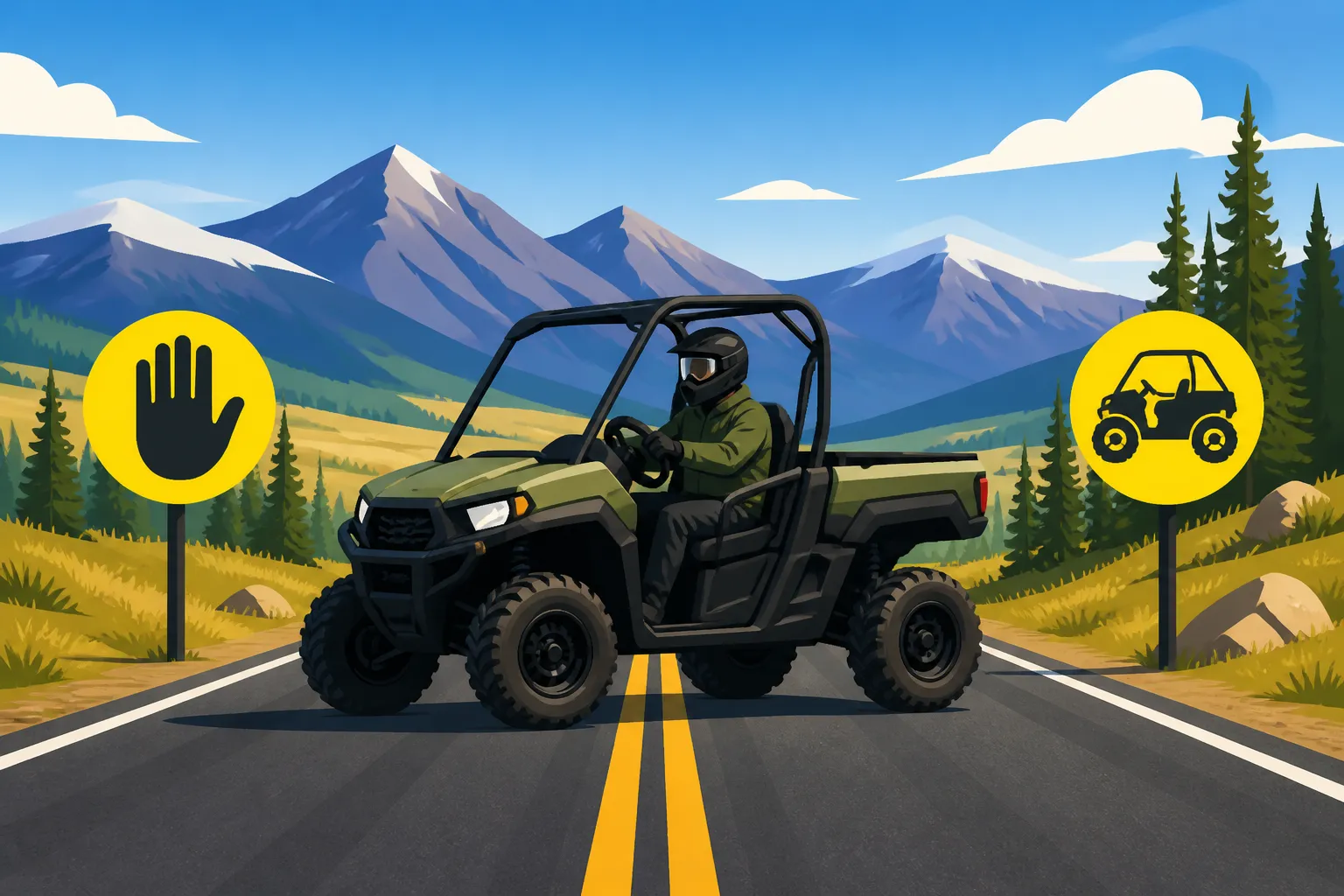
The core of Montana's OHV law regarding paved highways is simple yet often misunderstood: you are generally permitted to cross a paved highway, but not to travel on it. This distinction is absolutely critical. Imagine you're on a designated OHV trail that takes you through a forest, and suddenly it spits you out onto the edge of a two-lane state highway. You can see the continuation of the trail directly across the road, maybe 50 feet away. In this specific scenario, Montana law often allows you to make a direct, perpendicular crossing to reach the other side.
However, this doesn't mean you can turn right and ride down the shoulder for a quarter-mile to the next access point, or cruise into the nearest small town for lunch. Those actions would typically constitute illegal travel on the highway. Riders often get frustrated here because it feels like an arbitrary line, especially when the next trail access is just a stone's throw away down the pavement. But the law draws that line because OHVs are not designed for highway speeds, their tires have less grip on pavement, and they lack many of the safety features and visibility requirements of a street-legal vehicle. The intent is to allow you to bridge necessary gaps in the trail system, not to integrate OHVs into the regular flow of highway traffic.
Required Equipment for Any Road Interaction
Even for a brief crossing, your OHV needs to meet certain minimum equipment standards in Montana. This isn't just a suggestion; it's a legal requirement designed to make your machine as visible and safe as possible for a short interaction with paved roads. These requirements are in place because you're momentarily sharing space with vehicles that are often much larger and traveling at higher speeds.
Before you even think about approaching a paved highway to cross, double-check that your machine is equipped with:
- Headlights: Must be on, even during daylight hours, for maximum visibility. [Headlight and Taillight Rules in Montana]
- Taillights: Functioning taillights are crucial, especially if you're crossing a road where visibility might be limited by dust, weather, or time of day.
- Brakes: A reliable braking system is non-negotiable. You need to be able to stop quickly and safely if traffic dictates.
- Muffler: Your machine must have a muffler that is in good working order and effectively limits engine noise. Excessive noise can be a nuisance and draw unwanted attention.
- Spark Arrester: A spark arrester is essential on all public lands to prevent wildfires. While not directly for road safety, it's a critical piece of equipment for trail use that often precedes or follows a road crossing.
Beyond these basics, consider adding extra visibility aids. Aftermarket accessories from brands like SuperATV can significantly enhance your machine's safety profile, offering brighter LED lighting kits, turn signals (even if not strictly required for a crossing, they add clarity), and mirrors for better situational awareness. While you might not be doing sustained road travel, anything that increases your visibility to fast-moving traffic is a wise investment.
Driver's License and Age Requirements
Another crucial aspect of legal highway crossings involves the operator. It's not just about the machine; it's about who's behind the wheel. In Montana, if you are operating an OHV on a public road, even for a crossing, you generally need to possess a valid driver's license. This means that young riders who might be perfectly legal on trails under supervision, or on private land, often cannot make these public road crossings.
For riders under 16, there are strict rules. For instance, [Montana Rules for a 12-Year-Old on a Road] specify that a 12-to-15-year-old needs to complete an OHV safety education course and be accompanied by a licensed adult to operate on public roads where permitted. However, even with these provisions, the state highway crossing rules can add another layer of complexity. If a road is generally open to OHVs, then the age and license rules apply. But for state highways primarily allowing only crossing, the driver's license requirement for the operator typically holds true regardless of age, as this is considered interaction with a high-traffic roadway. Always ensure that the operator has the appropriate licensing and is of legal age to drive a motor vehicle on public roads.
Safety Protocols and Best Practices for Highway Crossings
Crossing a paved highway, even for a short distance, introduces an element of risk that's far greater than what you typically encounter on a trail. Highway vehicles are faster, heavier, and drivers may not expect an OHV to suddenly appear. Because of this, it's paramount to adopt a set of strict safety protocols to ensure everyone's well-being. Think of it less like an extension of your trail ride and more like a brief, high-alert maneuver.
Approaching the Paved Road Safely
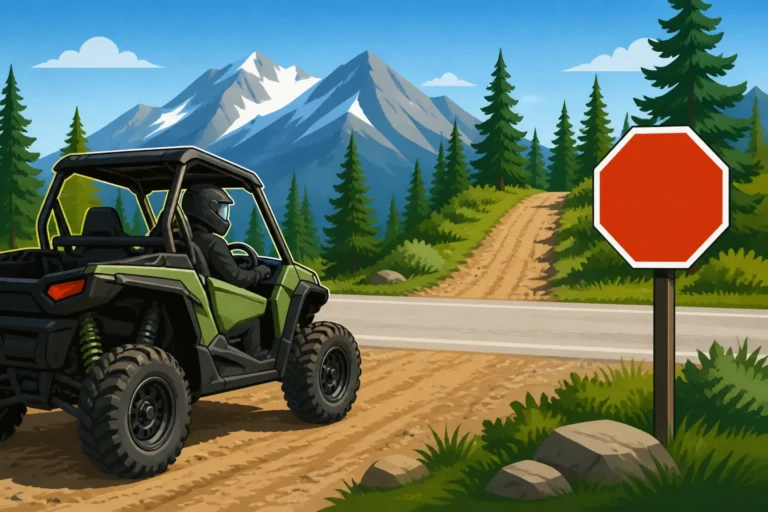
Your approach to the highway is the first critical step. Never barrel out of a trail onto a paved road without pausing. Just as you would at any intersection, bring your OHV to a complete stop before the edge of the pavement. Take a moment to assess the traffic in both directions. Remember, an OHV is much smaller and less visible than a car or truck, especially at highway speeds. Drivers may not see you immediately, or they might misjudge your speed and intentions.
Look, listen, and look again. Make eye contact with any approaching drivers if possible, to confirm they've seen you. Waiting for a clear, substantial gap in traffic is not just polite; it's a life-saving measure. Don't assume you can "gun it" and make it across before an approaching vehicle arrives. Their closing speed will be much faster than you anticipate. This moment of patience can prevent a serious accident and save you from potential [Montana Fines for Illegal Road Riding].
Making the Crossing Quickly and Directly
Once you've determined that it's safe to cross, the maneuver itself should be swift, direct, and unambiguous. You need to cross the highway as close to perpendicularly as possible. This means driving straight across the lanes to reach the opposite shoulder or trail access. Do not drive diagonally. Do not weave. Do not accelerate excessively in an attempt to "beat" traffic.
The goal is to minimize the time your OHV spends on the paved surface where it is most vulnerable. Avoid any actions that could be interpreted by other drivers as turning onto the highway or traveling along its length. If you're riding in a group, it's generally safest to cross one at a time, allowing each rider to focus entirely on their own crossing and ensuring a clear path. Communicate clearly with your fellow riders about when it's safe to proceed.
What NOT to Do: Common Mistakes
Even experienced riders can sometimes make critical errors when dealing with paved highways. Being aware of these common pitfalls can help you avoid them:
- Driving Down the Highway: The biggest mistake is treating the highway as a short cut. You might think, "It's only a hundred yards to the next trail entrance, what's the harm?" The harm is that you're operating a vehicle not designed for highway conditions, risking a collision, and violating the law. [Crossing US-93 on an OHV] specifically addresses this; you can cross, but you cannot travel along it.
- Assuming Visibility: Just because you have your headlights on and your machine might be brightly colored doesn't mean highway drivers will see you. Distracted driving is a serious issue, and an OHV merging or crossing is a novel sight that drivers might not register quickly enough.
- Lingering on the Shoulder: Don't stop and hang out on the shoulder of a busy highway. Get across and off the paved surface as quickly and safely as possible. The shoulder is meant for emergencies, not for staging your next trail segment.
- Ignoring Local Ordinances: While state law dictates general crossing rules, some municipalities or counties might have specific, stricter rules, even concerning approaches to state highways within their jurisdiction. Always be aware of local postings.
By strictly adhering to these safety protocols, you minimize risk and demonstrate responsible OHV use, which is beneficial for the entire riding community in Montana.
Navigating Specific Highway Types and Intersections
Not all paved roads are created equal, and Montana's rules reflect this. Understanding the nuances between different types of highways and roads is crucial for any OHV rider planning to connect trails via a crossing. While the general principle of "crossing, not traveling" applies broadly, the specifics of enforcement and danger can vary significantly.
Crossing State Highways (e.g., US-93, US-2)
Montana's state highways, like the scenic US-93 cutting through western Montana or US-2 spanning the northern part of the state, are typically high-traffic routes with higher speed limits. These are the roads where the "crossing only" rule is most strictly enforced and where the danger is highest. For an OHV, crossing such a highway means:
- Direct Passage Only: Your goal is to get from one side to the other in the most direct line possible. You cannot turn and drive parallel to the highway, even for a short distance on the shoulder. This is a critical legal distinction.
- High Visibility is Key: Ensure all your lights are functioning and on. Consider adding a whip flag, especially if visibility around the crossing point is limited by terrain or vegetation. Using quality aftermarket components, perhaps from SuperATV, can help ensure your lights are bright and reliable for these crucial moments.
- Be Patient: Traffic on state highways moves fast. Waiting for a large, clear gap is essential. Never rush a crossing. If there's an intersection with a stop sign or traffic light, treat it as you would in any other vehicle.
- Understand Jurisdiction: While it's a state highway, local law enforcement (county sheriff, state patrol) will enforce these rules.
Again, the purpose of allowing these crossings is to facilitate continuous trail riding, not to open up state highways for OHV travel. Penalties for violating these rules can be substantial and can include fines for illegal operation on a roadway.
Interstates Are a Hard No
Let's make this crystal clear: Interstate highways in Montana are absolutely off-limits for OHVs, under any circumstances, including crossing. There is no provision in Montana law that allows an ATV or UTV to operate on or cross an Interstate highway. These are high-speed, limited-access roads designed exclusively for highway-legal vehicles, and the risks associated with an OHV attempting to use them are catastrophic.
This means you cannot even make a quick dash across an Interstate exit or entrance ramp if it's considered part of the Interstate system. If your trail system is divided by an Interstate, you must find an alternate route that does not involve any part of the Interstate highway. This might mean trailering your machine a short distance, or finding a county road that bridges the gap. Trying to shortcut across an Interstate, even for a fleeting moment, is incredibly dangerous and will almost certainly result in severe legal consequences, including significant fines and potential criminal charges. [Crossing an Interstate on a Quad] is a situation to avoid at all costs.
Understanding Local Ordinances and Permissions
While state law governs major highways, local jurisdictions – counties and cities – have significant authority over roads within their boundaries. This means that while you might be allowed to cross a state highway, the roads leading to or from that crossing point might have their own specific rules.
- County Roads: Many [Which Montana Roads Allow OHVs] are county roads, where local county commissioners have the power to designate them as open or closed to OHVs. [County Commissioners and Montana County Roads] play a vital role in determining where you can ride. If you need to use a county road to connect to a highway crossing point, ensure that particular county road is legally open to OHV use.
- City Streets: Some progressive Montana towns have adopted ordinances allowing OHVs on their streets, often with specific speed limits and equipment requirements. [Montana Towns That Allow OHVs on Their Streets] are typically trail-friendly communities. If your planned crossing is within city limits, double-check that you can legally access the highway via city streets. Never assume; check local signs or municipal websites.
The takeaway here is that while the state sets the overarching rules, local governance can add layers of permission or restriction. Always be aware of the specific signs and local ordinances in the area you are riding.
Beyond the Crossing: When Road Riding IS Permitted
While the focus has been on the restrictive nature of paved highway crossings, it's important to remember that not all road riding in Montana is forbidden. There are specific scenarios where OHVs are legally permitted to operate on public roads, albeit with their own set of rules and requirements. Understanding these distinctions helps clarify when you can truly enjoy your machine on a road, and when you must remain strictly on the trails.
County Roads and Designated OHV Routes
This is where the distinction between "highway" and "road" becomes critical. Many county roads in Montana, particularly in rural or less populated areas, are designated as open to OHVs. These are often gravel or dirt roads, but can sometimes include paved sections within the county system, depending on local ordinances. The decision to open a road to OHV traffic typically rests with the local county commissioners, who consider factors like safety, traffic volume, and community impact.
When a county road is open to OHVs, you'll generally find signage indicating this. On these roads, you might be allowed to travel for longer distances than a mere crossing, but you're still expected to adhere to specific rules:
- Speed Limits: Posted speed limits for OHVs on these roads are often lower than for other vehicles.
- Equipment: The same equipment requirements for crossing (headlights, taillights, brakes, muffler, spark arrester) apply, and sometimes additional items like mirrors and turn signals might be required for sustained travel. SuperATV, for instance, offers street-legal kits that can help equip your UTV for these broader road-riding permissions.
- Driver's License: A valid driver's license is almost universally required for operation on any public road open to OHVs.
- Registration and Decals: Your OHV must be properly registered with the state, and current decals must be displayed. [Montana OHV Registration Cost at the Treasurer] is a small price to pay for legal access.
These designated routes are a fantastic way to connect larger trail systems or access scenic points, offering a different kind of riding experience than dense forest trails.
Farm and Ranch Exemptions
Montana, with its vast agricultural lands, has some specific exemptions for OHVs used for farming and ranching purposes. These machines, when used strictly for agricultural work, can sometimes operate on public roads for short distances without needing full registration or meeting all the typical OHV road-use requirements. [Montana Agricultural Road Exemptions] are designed to allow farmers and ranchers to move their equipment efficiently between fields, barns, or to access leased lands.
However, these exemptions are not a free pass for recreational riding. The machine must be actively engaged in agricultural work, and the operator must be traveling the most direct route. If you're heading out for a leisurely ride after chores, even on your property, you need to ensure your machine and operation comply with the standard OHV rules for public land and road use. Misusing these exemptions can lead to fines and erode public trust, potentially jeopardizing future access for legitimate agricultural users.
Always Carry Your Paperwork
Whether you're making a quick highway crossing, cruising a designated county road, or even just riding a trail, it is absolutely imperative to carry all your relevant paperwork with you. This includes:
- Proof of Ownership: A bill of sale or title.
- Registration: Your current OHV registration.
- Driver's License: A valid driver's license for the operator.
- Proof of Insurance: If required for road use (though not always for just crossing).
- OHV Safety Certificate: If you are a minor or otherwise required.
Montana wardens, county deputies, and state patrol officers frequently conduct checks, especially in popular riding areas. Being able to readily produce your paperwork demonstrates compliance and can save you a lot of hassle. [Do You Carry Paperwork on a Montana Trail?] Yes, you absolutely should. Keep it in a waterproof bag on your machine, or a copy on your person.
| Action / Requirement | Allowed for Paved Highway Crossing? | Allowed for Designated County Roads? | Remarks |
|---|---|---|---|
| Direct Crossing | Yes | N/A (for continuous travel) | Must be perpendicular and quick. |
| Travel Along Road | No | Yes (if designated) | Strict "no" for state highways. Check local ordinances for county roads/city streets. |
| Interstate Use | Absolutely No | Absolutely No | Never, under any circumstances. |
| Valid Driver's License | Yes | Yes | Required for operator on all public roads. |
| OHV Registration | Yes | Yes | Machine must be properly registered and decals displayed. |
| Headlights On | Yes | Yes | Mandatory for all public road interaction. |
| Taillights On | Yes | Yes | Mandatory for all public road interaction. |
| Brakes | Yes | Yes | Must be in good working order. |
| Muffler & Spark Arrester | Yes | Yes | Required on all public lands; also for road interactions. |
| Helmet (Under 18) | Yes | Yes | [Montana Helmet Rules for Riders Under 18] applies. |
| Eye Protection | Yes | Yes | Recommended always; legally required in some road-riding scenarios. |
| Carry Paperwork | Yes | Yes | License, registration, proof of ownership. |
Crossing paved highways in Montana on your ATV or UTV can be a necessary part of connecting trails and enjoying the full scope of what the state has to offer. By understanding and strictly adhering to the rules, exercising extreme caution, and ensuring your machine and yourself are properly equipped, you can navigate these brief interactions safely and legally. Always prioritize safety, stay informed about local regulations, and ride responsibly.
Disclaimer
This article is for general informational purposes only and does not constitute professional advice. Laws, prices and regulations vary by location and change over time. Consult a qualified professional for guidance on your specific situation.