Montana Rules for a Rider Who Turns 16
It can be incredibly confusing to figure out the exact rules for riding an ATV or UTV on Montana's roads and trails, especially as your child approaches a new milestone like turning 16. The transition from specific youth rider regulations to what seems like more adult freedom often comes with its own set of questions and uncertainties about licenses, safety courses, and where they can legally go. This guide will meticulously break down the Montana rules for a rider who turns 16, helping you understand how their eligibility changes and what new responsibilities come with this age.
Navigating the Driver's License Question at 16
One of the biggest questions that comes up when a rider turns 16 in Montana, especially concerning operating an OHV on public roads, is how their new driving privileges interact with existing OHV laws. It's a common misconception that simply having a driver's license automatically grants full freedom to operate any OHV anywhere. The reality is a bit more nuanced, as Montana has specific requirements for off-highway vehicles that don't always align perfectly with standard motor vehicle laws.
The Standard Driver's License and OHVs
Once a rider turns 16 and obtains a standard Montana driver's license, many of the restrictions related to age for operating an OHV on designated public roads are lifted. Prior to this, riders often need to complete a safety course and operate under adult supervision on public lands and certain roads. With a driver's license in hand, the 16-year-old can now operate a street-legal OHV on roads where OHV use is permitted, similar to an adult. This is a significant change, as it means they can, in many areas, drive their side-by-side into town for supplies or to access a trailhead without needing a parent right beside them, provided the machine is properly equipped and the road allows it.
However, possessing a driver's license doesn't negate the need for the OHV itself to be street-legal. This means it must be properly registered, carry the required safety equipment like headlights, taillights, brake lights, mirrors, and a horn, and often a spark arrester if riding on public lands. [What Montana Requires on an OHV Road Ride] covers these equipment specifics. The driver's license addresses the operator's eligibility, but the machine's legality remains paramount. Think of it like this: a 16-year-old with a driver's license can drive a car on any public road, but they can't drive a dirt bike on a paved highway just because they have a license. The vehicle itself must meet the road-legal criteria.
What About a Learner's Permit or Provisional License?
A common area of confusion arises with learner's permits or provisional licenses. In Montana, simply holding a learner's permit is generally not sufficient to operate an OHV on public roads without the direct supervision of a licensed adult. The intent of a learner's permit is to allow practice driving a standard motor vehicle under specific conditions, not to grant independent operation of OHVs on public roads. Therefore, if your 16-year-old has only a learner's permit, they would still largely fall under the same supervision requirements as younger riders when attempting to access roads with an OHV.
For those with a provisional or graduated driver's license, the rules can be a bit more ambiguous, but the safest interpretation is to assume that the same restrictions that apply to driving a car with a provisional license would extend to OHV operation on roads. This might include restrictions on passengers, night driving, or specific routes. Always check with the local county or municipal ordinances if your 16-year-old has a provisional license and intends to ride an OHV on their roads. The key takeaway is that for full independent road access with an OHV, a standard, unrestricted driver's license is the clearest path. [Driver's License Rules for Montana Road Riding] offers more insight into these nuances.
OHV Safety Education: Does it Still Apply at 16?
Montana places a strong emphasis on safety education, particularly for younger riders. This is designed to ensure that operators understand responsible riding practices, trail etiquette, and the laws governing OHV use. As a rider turns 16, the role of the safety certificate can change, especially once they obtain a driver's license. It’s important to understand these shifts to ensure your rider remains compliant.
The Montana OHV Safety Certificate for Young Riders
Prior to turning 16 and obtaining a standard driver's license, riders in Montana who are between the ages of 12 and 15 are generally required to complete an approved OHV safety education course if they wish to operate an OHV on public lands or roads, even under supervision. This requirement ensures a baseline of knowledge and responsibility for these younger operators. [Montana Age Rules for Riders Under 16] elaborates on the specifics for this age group. The certificate is a tangible piece of proof that they've met this educational standard.
This course covers a wide range of topics, from basic machine operation and maintenance to environmental awareness and state-specific laws. For many families, completing this course is a rite of passage, instilling good habits early on. Even if a 16-year-old already has a driver's license, having completed an OHV safety course earlier in their riding career is always beneficial, as it provides specialized knowledge beyond what a typical driver's ed course would cover for off-highway vehicles. It's about knowing the terrain, understanding machine limitations, and being a good steward of the land.
When a Driver's License Takes Over
Here's where the change really kicks in: once a rider turns 16 and possesses a valid, standard Montana driver's license, the specific requirement for an OHV safety education certificate for operation on roads and trails generally becomes optional. The state views a standard driver's license as sufficient proof of an operator's general understanding of traffic laws and responsible vehicle operation. Essentially, the driver's license supersedes the need for the OHV safety certificate for those 16 and older when it comes to riding on designated public roads where OHVs are permitted.
However, this doesn't mean the knowledge gained from a safety course is useless. Far from it. While not legally mandatory for a 16-year-old with a driver's license, continuing education or simply retaining the lessons from a safety course is highly recommended. The skills learned about navigating varied terrain, environmental impact, and specific OHV-related regulations are invaluable, especially since many driver's education courses don't delve into the unique challenges of operating an ATV or UTV. [Montana's Safety Education Requirement] provides more context on the general rules. A 16-year-old with a driver's license and a safety certificate is undoubtedly a more prepared and safer rider. If you're going to [Carrying a Safety Certificate on a Road Ride], it might as well be because you took the course.
Helmet, Eye Protection, and Other Gear for a 16-Year-Old Rider
Safety gear is a non-negotiable aspect of OHV riding, regardless of age. While some states have differing helmet laws based on age, Montana's approach to helmets and other protective equipment for young riders on OHVs has specific stipulations that transition as a rider gets older. Understanding these rules ensures your 16-year-old is not only safe but also compliant when hitting the trails or designated roads.
Helmet Requirements for a 16-Year-Old
In Montana, all OHV operators and passengers under the age of 18 are required to wear a safety helmet that meets specific standards, such as those set by the U.S. Department of Transportation (DOT), when operating or riding an OHV on public lands or roads. This means that a rider who just turns 16 still falls under this helmet mandate. Even if they have a standard driver's license, the helmet rule for minors remains in effect until their 18th birthday. This is a critical point that sometimes gets overlooked, as many assume that turning 16 and getting a driver's license instantly equates to adult privileges in all aspects, including helmet choice.
For parents, this means continuing to enforce helmet use for your 16-year-old, not just for compliance but for their undeniable safety. A proper helmet can be the difference between a minor bump and a serious head injury. Brands like SuperATV offer a range of accessories that can enhance safety, from protective gear to mirrors that improve visibility, though they don't typically sell helmets themselves. Ensuring the helmet fits properly, is in good condition, and meets the DOT standard is paramount. [Montana Helmet Rules for Riders Under 18] delves deeper into these requirements, and it's important to note the distinction from [Montana Helmet Law for Riders Over 18], which generally makes helmets optional for adults.
Eye Protection and Other Essential Gear
Beyond helmets, eye protection is also crucial, especially when riding an OHV where dust, debris, and insects are common. While the specific legal requirement for eye protection might not be as strictly tied to age as helmets are, it is a fundamental safety practice. Goggles or a face shield on a helmet are highly recommended for all riders, including 16-year-olds, to prevent eye injuries and maintain clear vision, which is essential for safe operation. Imagine a branch smacking you in the eye or dust blinding you on a corner—eye protection prevents these common hazards.
Furthermore, other essential gear includes sturdy over-the-ankle boots, long pants, a long-sleeved shirt, and gloves. This attire helps protect against scrapes, abrasions, and minor impacts, offering a layer of defense that street clothes simply can't provide. For machines that are used on roads, ensuring the OHV itself has all the necessary road-legal equipment, such as proper lighting and mirrors, is also part of being well-equipped. [What Montana Requires on an OHV Road Ride] details the specific vehicle equipment. For riders exploring trail systems, packing a basic first-aid kit, a small toolkit for minor repairs, and navigation tools like a physical map or a reliable GPS app is also highly advised. Being prepared means being safe, no matter the age.
Road Access and Machine Operation for a 16-Year-Old
Turning 16 often brings a sense of expanded freedom, and for OHV enthusiasts, this includes increased access to Montana's diverse network of roads. However, this access isn't universal, and there are specific rules about where and how a 16-year-old can operate their ATV or UTV on public thoroughfares. Understanding these distinctions is key to legal and responsible riding.
Allowed Roads and Municipal Ordinances
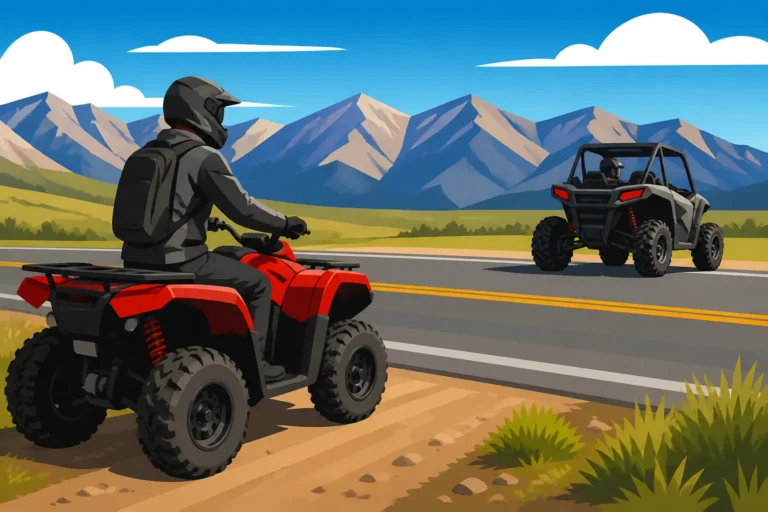
When a 16-year-old has a valid Montana driver's license, they generally gain the privilege to operate a properly equipped, street-legal OHV on any public road where OHV use is specifically permitted by local or state statute. This is a critical distinction: just because a road is public doesn't automatically mean OHVs are allowed. Montana law allows counties and municipalities to open certain roads to OHV traffic, often for purposes like connecting trails or providing access to services. [Montana Roads That Allow OHVs] explores this topic in more detail. Many of these roads are county roads or city streets in smaller, trail-friendly towns.
It's imperative to remember that interstates and most state highways are almost universally off-limits to OHVs. The permission to ride on public roads typically applies to lower-speed county and forest service roads. Before any ride, especially if it involves road sections, always check the local ordinances of the specific county or town. Many towns, especially those that cater to outdoor recreation, have specific ordinances detailing which streets are open, the hours of operation, and any additional equipment requirements. [Montana City Streets and Municipal Ordinances] provides guidance on navigating these local rules. Always be on the lookout for signage that explicitly permits or prohibits OHV use.
Machine Requirements for Road Use
Beyond the operator's age and license status, the OHV itself must meet stringent requirements to be considered "street legal" in Montana. For a 16-year-old to legally operate their machine on permitted roads, it must have:
- Headlights (with high/low beam capability)
- Taillights and brake lights
- At least one mirror (most commonly a rearview mirror)
- A horn
- Turn signals (if required by local ordinance, though often highly recommended for safety)
- A license plate and current registration decal
- A spark arrester if riding on public lands
- Proper tires (not excessively aggressive treads that damage pavement)
Many enthusiasts customize their machines to meet these requirements. Aftermarket parts manufacturers, like SuperATV, offer a wide range of accessories specifically designed to convert off-road machines into street-legal vehicles, from full street-legal kits with lights and turn signals to mirrors and horns. These components are essential for safety and compliance, especially when merging with other traffic on a county road. For instance, having clear, bright [Lights On at All Times in Montana] is crucial for visibility. Also, don't forget the importance of [Mufflers and Spark Arresters in Montana] for noise control and fire prevention, particularly when moving between trails and roads. Ensuring the machine is fully compliant means less hassle and a safer ride for your 16-year-old.
Disclaimer
This article is for general informational purposes only and does not constitute professional advice. Laws, prices and regulations vary by location and change over time. Consult a qualified professional for guidance on your specific situation.