Montana Rules on Rail-Trails
Navigating Montana's vast and diverse landscapes on an ATV or UTV is one of life's great pleasures, but figuring out where you can and cannot ride can sometimes feel like solving a complex puzzle. One area that causes a lot of head-scratching for off-highway vehicle (OHV) enthusiasts is the question of rail-trails. These unique corridors, repurposed from old railroad beds, offer incredible scenic beauty, but their rules for motorized access are often misunderstood, leading to potential fines or unintentional conflict with other users. This guide is here to untangle the complexities of Montana's rail-trails and help you understand when, where, and if your machine can legally traverse them.
What Exactly are Montana's Rail-Trails?
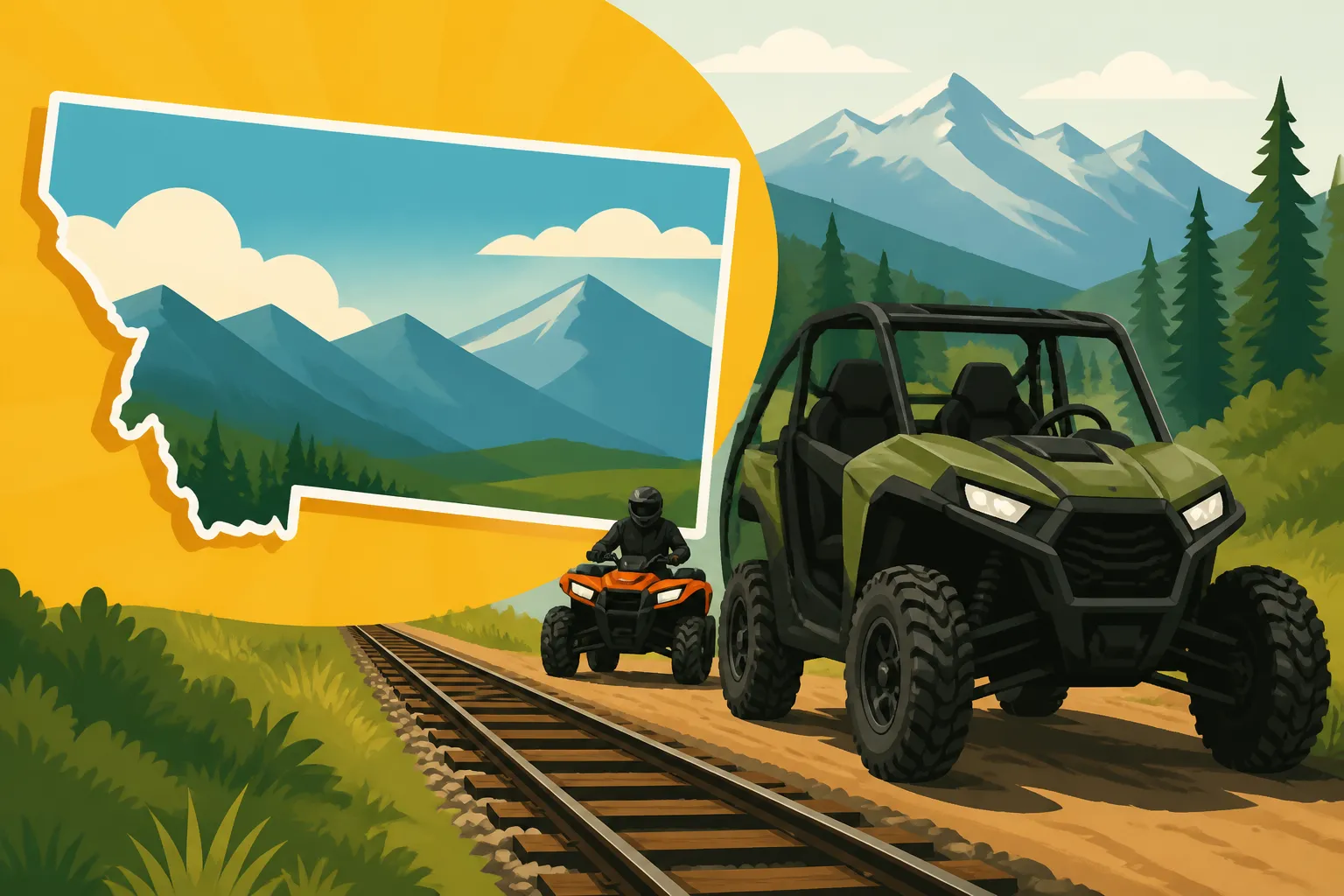
Imagine old train tracks, once humming with the rumble of locomotives carrying lumber or grain, now silent. Over time, many of these abandoned railway lines have found new life as "rail-trails" or "rail-to-trail" conversions. These are essentially linear parks or corridors, often quite long and relatively flat, that offer a unique way to experience Montana's natural beauty and history. But just because a trail follows an old rail bed doesn't mean it's open to all forms of recreation.
The Concept of Rail-Trails and Their Origins
The rail-trail movement picked up steam across the country as old railway lines were decommissioned. Instead of letting these valuable corridors revert to private ownership or simply sit unused, communities saw an opportunity to create multi-use pathways. In Montana, these trails wind through everything from dense forests to wide-open plains, often connecting small towns or natural areas. They typically prioritize non-motorized uses like walking, running, biking, and sometimes even horseback riding.
It's easy for an ATV or UTV rider to see a long, flat, well-maintained gravel path and think, "This looks like a perfect place to ride!" This is where the frustration often begins, because the appearance can be deceiving. The core philosophy behind most rail-trails is to provide a quiet, accessible pathway for human-powered recreation, fostering a sense of peace and natural immersion. While many of us find peace and immersion on our machines, that's not usually the specific intent behind a rail-trail's creation.
Who Manages Montana's Rail-Trails?
The biggest reason for the varied rules is that different entities manage Montana's rail-trails. It’s not a one-size-fits-all situation, and that's where the confusion truly sets in. You might have a rail-trail that is part of a state park system, managed by Montana Fish, Wildlife & Parks (FWP). Another section could fall under a county parks department, or even a local city. If a rail-trail happens to cross or exist within federal lands, such as a National Forest or Bureau of Land Management (BLM) area, then federal regulations come into play.
Each of these managing bodies has its own set of regulations and policies regarding what activities are permitted. What's allowed on one FWP-managed trail might be strictly prohibited on a county-managed trail just a few miles away. This patchwork of jurisdictions means that a rider absolutely cannot assume that access rules are consistent from one rail-trail to another, or even along different segments of the same long rail-trail. It really pays to do your homework and understand who is in charge of the specific section you're interested in.
The Complex Legalities of OHV Access on Rail-Trails
This is where things get particularly tricky for ATV and UTV owners. While Montana is generally a fantastic state for OHV riding, that freedom doesn't automatically extend to rail-trails. The legal framework is layered, often involving both state statutes and highly localized rules.
State Law vs. Local Ordinances
Montana has statewide laws governing OHV operation, covering everything from [Registering an OHV in Montana] to age restrictions for riders ([Montana Age Rules for Riders Under 16]). However, these general laws often delegate authority to local jurisdictions or land management agencies to create more specific rules for trails and land parcels within their control. This means that while a state law might define an OHV, it doesn't necessarily dictate where it can or cannot go on every inch of public land.
For rail-trails, local control is often the dominant factor. A county commission or a city council can pass an ordinance that explicitly prohibits motorized vehicles on a rail-trail within their jurisdiction. These local rules often supersede or add to state laws. So, even if your side-by-side meets all the requirements to be considered "street legal" in Montana, that doesn't grant you carte blanche to ride it on a rail-trail that has been designated non-motorized by the local authority. It's a common misconception that if your machine can technically go on a paved road, it can go on any trail, but this is rarely the case for rail-trails.
Explicit Prohibitions and Permitted Sections
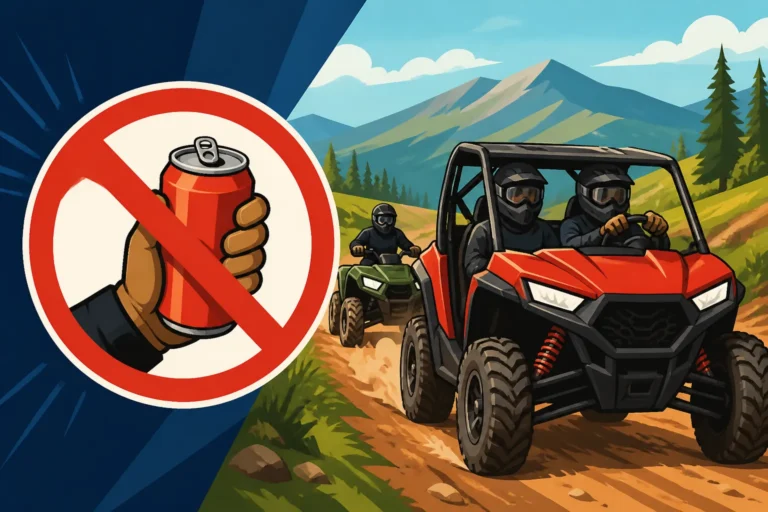
The vast majority of designated rail-trails in Montana are explicitly non-motorized. You'll often see signage at trailheads clearly stating "No Motorized Vehicles," sometimes with specific pictograms for ATVs or UTVs. Ignoring these signs can lead to fines and, more importantly, create friction with other trail users who expect a quiet, motor-free experience. Wardens and local law enforcement often patrol these areas, and they are usually not keen on warnings when it comes to clear violations.
However, there are rare exceptions. Sometimes, a section of an old rail bed might also be part of a larger designated multi-use trail system that does allow OHVs, or it might function as a connecting route between two legal OHV areas. This is often the case on federal lands, where the Forest Service or BLM has specific Motor Vehicle Use Maps (MVUMs) that detail exactly which routes are open to motorized travel. If a rail-trail segment is marked on an MVUM as open, then you're likely in the clear. But this is the exception, not the rule, and it typically requires very specific planning and verification. You really need to check the official maps, like a [Reading a Montana Motor Vehicle Use Map], for the exact area you plan to ride.
Practical Guidance for Riding Near or On Rail-Trails
Given the complex nature of rail-trail access, approaching them requires a strategic and cautious mindset. The key is never to assume and always to verify.
Identifying Allowed Connections and Crossings
While riding on a rail-trail for extended periods is generally prohibited, there might be situations where you encounter one as part of a larger, legal OHV route. For example, a designated OHV trail could temporarily merge with or cross a rail-trail for a very short distance, perhaps to utilize an old railroad bridge over a river before immediately diverging again onto another legal OHV path. In these specific, marked instances, the rail-trail serves as a necessary connector, not a riding destination itself.
When such a connection or crossing is permitted, the rules usually require you to treat it like a public road crossing: come to a complete stop, yield to all other users (pedestrians, cyclists, horses), and proceed with extreme caution and at the lowest possible speed. The goal is to minimize your impact and maintain safety for everyone. You are not meant to ride down the rail-trail; you are simply using a specific, marked portion to get from one legal motorized route to another. Always look for clear signage or markings that specifically designate motorized use for that particular segment. If you're not seeing explicit allowance, assume it's off-limits.
What to Do Before You Ride
The single most important piece of advice when considering rail-trails is to do your homework before you ever load your machine onto the trailer. Don't rely on hearsay or outdated information.
- Check Official Maps: For federal lands, this means consulting the relevant MVUM. For state parks, check the Montana FWP website. For county or city trails, look up their parks and recreation department websites. Many trails now have online maps that clearly delineate allowed uses.
- Look for Local Ordinances: A quick search for the specific county or city's OHV ordinances can clarify local restrictions.
- Contact the Managing Agency: If you're still unsure, call the local FWP office, Forest Service district, or county/city parks department. Get a clear answer directly from the source. It’s better to make a phone call than to pay a hefty fine later.
- Observe Signage: Once you're on the ground, always respect posted signs. They are the final word for that specific location.
- Use Mapping Apps: Tools like onX Offroad can be incredibly helpful for identifying legal OHV trails, and often include overlays for public land boundaries and trail designations. While these are fantastic resources, they should always be cross-referenced with official agency maps, especially concerning specific rail-trail rules. When you're out there, having the right gear is crucial for all types of terrain, and many riders rely on robust components like those from SuperATV to ensure their machine can handle whatever a legal trail throws at it.
- Carry Required Documents: Ensure you have your [Keeping Registration Papers on the Machine] and any other necessary permits for legal OHV riding in Montana. This won't make a prohibited trail legal, but it ensures you're ready for any authorized sections.
The Importance of Respect and Stewardship
Riding ATVs and UTVs in Montana is a privilege, not a right, and that's especially true when we consider shared-use areas like rail-trails. Responsible riding and a strong sense of stewardship are essential for preserving access for everyone, including ourselves.
Why Rules Exist: Safety and Conservation
The rules prohibiting OHVs on most rail-trails aren't meant to be arbitrary; they're in place for very good reasons.
- Safety for All Users: Rail-trails are often frequented by families with small children, elderly walkers, and cyclists who expect a quiet, slow-moving environment. The speed and noise of an OHV, even a carefully driven one, can be startling or even dangerous in these contexts. Imagine a blind corner with a family on bicycles and your UTV. It’s a recipe for an accident.
- Minimizing Environmental Impact: While OHVs are designed for off-road use, continuous use on soft or narrow rail-trail surfaces can lead to erosion, dust, and habitat disturbance. The compact nature of old railroad beds can also make them susceptible to damage from heavier, knobby-tired machines.
- Preserving the Experience: Many people seek out rail-trails specifically for their peaceful ambiance, the opportunity to enjoy nature without the sounds of engines, and the connection to history. Allowing motorized vehicles fundamentally alters that experience for a large segment of users.
It's natural to feel frustrated when a beautiful trail is off-limits to your machine. However, understanding the rationale behind these rules can help foster acceptance and encourage riders to seek out the many miles of designated OHV trails that are available, like those found in the [Montana's National Forest Trail Systems].
The Future of OHV Access and Rider Advocacy
The future of OHV access on public lands, including potential connections with rail-trails, largely depends on the responsible actions of riders today. When riders consistently respect signage, stay on designated routes, and maintain a courteous demeanor, it builds goodwill and strengthens the argument for continued and even expanded access. Conversely, a few instances of disrespectful or illegal riding can quickly lead to widespread closures and stricter regulations for everyone.
Getting involved with local OHV clubs, such as those that participate in [Montana OHV Clubs and Trail Adoption], is a powerful way to advocate for responsible access. These groups often work directly with land managers to maintain trails, educate riders, and champion common-sense policies. By demonstrating commitment to trail stewardship, riders can help shape a positive future for OHV recreation in Montana. Ensuring your machine is always trail-ready, with well-maintained parts and accessories – perhaps even some aftermarket upgrades from a company like SuperATV – also shows a commitment to safe and responsible riding, including adherence to noise regulations with appropriate [Mufflers and Spark Arresters in Montana]. It's about showing that OHV enthusiasts are part of the solution, not the problem.
| Rail-Trail Type | Typical Management | OHV Access | Key Action for Rider |
|---|---|---|---|
| State Park Rail-Trail | Montana FWP | Highly restricted; generally non-motorized | Check FWP website/trailhead signs for specific rules. |
| County/City Rail-Trail | Local Parks Department | Almost always non-motorized; local ordinances apply | Consult city/county parks website or local ordinances. |
| Federal Land Rail-Trail | US Forest Service/BLM | Varies; often non-motorized, but check MVUMs | Crucially, consult Motor Vehicle Use Map (MVUM). |
| Connecting Segments | Various, often designated | Very specific, marked crossings or short links | Look for explicit signage; treat as road crossing. |
| Abandoned Rail Grade (Undesignated) | Private or undermanaged | Assume private property or no public access | Avoid unless clearly public and legal for OHV use. |
Disclaimer
This article is for general informational purposes only and does not constitute professional advice. Laws, prices and regulations vary by location and change over time. Consult a qualified professional for guidance on your specific situation.