Dust Behind You on a Ranch Road
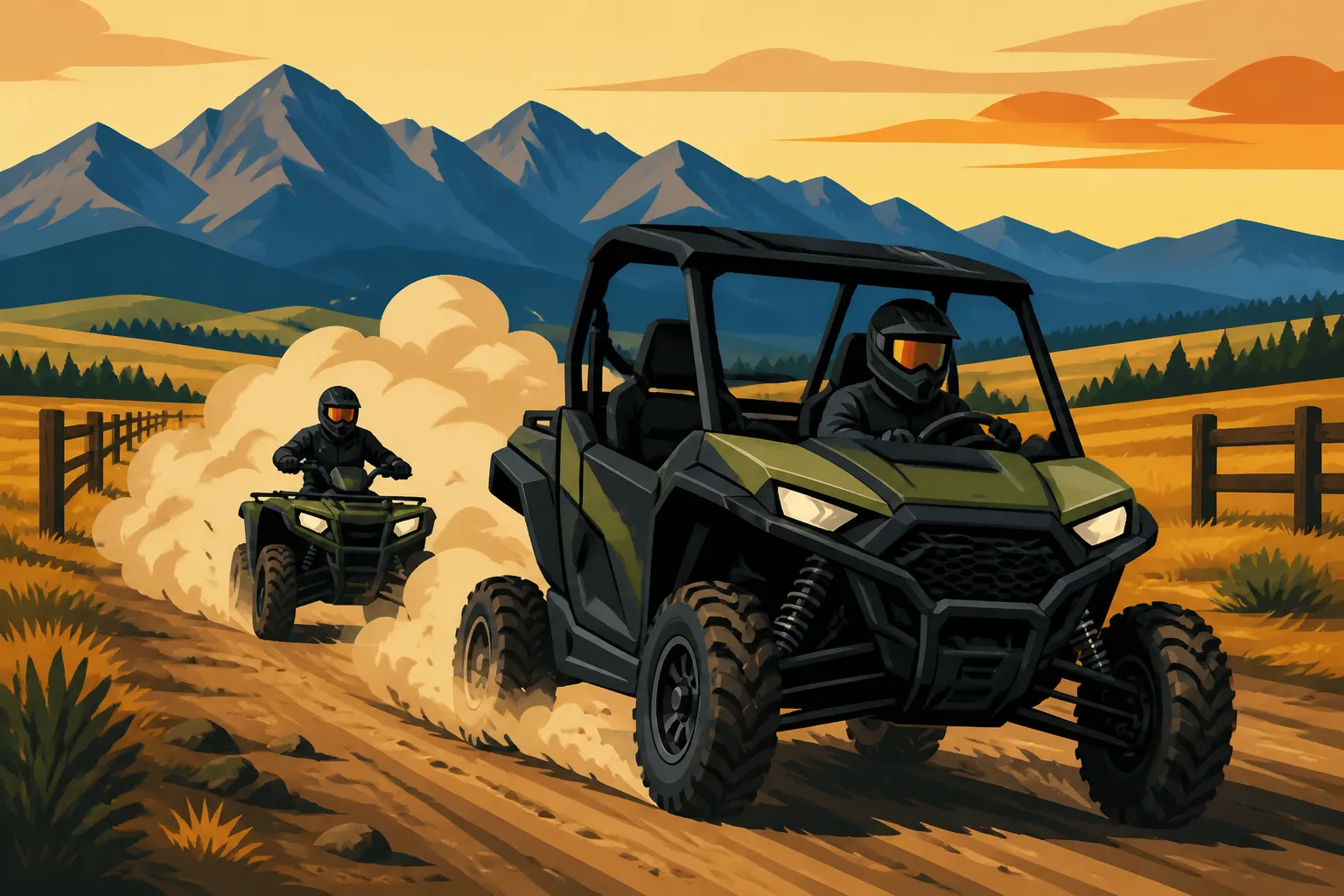
Picture this: you're out on a beautiful Montana ranch road, the sun shining, the views stretching forever… and then you look behind you. A massive cloud of choking dust is billowing, obscuring the landscape and making your fellow riders disappear into a hazy brown fog. Dealing with dust is an unavoidable reality when you're riding ATVs and UTVs on those dry, unpaved backroads across Big Sky Country. This guide dives deep into why dust is such a problem, how you can minimize its impact, and what to keep in mind when sharing these vital ranch arteries.
The Unavoidable Reality of Dust on Montana Ranch Roads
Riding an off-highway vehicle (OHV) across Montana's vast landscapes often means traversing gravel, dirt, and unpaved ranch roads. These roads are the arteries of rural life, connecting homes, fields, and pastures. While they offer incredible access to some of the most stunning backcountry, they come with a universal challenge: dust. It's not just a minor inconvenience; it's a genuine problem that affects safety, machine longevity, and even the relationship with those who own or maintain the land.
Why Dust Is More Than Just an Annoyance
Dust might seem like a small thing, but when you're engulfed in a thick cloud, it quickly becomes a major concern. First and foremost, visibility plummets. Following another machine through a plume of dust is like driving in heavy fog – you can't see hazards, curves, or even the machine directly in front of you. This drastically increases the risk of collisions, especially on winding roads or when livestock might be present. Imagine hitting a deep pothole you couldn't see, or worse, not spotting a cow that's strayed onto the road. Beyond safety, dust is incredibly abrasive. It gets everywhere: into your eyes, up your nose, in your clothes, and deep into your machine's vital components. For riders, it can cause eye irritation, respiratory issues, and just general discomfort that saps the joy out of a ride. For your ATV or UTV, dust is a relentless enemy, grinding away at bearings, clogging air filters, and accelerating wear on everything from suspension components to engine parts. Landowners, too, have valid concerns. Dust coats their fences, invades their homes, and settles on their crops and pastures. It's an environmental nuisance that impacts their daily operations and quality of life.
Common Scenarios Creating Dust Clouds
You don't need to be going at top speed to kick up a significant dust cloud. The drier the conditions, the worse it gets. A long stretch of unpaved road on a hot summer afternoon is a prime candidate for a dust storm. Any significant amount of vehicle traffic, whether it's ATVs, UTVs, or full-size ranch trucks, will churn up the surface. Group rides are notorious for generating massive dust trails, as each subsequent machine drives into the cloud left by the one ahead. Even a single machine moving at a moderate pace can create a surprisingly large plume, especially on powdery or finely graded gravel. Remember, these roads are often built from local materials, which can vary widely in their dust-producing potential. A road with a lot of fine silt or clay particles will generally be dustier than one with coarser, angular gravel. Add a bit of wind, and that dust can hang in the air for an incredibly long time, drifting across fields and into homesteads.
Practical Strategies for Riders to Minimize Dust Impact
While you can't eliminate dust entirely on a dry Montana ranch road, there are plenty of proactive steps you can take to significantly reduce its impact on yourself, your machine, and those around you. It's about being prepared, adjusting your habits, and making smart choices about your equipment.
Adjusting Your Riding Style and Group Dynamics
The simplest and most effective way to cut down on dust is to slow down. High speeds kick up exponentially more dust. On ranch roads, which often have blind corners, varying surfaces, and unexpected hazards like cattle guards or livestock, a slower pace is also just plain safer. If you're riding in a group, increase the distance between machines. Instead of tailgating, leave a significant gap – think multiple machine lengths, especially on dusty days. This allows the dust from the rider in front to settle a bit before you enter the area, or at least to dissipate enough to improve visibility. Consider staggering your group, so not everyone is riding directly in the tracks of the machine ahead. Sometimes, riding off to the side of a previous tire track can help you find slightly firmer, less disturbed ground, but always be mindful of staying on the road itself and not widening the trail or causing new ruts. Communicate with your group about dust, reminding everyone to space out and keep speeds reasonable, particularly when [Riding Slowly Past Ranch Houses] or approaching intersections.
Equipping Your Machine for Dust Control
Your OHV can be a major ally in the fight against dust. For UTVs, a full windshield is a game-changer, deflecting the dust cloud generated by your own front tires and preventing it from swirling back into the cab. Many riders also add rear panels or full cab enclosures to stop dust from entering from behind. Products from brands like SuperATV offer a range of windshields, rear panels, and full enclosures designed to keep dust, mud, and debris out of your riding compartment. These can dramatically improve rider comfort and visibility. Don't forget the air intake system. A clogged air filter is detrimental to engine performance and longevity. Invest in high-quality air filters, and consider pre-filters or filter socks, especially if you know you'll be riding in extremely dusty conditions. Regular cleaning and replacement of your air filter are non-negotiable in Montana's dry climate. Some riders even install snorkel kits to draw air from a higher, less dusty location, though this is usually for more extreme conditions. Additionally, consider tire choice; some aggressive tread patterns can churn up more dust than others.
Personal Protective Gear for Dusty Conditions
Even with a well-equipped machine, personal protection is crucial. Goggles or safety glasses are an absolute must to protect your eyes from fine dust particles and any small debris that gets kicked up. Look for goggles with good ventilation to prevent fogging, and consider tear-offs or roll-offs if you're in truly extreme conditions. A bandana, neck gaiter, or full face mask can make a huge difference in keeping dust out of your nose and mouth, preventing that gritty feeling and potential respiratory irritation. For longer rides, a proper dust mask or respirator can offer even better protection, filtering out fine particulate matter. A good helmet will also protect your face and often has a visor that can help deflect some dust. Beyond the basics, consider long-sleeved shirts and pants, even in warm weather, to protect your skin from dust and sun, and to make cleanup easier. You want to avoid that "dust tan" where your skin is coated in a fine layer of Montana silt.
Respecting the Land: Rancher Expectations and Road Etiquette
When you're riding on ranch roads, whether they're private access roads with permission or public easements that cross private land, you're a guest in someone else's workplace and home. Understanding and respecting the unwritten rules of the road is just as important as knowing the legal ones. Your actions, especially regarding dust, can heavily influence perceptions of OHV riders and impact future access. This is why it's so important to be mindful, particularly when you're traversing a working ranch.
Understanding Agricultural Road Use
Ranch roads are not recreational trails first; they are working infrastructure. They are used daily by ranchers for moving livestock, accessing fields, hauling feed, and simply getting to and from their homes. This means you might encounter large equipment like tractors, pickups with trailers, or even herds of cattle. The dust you kick up can affect these operations directly. Imagine a rancher trying to move cattle through a cloud of dust you've just created – it stresses the animals, makes it harder for the rancher to see, and can even contribute to respiratory issues for the livestock. Furthermore, dust settling on hayfields can contaminate feed, reducing its quality. Keep in mind that many ranches operate under [Farm and Ranch Exemptions in Montana] for certain vehicle uses, highlighting their primary purpose. Always assume that the next vehicle you encounter will be a working vehicle, not another recreational rider. If you see signs indicating "Private Road" or "No Trespassing," respect them absolutely. Even on roads that appear public, understanding [Montana Rules on Private Ranch Roads] is critical.
The Role of Road Maintenance and Dust Control by Landowners
While riders can do their part, the ultimate condition of a ranch road often falls to the landowner or a local road district. Ranchers invest significant time and money into maintaining these roads, whether it's grading after heavy rains, fixing potholes, or even applying dust suppressants. These suppressants, like magnesium chloride or other binding agents, are an added expense, and their effectiveness can be reduced by excessive speeds and heavy traffic that churns up the treated surface. Your respectful use, including minimizing dust, contributes to the longevity of these treatments and shows that you value their efforts. If you're granted permission to ride on private land, offer to help with maintenance, or at least be extra vigilant about leaving the road in good condition. Complaints about excessive dust from recreational riders can lead to increased restrictions or even outright closures of access, impacting everyone. Remember, sometimes [When Neighbors Complain About Engine Noise], dust can be an equally aggravating nuisance.
| Dust Impact Factor | Rider Action to Mitigate | Machine/Gear Solution | Landowner/Road Aspect |
|---|---|---|---|
| Visibility | Reduce speed, increase following distance, stagger formation | Goggles, helmet visor, windshield (UTV) | Road width, signage |
| Machine Wear | Regular air filter checks, avoid deep dust, slower speeds | High-quality air filter, pre-filter, snorkel, SuperATV enclosures | Road grading, dust suppressants |
| Rider Health/Comfort | Wear bandana/mask, hydrate, proper eye protection | Full-face helmet, dust mask, cab enclosure, SuperATV rear panels | Water trucks, road treatments |
| Environmental/Nuisance | Slow down near homes/fields, avoid sensitive areas | Quieter exhaust (less disturbance), less aggressive tires | Property setbacks, local ordinances, [Riding Slowly Past Ranch Houses] |
| Rancher Relations | Always yield, be courteous, follow posted rules, stay on designated paths | N/A | Posted rules, private property rights, [Montana Trespass Rules Along Roads] |
Beyond the Basics: Long-Term Solutions and Machine Care
Managing dust isn't just about what you do on a single ride; it's also about how you care for your machine and understanding the broader context of OHV use in Montana. Long-term vigilance and proper maintenance are key to keeping your ATV or UTV running smoothly despite the dusty challenges of Montana's unpaved roads.
Keeping Your OHV Healthy in Dusty Environments
Dust is an engine killer. The fine abrasive particles can bypass inadequate air filtration and cause premature wear on piston rings, cylinder walls, and valve guides. Beyond just replacing your air filter often (and we mean often in dusty Montana conditions), consider the type of filter you're using. Many riders opt for reusable foam filters that can be cleaned and re-oiled, offering excellent filtration. Always make sure your airbox lid is properly sealed and that there are no cracks or gaps where dust can sneak in. Pay attention to other entry points for dust, like CVT intake and exhaust ducts on UTVs. Regularly clean your radiator fins to prevent overheating, as dust buildup can act as an insulating layer. Your chain or driveshaft will also suffer. Keep chains well-lubricated and properly adjusted. For driveshafts, inspect boots for tears that could allow dust and grit into universal joints. After every dusty ride, a thorough wash, focusing on suspension components, brakes, and undercarriage, will help remove abrasive particles before they can cause lasting damage. Don't forget your wheel bearings; dusty and wet conditions are their worst enemy. Consider upgraded, sealed bearings if you frequently ride in harsh environments.
When Dust Suppression is a Rancher's Responsibility
While we as riders can mitigate our contribution to dust, the primary responsibility for significant dust control on shared or public roads often falls to the entity managing the road, whether that's a private landowner, a county, or a state agency. Ranchers, in particular, will sometimes take steps to control dust around their homes, corrals, or along high-traffic sections of their private roads. This might involve periodic watering with a water truck, especially during extremely dry periods, or applying specialized dust suppression agents. These agents, like lignosulfonates (byproducts of the paper industry), calcium chloride, or magnesium chloride, work by attracting and retaining moisture, binding the fine particles together, or both. They aren't cheap and require reapplication, which is why they're usually reserved for critical areas. Understanding that landowners shoulder this expense and effort should reinforce our commitment to responsible riding. Excessive dust from recreational users makes their efforts less effective and adds to their ongoing costs. For specific guidelines on agricultural usage, you might want to review resources like [Montana OHV Rules for Ranch Machines], which touches on the nuances of riding on working landscapes. Even if a road technically has public access, respecting its primary use as a working ranch route is paramount.
Disclaimer
This article is for general informational purposes only and does not constitute professional advice. Laws, prices and regulations vary by location and change over time. Consult a qualified professional for guidance on your specific situation.