Fords Running High After Montana Snowmelt
There's nothing quite like the anticipation of a Montana ATV or UTV ride, especially as the days get longer and the high country starts to shed its winter coat. You've been checking trail reports, planning your route, maybe even dreaming of those wide-open vistas. But then you hit a snag: a ford, a seemingly innocent stream crossing that was perfectly passable last fall, is now a raging torrent. It's a common frustration for riders across the Treasure State, especially when the spring snowmelt turns peaceful creeks into formidable obstacles. This guide is all about navigating those high-water fords, understanding the risks, preparing your machine and yourself, and ultimately, making smart, safe choices when Montana's waterways decide to put up a fight.
The Seasonal Reality: Why Montana Fords Swell with Snowmelt
Spring in Montana is a beautiful, if sometimes unpredictable, season. The warming temperatures bring vibrant green to the valleys and wildflowers to the lower elevations, but up high, millions of cubic feet of snow begin their slow, majestic journey downhill. This journey inevitably impacts the creeks, rivers, and drainages that crisscross our beloved trail systems. Those small, manageable fords you barely noticed in August can become deep, fast-moving waterways, capable of sweeping away an unprepared rider or swamping a machine in moments. It’s not just the sheer volume of water; it’s the timing and the hidden dangers that come with it.
The Cycle of Runoff
Montana's runoff season typically kicks off in late April, peaks in May and early June, and then gradually recedes through July. However, this isn't a hard-and-fast rule. A late, heavy snowpack can push peak runoff well into June, while a warm spring with early thaws might bring it on sooner. Elevation plays a huge role here; lower elevation trails might dry out and become perfectly passable by late May, while trails winding through 8,000-foot passes could still be dealing with significant snow and roaring creeks well into July. Monitoring snowpack reports and local river gauges, if available for smaller waterways, can give you a better idea of what to expect. Think of a sunny, warm day after a week of cooler temperatures – that sun is melting snow quickly, sending a surge of water into the system. This is why [Montana Trails Open in June] and [Montana Trails Open in July] can present very different water crossing challenges.
Hidden Dangers Beneath the Surface
It's not just the depth you see that's the danger. High-water fords often conceal a host of nasties just below the surface. Fast-moving water creates strong currents that can easily pull a side-by-side off its line, pushing it downstream or even flipping it. Then there's the debris: logs, rocks, branches, and even fencing that has been washed out upstream can be carried by the current. Hitting one of these unseen obstacles can cause serious damage to your machine, throw you off balance, or trap your tires. And let's not forget the sheer cold of snowmelt. Even a brief submersion in frigid water can lead to hypothermia, impairing your judgment and physical abilities rapidly. What looks like a fun splash can quickly become a life-threatening situation.
Assessing the Risk: Before You Attempt a Water Crossing
The cardinal rule of water crossings is this: when in doubt, don't go. It sounds simple, but the thrill of the ride and the desire to complete a loop can sometimes make us overconfident. Before you even think about putting tires in the water, take a moment to truly assess the ford. This isn't about rushing; it's about making an informed decision that could save your day, your machine, or even your life.
Visual Cues and Water Levels
From the bank, take a good, hard look at the water. How fast is it moving? Even clear water can be deceptively fast. Look for boils, eddies, or anything that suggests a powerful current. What color is the water? Clear water is often shallower or moving slower. Murky, muddy, or silty water often indicates a fast flow, recent heavy runoff, or a lot of debris being moved downstream. Are there any markers? Sometimes, you'll see a stick, a rock, or even a previous tire track that can give you a clue about the depth. If the water is above the banks, or if you can't see the bottom at all, consider that a major red flag. If it looks like a rushing river rather than a creek, it probably is. Pay attention to [Checking Snowpack Before a Trip] reports to anticipate these conditions.
The Art of Reconnaissance
Sometimes, a visual check isn't enough, especially if the water is murky or the banks are steep. If you're with a group and decide to proceed with extreme caution, one person, equipped with waterproof gear and a sturdy stick, might walk the crossing if it appears shallow and slow enough to be safe for wading. This is a critical point: if you don't feel safe walking it, you absolutely should not drive through it. The walker should probe the bottom for hidden holes, large rocks, or soft spots. They should also gauge the current's strength firsthand. This person should be tethered to a safety line held by others on the bank if there's any risk of being swept away. This is not a job for the faint of heart, and if the water is chest-deep or moving with any significant force, this reconnaissance mission becomes far too dangerous. In many cases, the safest reconnaissance is simply turning around and finding an alternate route, or coming back another day when water levels are lower. This is where pre-trip planning, studying maps, and having alternative routes for [Spring Mud and Montana Trail Damage] is invaluable.
Preparing Your Machine and Yourself for a Ford Crossing
You've assessed the risk, and you've decided the crossing is manageable. Great! But don't just charge in. Proper preparation of both your machine and yourself can significantly increase your chances of a successful and safe ford. This is where a little bit of foresight goes a very long way.
Machine Prep for Wet Conditions
First, understand your machine's limits. Know where your air intake is located. Most ATVs and UTVs have it relatively high, but if the water goes over that, you're going to hydro-lock your engine, and that's a whole world of expensive hurt. If you frequently encounter deep water, consider snorkel kits. Brands like SuperATV offer robust snorkel systems that raise your air intake and exhaust vents, giving you a greater margin of error. Beyond snorkels, ensure your differential and transmission vent lines are routed high. Many stock machines have them tucked low, making them susceptible to water intrusion, which can contaminate fluids and lead to costly repairs. Check all electrical connections for corrosion and ensure they are as waterproof as possible. A little dielectric grease can help. Finally, ensure your tires are in good condition and properly inflated for traction. High-water fords are not the place for worn-out rubber.
Personal Safety Gear and Contingency Plans
For yourself, always wear appropriate safety gear. A helmet is non-negotiable, and sturdy boots that offer ankle support are crucial. For deep crossings, waders or waterproof pants might be a good idea, not just for comfort but for protecting against the chilling effect of cold water. Even if you don't plan on swimming, a life vest is a wise precaution if there's any chance of being swept away by a strong current. Carry essential [What to Carry on a Remote Montana Ride], including a recovery strap or rope, a shovel, and if you have one, a winch. Make sure your winch is properly maintained and you know how to use it safely, especially for [Winching on a Steep Montana Trail] or out of a ford. A waterproof bag for your phone, keys, and any essential electronics is also a must. And always, always ride with at least one other person when tackling challenging terrain or water crossings. Should something go wrong, having backup can make all the difference, and a working satellite messenger is a smart idea in many parts of the Montana backcountry where cell service is non-existent.
Navigating the Ford: Techniques for a Safe Crossing
Once you've done your prep work, it's time to actually make the crossing. This is where smooth operation, a bit of finesse, and good judgment really come into play. Rushing or being reckless here can turn a navigable ford into a nightmare.
Choosing Your Line and Maintaining Momentum
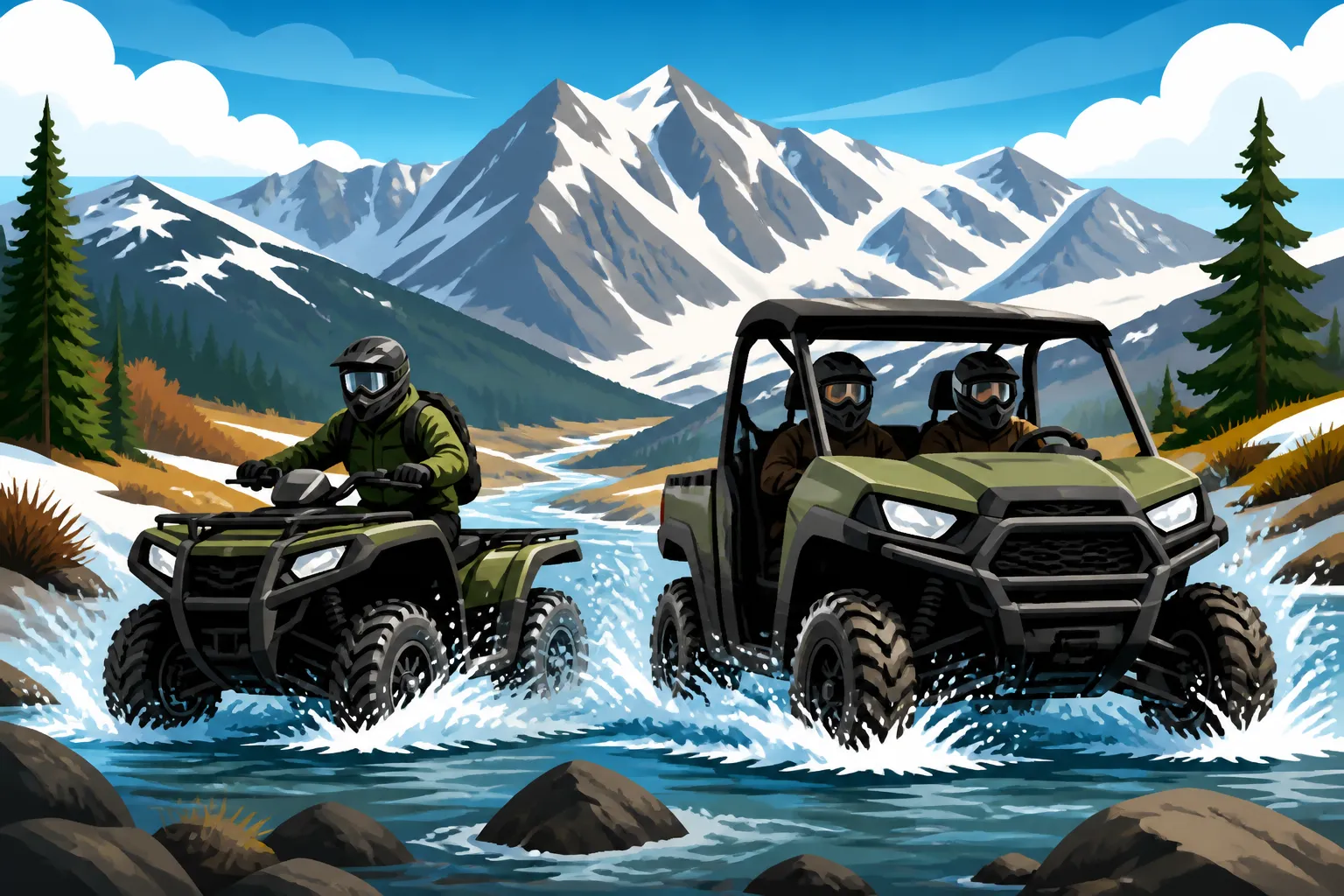
Before entering the water, pick your line carefully. Look for the shallowest path, often where the current appears least disturbed. If other vehicles have crossed recently, their tracks can give you a clue, but don't blindly follow them if conditions have changed. Enter the water slowly and steadily. Don't hit it at full speed; this can create a large bow wave that washes over your machine. Once in the water, maintain a consistent, slow speed. A good rule of thumb is a speed that creates a bow wave in front of your machine, but not so fast that the wave breaks over your hood or fenders. This bow wave actually helps to push water away from your engine and air intake. Avoid sudden stops or sharp turns, as these can disrupt the bow wave, expose your air intake, or cause you to lose traction. Keep your feet up on the footrests; putting them down in moving water can cause them to get caught or swept under the machine. If you feel yourself losing traction, a slight increase in throttle might help, but avoid spinning your tires wildly, as this can dig you in deeper.
When to Turn Back: Recognizing Your Limits
This is perhaps the most important technique of all: knowing when to say "no." If, once you're in the water, you realize it's deeper, faster, or more challenging than you anticipated, do not hesitate to turn back. It's far better to retreat, find an alternate route, or postpone your ride than to risk your safety or damage your machine. Don't let ego push you forward. There's no shame in recognizing a formidable obstacle. Sometimes, that means adjusting your entire day's plan, maybe heading for another trailhead or exploring a different area. Remember, the Montana backcountry isn't going anywhere, and the water levels will eventually recede. If you're feeling uneasy or unsure, that's your instinct telling you something important. Listen to it. Sometimes the best line across is the one that leads you away from the water entirely.
After the Crossing: Post-Ford Checks and Maintenance
You've made it across! Great job. But the job isn't quite done. High-water crossings, even successful ones, can take a toll on your machine. A few immediate checks and some long-term maintenance will help ensure your ATV or UTV continues to run smoothly for many more Montana adventures.
Immediate Checks and Troubleshooting
As soon as you're safely on the other side, take a few minutes for a quick inspection. First, check your brakes. Water can temporarily reduce their effectiveness. Pump them gently a few times to dry them out. Next, give your engine a listen. Does it sound normal, or is there any sputtering or unusual noise? Check your exhaust for any water lingering inside. If your machine sputtered or died in the water, you might have gotten water into the engine or electrical system. Don't try to restart it repeatedly if it's resistant; that could worsen the damage. Instead, pull your spark plug(s) and try to turn the engine over slowly by hand to expel any water. Also, check your air filter. Even with a snorkel, a small splash or wave could have introduced moisture. A wet air filter needs immediate attention to prevent engine damage. If your ride included a deeper section, consider stopping soon to allow any trapped water to drain and evaporate from nooks and crannies. [Montana OHV Accident Reporting Rules] would apply if you had a significant incident.
Long-Term Maintenance After Water Exposure
Even if your machine seems fine immediately after a crossing, water has a way of finding its way into places it doesn't belong. Once you're back at camp or home, a more thorough inspection is warranted. Start by checking all fluid levels and clarity: engine oil, transmission fluid, and differential fluids. If any of these look milky or discolored, it's a sure sign of water intrusion, and you'll need to change them immediately to prevent rust and damage. Grease all zerks on your suspension and driveline. Water washes away grease, and fresh grease will push out any moisture that got in. Inspect all electrical connections for signs of corrosion or moisture. Clean and dry your air filter thoroughly, or replace it if it's paper. Look for any debris, like sticks or mud, that might have lodged in your skid plates, cooling system, or suspension components. Removing this can prevent long-term issues. Taking these preventative steps, whether your machine is equipped with SuperATV accessories or stock components, will extend its life and keep it trail-ready.
Remember, Montana's beauty often comes with its challenges. High-water fords are just one of them. By understanding the environment, preparing wisely, and exercising good judgment, you can safely navigate these watery obstacles and continue to enjoy the incredible riding the state has to offer.
| Condition / Depth | Potential Dangers | Assessment for Riders | Recommended Action |
|---|---|---|---|
| Puddle / Up to Axle | Minor splash, dirty water | Usually safe, but check for hidden rocks/holes. | Proceed slowly, maintain consistent speed. |
| Shallow Ford / Up to Skid Plate | Hidden rocks, uneven bottom, minor current | Walk it if possible/safe, observe water flow for strong current, check for debris. | Engage 4WD, steady speed, create bow wave. |
| Moderate Ford / Up to Floorboard | Stronger current, potential for engine flooding, debris | High risk. Walk it only if absolutely safe (tethered). Scout for alternate routes. | Extreme caution. Consider turning back. If crossing, use max 4WD, steady throttle, deep breath. |
| Deep Ford / Above Floorboard / Near Air Intake | Engine hydro-lock, machine swept away, major damage, hypothermia | DO NOT ATTEMPT. Very high risk to life and machine. | TURN BACK. Find another route or wait for water to recede. |
| Fast-Moving Current | Loss of control, machine swept downstream, capsizing | Observe surface for boils, eddies, listen for rushing sound. Look for leaning vegetation. | Avoid. Current often hides greater depth. Very high risk. |
| Murky/Silty Water | Hidden obstacles (logs, rocks), inability to gauge depth | Can't see bottom = can't assess danger. Assume worst. | Avoid. Extremely high risk of unseen hazards. |
Disclaimer
This article is for general informational purposes only and does not constitute professional advice. Laws, prices and regulations vary by location and change over time. Consult a qualified professional for guidance on your specific situation.