Montana Road Rules Riders Get Wrong
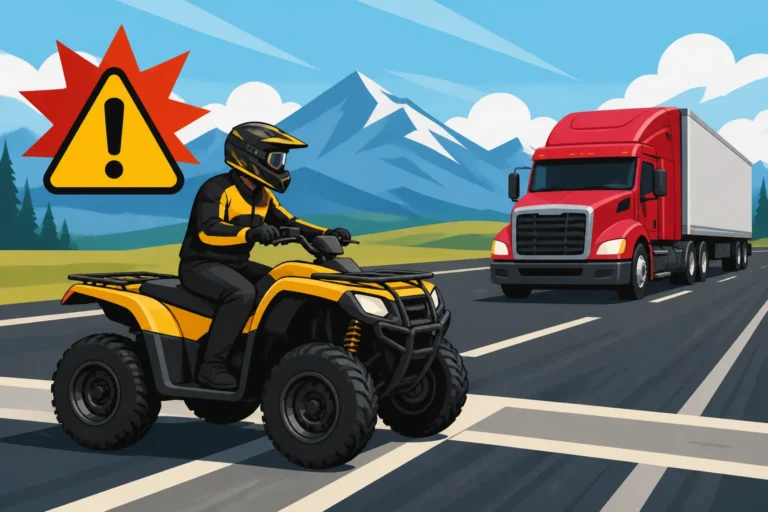
It’s a common scenario out here in Big Sky Country: you’ve got your ATV or UTV, you’ve heard Montana is pretty relaxed about off-highway vehicles, and you assume that means you can just hit any road to get to the next trail, grab some lunch, or even run into town for supplies. But hold on a second! This assumption can lead to some real headaches, from confusing legalities to unexpected fines. This guide is here to clear up those misconceptions, diving deep into the Montana road rules for ATVs and UTVs that often trip up even seasoned riders, so you can ride confidently and legally.
The Myth of "Any Road" Access in Montana
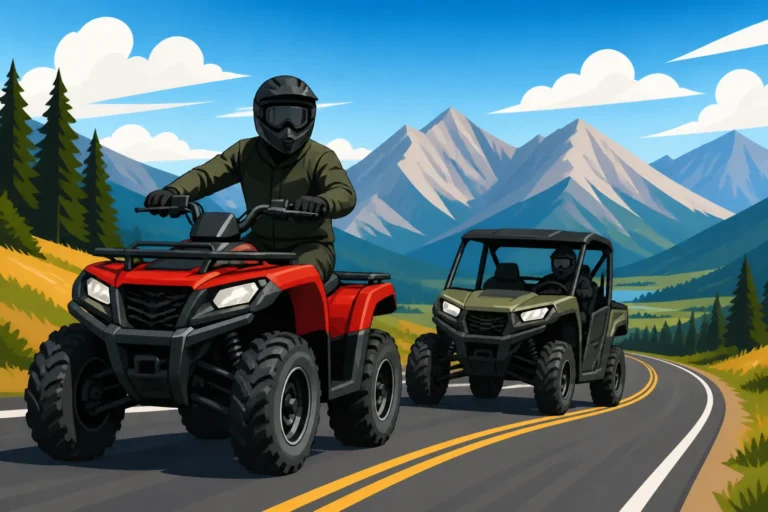
One of the biggest misunderstandings riders have in Montana is that once your OHV is registered, you can just cruise down any paved or gravel road you please. While Montana is indeed more OHV-friendly than many states, it’s far from a free-for-all, and this "any road" idea is a fast track to trouble. The reality is a complex tapestry of state statutes, county ordinances, and municipal rules that can change dramatically from one jurisdiction to the next, even just a few miles down the road.
This patchwork system means that what’s perfectly legal in one county or town might get you pulled over in the next. It creates a sense of uncertainty that can be frustrating, especially when you’re just trying to enjoy a ride or connect a few trails. Many riders only find out they’re on the wrong side of the law when a local deputy or county sheriff is explaining the fine, and by then, it's too late. It’s not about being intentionally rebellious; it's often a genuine lack of clear, consistent information.
Why County Roads Are Not Always Open
While state law generally provides a framework for OHV use on public roads, it's crucial to understand that county commissioners hold significant power to modify or restrict that access within their own county lines. This means that even if a state statute says "OHVs can operate on county roads," the local county commissioners can, and often do, pass specific ordinances that either open or close certain roads, or parts of roads, to OHV traffic. They might consider factors like traffic volume, safety concerns, school zones, or even local resident complaints when making these decisions.
For example, imagine you're riding through a rural part of Yellowstone County, where county roads might be wide open for OHVs. You cross into a neighboring county, say Gallatin County, known for its rapid growth and higher traffic. Suddenly, you might find that the county commissioners there have restricted OHV use to specific designated routes or perhaps banned it entirely on certain main connector roads. This isn't just a theoretical scenario; it happens all the time. Riders often assume a gravel road is a gravel road, regardless of the county, but the local rules are what truly dictate legality. Always check for signs, local government websites, or ask at local Forest Service or BLM offices about specific county rules before you head out. Understanding [County Commissioners and Montana County Roads] is paramount.
City Streets and Municipal Headaches
Even more restrictive than county roads are city and town streets. While a county might have some open roads, most incorporated towns and cities in Montana have their own municipal ordinances regarding OHV use. And let me tell you, these can vary wildly! Some smaller, trail-friendly towns, particularly those that cater to outdoor recreation and tourism, have embraced OHVs and allow them on certain streets, often with specific speed limits and equipment requirements. Places like West Yellowstone, for instance, are known for their OHV-friendly street access, allowing riders to travel from their lodging to trailheads or local businesses.
However, many other towns, especially larger cities or those not directly tied to trail systems, strictly prohibit OHV use on their streets. They view ATVs and UTVs as off-road vehicles that don't belong in general traffic, citing safety concerns, noise complaints, and road damage. So, while you might be able to ride your side-by-side into a cafe in one trail town, attempting the same thing in another, even a small one, could land you a hefty ticket. It's not uncommon for riders to make the mistake of assuming a small town will be lenient, only to be surprised by an active police presence enforcing local bans. This is where researching [Montana Towns That Allow OHVs on Their Streets] and understanding [Montana City Streets and Municipal Ordinances] becomes absolutely critical for avoiding a run-in with the law.
Equipment Requirements Many Riders Overlook
You’ve got your machine, you’ve gotten it registered, and you've possibly even explored some trails. But when it comes to riding on public roads, even those few open county or city streets, your OHV needs to meet specific equipment standards that go beyond what's typically required for off-road use. This is where many riders get caught off guard, assuming that if it came from the factory, it's ready for the road. The truth is, most stock ATVs and UTVs, while awesome for the trail, aren’t inherently set up for legal road use without some modifications or additions.
Thinking about upgrading your machine for road compliance? Companies like SuperATV offer a wide range of accessories, from mirrors to turn signal kits, that can help get your machine up to snuff. These upgrades are not just about convenience; they're about meeting the letter of the law and ensuring your safety and the safety of others when you share the road. Don't assume; always check the specific equipment list Montana requires for road-legal operation.
Lights, Mirrors, and the Horn: More Than Just the Basics
When you take your OHV onto a public road, it needs to be visible and capable of communicating with other traffic, just like any other vehicle. This means having proper lighting. Montana law typically requires your OHV to have at least one headlight and one taillight, both of which must be illuminated whenever you are operating on a public road, regardless of whether it's day or night. That's right, "lights on at all times" is often the rule. Beyond just being present, they need to be functional and visible from appropriate distances. Brake lights are also a must, indicating when you are slowing down or stopping.
What often surprises riders is the need for turn signals and mirrors. While not all ATVs come with integrated turn signals, if you're riding on a road where they're required for other vehicles, you'll likely need them or at least demonstrate proper hand signals. Mirrors are often overlooked entirely, but good rearview mirrors are essential for situational awareness in traffic. Imagine trying to merge or turn without knowing what's behind you – it's a huge safety hazard. A functioning horn is also a requirement, allowing you to alert other drivers or pedestrians to your presence. Without these crucial components, even on an "open" road, you could be deemed non-compliant. Be sure to review [Headlight and Taillight Rules in Montana] and [Mirrors Montana Road Riding Calls For] to understand the full scope of requirements.
The Often-Forgotten Muffler and Spark Arrester
While less about direct safety on the road and more about environmental and noise regulations, the muffler and spark arrester are critical components that riders often forget about when considering road legality. For any OHV operating on public lands (which includes many county roads and forest service roads that intersect trails), a U.S. Forest Service-approved spark arrester is typically mandatory. This isn't just a suggestion; it’s a fire prevention measure designed to stop hot carbon particles from escaping your exhaust and potentially igniting dry vegetation – a very real danger in Montana's often-dry landscapes.
Beyond the spark arrester, noise regulations come into play, especially when riding through towns or near residential areas. While an aftermarket exhaust might sound great on the trail, many can exceed legal noise limits on public roads. Montana has rules in place to prevent excessive noise, and local municipalities often have even stricter ordinances. A noisy machine can quickly draw unwanted attention from law enforcement and upset local residents, potentially leading to tickets or even calls for further restrictions on OHV access. Ensuring your muffler is in good working order and your exhaust system meets legal noise levels is not just about avoiding a ticket; it's about being a respectful and responsible rider in our communities. Check [Muffler and Exhaust Noise Limits in Montana] and [Spark Arrester Rules on Public Land] for specific details.
Age, Licensing, and Passenger Confusion
Operating an OHV on public roads isn't just about the machine's setup; it's also about the operator's qualifications and who they can carry. This area is ripe with misconceptions, especially concerning young riders and passengers. Many assume that if someone is old enough to ride an ATV off-road, they're fine on a road, or that if a UTV has multiple seats, it's always legal to fill them. Unfortunately, the rules are often far more nuanced, designed to ensure the safety of all road users and prevent tragic accidents.
The consequences of getting these rules wrong can range from fines to more severe penalties, especially if an accident occurs involving an underage driver or an improperly seated passenger. It's not just about obeying the law; it's about safeguarding lives. Don't let a lack of understanding turn a fun ride into a regrettable incident.
Young Riders and the Driver's License Question
One of the most frequently misunderstood aspects of Montana OHV law pertains to young riders operating on public roads. While the state has specific age and safety certificate requirements for off-road operation, these often change when an OHV hits a public road. Generally, to operate an OHV on a public road, the driver must possess a valid driver's license. This typically means being 16 years of age or older. This can be a significant distinction from trail riding, where riders as young as 12, with proper safety certification and supervision, can operate machines.
The common mistake here is assuming that a youth's off-road safety certificate, which allows them to ride trails, also grants them permission to operate on county or city roads. It does not. A safety certificate is distinct from a driver's license. This means that if your 14-year-old is a proficient off-road rider, they still cannot legally operate your ATV or UTV on a public road, even just to cross it, unless they are at least 16 and have a valid driver's license. This rule is in place for a reason: the complexities and dangers of interacting with other motor vehicle traffic on a road require a higher level of maturity and driving experience. For more on this, look into [Driver's License Rules for Montana Road Riding] and [Montana's Rule for Riders Aged 12 to 15].
Passenger Rules and Why Seatbelts Matter
Another area of confusion revolves around carrying passengers on an OHV, particularly when transitioning to road use. Many ATVs are designed for a single rider, and carrying a passenger on a single-rider ATV, even on a public road, is generally illegal and extremely dangerous. These machines are not built to safely accommodate the weight distribution or provide proper handholds for a second person, significantly increasing the risk of rollovers or loss of control.
For UTVs (side-by-sides), which are designed with multiple seats, the rules are still specific. You can carry passengers, but only up to the manufacturer's designed capacity, and every passenger must be properly seated and utilize available seatbelts. This is not optional for road use. Just because a UTV has a bench seat that could theoretically fit three small children doesn't mean it's legal or safe if it's designed for two. Furthermore, specific rules may apply to child passengers, including age or height requirements for certain seating positions, or even requiring certain types of restraints. Riders often neglect to ensure everyone is properly buckled, or they carry more passengers than the vehicle is rated for, underestimating the risks involved, especially on paved surfaces with higher speeds and other vehicles. Always adhere to [Montana Passenger Rules on a Road Section] and ensure compliance with [Montana Seat Belt Rules in a Side-by-Side] for the safety of everyone in your rig.
Registration, Insurance, and the "Ranch Exemption" Trap
Beyond individual operator qualifications and machine equipment, there's another layer of rules that frequently leads to misunderstandings: registration status, insurance requirements, and common exemptions. Riders often conflate permanent registration with blanket road legality, or they misinterpret agricultural exemptions, leading to situations where they believe they're covered when they're actually not. These are crucial details that, if overlooked, can result in significant legal and financial consequences.
It's tempting to think that once you've paid your initial fee for your OHV, all administrative boxes are checked. But Montana's system, while convenient in some ways, has specific caveats, especially for road use. And when it comes to insurance, the financial risk of operating an uninsured OHV on a public road is immense, should an accident occur.
Permanent Registration Doesn't Mean "Road Legal" Everywhere
Montana's "one-time permanent" OHV registration is a fantastic benefit for riders. You pay a fee, get your decal, and your machine is permanently registered for off-road use, meaning you don't have to renew it annually. This is a source of pride for many Montana riders and often a point of envy for out-of-state visitors. However, a widespread misconception is that this permanent registration automatically makes your OHV legal to ride on any public road. It does not.
While the permanent registration covers your machine for use on designated trails and roads where OHVs are specifically allowed, it doesn't override local county or city ordinances that might restrict or prohibit OHV use on other public roads. The permanent registration is primarily about identifying your machine and contributing to trail maintenance funds; it's not a blanket permit for street legality. You still need to ensure your machine meets all road equipment requirements and that the specific road you wish to ride on is open to OHVs by the governing authority (county, city, or state). Many riders confuse the convenience of the [What Permanent Registration Actually Buys You] with an all-access pass, leading to tickets in areas where local rules supersede. You can learn more about [Montana OHV Registration Cost at the Treasurer] to ensure your initial registration is correct.
The Misunderstood Ranch and Farm Exemption
Montana is a big agricultural state, and there are indeed specific exemptions for ATVs and UTVs used exclusively for ranching, farming, or other agricultural purposes. Many riders, especially those living in rural areas or on large properties, interpret these exemptions broadly, assuming that if they're using their machine for "work," they can operate it on public roads without concern for registration, equipment, or licensing. This can be a dangerous assumption.
The agricultural exemption is typically quite specific. It often applies to machines used on private land for agricultural purposes, or for very limited and direct travel between adjacent parcels of land on public roads, and sometimes only during daylight hours or with specific signage. It does not typically extend to general recreational use on public roads, even if you’re technically on your way to check fence lines that happen to run along a county road. If you’re riding into town for supplies, or going for a scenic drive on a county road, you're likely no longer operating under the agricultural exemption and must comply with all standard OHV road rules, including proper registration, equipment, and licensing. Misinterpreting [Montana Rules for Work Machines] or [Montana Agricultural Road Exemptions] can lead to unwarranted tickets or other legal issues.
Insurance for Road Riding: Don't Get Caught Uncovered
Another critical area often overlooked by OHV owners is insurance, particularly when operating on public roads. While liability insurance might not be strictly mandated for all off-road OHV use in Montana, it becomes paramount, and often legally required, the moment you put your machine on a public road or highway. Many riders mistakenly assume their existing auto insurance policy or even their homeowner's insurance will cover their ATV or UTV if they get into an accident on the street. This is almost universally false.
Standard auto policies are designed for cars and trucks, not off-highway vehicles. Homeowner's insurance typically only provides coverage for an OHV while it's stored on your property, not when it's being operated anywhere else. If you are involved in a collision with another vehicle, pedestrian, or property while riding your OHV on a public road, and you don't have specific OHV liability insurance, you could be facing astronomical out-of-pocket costs for damages, medical bills, and legal fees. It's a risk simply not worth taking. Even if the law in a particular municipality doesn't explicitly demand it for OHVs on certain roads, being uninsured is a massive gamble. Protect yourself and others by ensuring you have adequate liability coverage when riding on any public road. Explore [Montana ATV Insurance Cost] and specifically [Liability Insurance for Montana Road Riding] for details on what coverage you truly need.
Common Montana OHV Road Rule Misconceptions vs. Reality
To help clarify some of the most common pitfalls, here’s a quick overview of what riders often get wrong compared to the actual rules in Montana.
| Misconception | Montana Reality |
|---|---|
| "Permanent registration means I can ride anywhere." | FALSE. Permanent registration is for OHV trails and designated roads. County and city ordinances often restrict or prohibit OHV use on many other public roads. You must check local rules. |
| "Any road that's gravel is open to OHVs." | FALSE. Even gravel roads are subject to county commissioner decisions. A county can close any road to OHVs, regardless of surface type. Local rules are paramount. |
| "My 14-year-old has a safety certificate, so they can ride on the road." | FALSE. To operate an OHV on a public road in Montana, the driver generally needs a valid driver's license (16+ years old). A safety certificate is for off-road use. |
| "If my UTV has seats, I can fill them all with passengers." | CAUTION. You can carry passengers up to the manufacturer's rated capacity, but all passengers must be properly seated and use seatbelts (if equipped) for road operation. Overloading is unsafe and illegal. |
| "I'm just using my ATV for ranch work, so I don't need road equipment." | PARTIALLY FALSE. Agricultural exemptions are specific and often limited to private land or very short distances between adjacent parcels. Recreational or general travel requires road-legal equipment. |
| "My car insurance will cover my OHV on the road." | HIGHLY UNLIKELY. Most auto and homeowner's insurance policies do NOT cover OHVs on public roads. You need specific OHV liability insurance for protection. |
| "I only need my lights on after dark." | FALSE. For road-legal operation, Montana often requires your OHV’s headlights and taillights to be on at all times on public roads, even during daylight hours. |
| "I don't need mirrors or a horn if it didn't come with one." | FALSE. For legal road use, your OHV generally needs proper mirrors for rearview visibility and a functioning horn to alert others, just like other vehicles. Many stock machines require upgrades. |
Disclaimer
This article is for general informational purposes only and does not constitute professional advice. Laws, prices and regulations vary by location and change over time. Consult a qualified professional for guidance on your specific situation.