Reporting Trail Damage in Montana
A washed-out rut, fallen tree, damaged trail sign, or fresh stretch of unauthorized tracks can turn a good Montana ride into a safety problem—and make it harder for land managers to keep routes open. This guide explains how to report OHV trail damage, identify the right land manager, document what you saw, and avoid making the damage worse while help is arranged.
What Counts as OHV Trail Damage in Montana
Trail damage is more than a deep rut or a collapsed bridge. It can include erosion, a blocked route, damaged signs, unsafe water crossings, or evidence that riders have left an authorized trail. A useful report describes what happened and where, without putting you or other riders at risk.
Recognize damage that needs to be reported
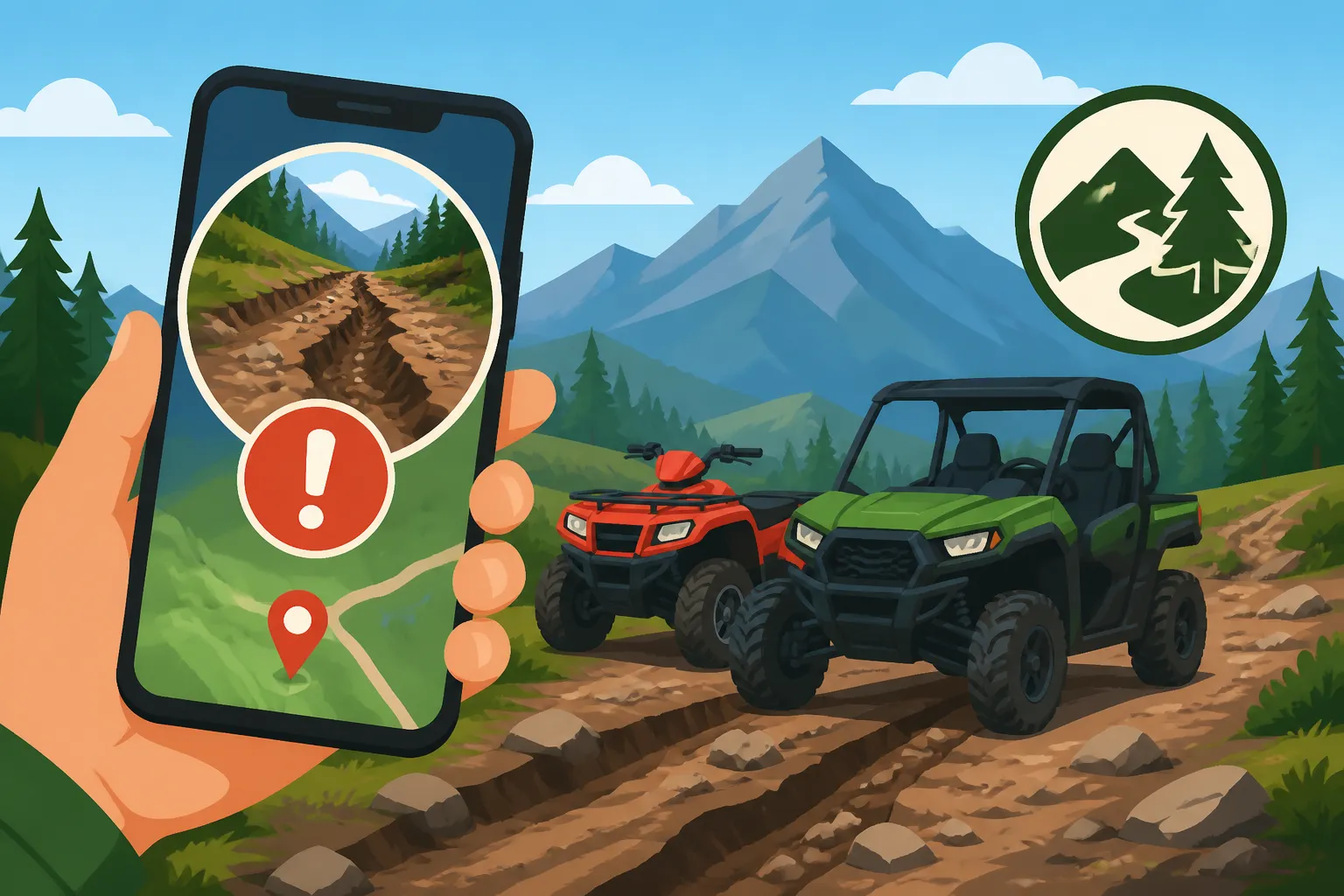
Look for changes that could make a route unsafe or lead to further deterioration. Examples include a washout that has exposed rocks or a drop-off, a culvert that appears to have failed, a bridge with damaged decking, or a fallen tree blocking the trail. A sign that has been knocked down or a gate that appears damaged may also need attention, especially if riders could mistakenly continue onto a closed or private route.
Some damage develops gradually. Deepening ruts, widening tracks around a muddy section, or water cutting a channel down the trail can signal that continued traffic is worsening the problem. On soft ground, turning around may be a better choice than trying to power through. Spinning tires can deepen ruts, tear up vegetation, and push water and sediment into nearby streams.
It is also worth reporting hazards that may not look like damage at first glance. A new obstacle around a blind corner, a washout hidden by dust, or a damaged route marker can put the next rider in danger. If conditions are changing quickly, such as during snowmelt, heavy rain, or wildfire activity, tell the manager what you observed and when. For context on how wet ground can be affected by vehicle traffic, see Ruts and Why a Wet Trail Gets Closed.
Separate natural hazards from possible misuse
A storm, spring runoff, falling tree, or slope failure can damage a route without anyone causing it through misuse. Your report does not need to identify blame. Describe the observable facts: the trail is blocked, the surface is eroding, or a crossing appears unsafe. Let the land manager determine the cause and the appropriate response.
You can also report apparent off-route travel, new unauthorized tracks, damaged barriers, or dumping. Be careful not to assume that every track away from a main route is illegal. Some areas have signed spurs, authorized staging routes, or access arrangements that are not obvious on the ground. The applicable map and land manager’s rules matter. Reading a Montana Motor Vehicle Use Map can help riders understand why a route shown on a map is a better reference than an informal track on the ground.
Do not confront another rider or try to enforce a closure yourself. If there is an immediate threat to someone’s safety, use the appropriate emergency service. For non-emergency damage or suspected violations, report the location and what you saw to the agency responsible for that land.
Find the Right Land Manager Before You Report
Montana trails cross different kinds of land, and the agency responsible for one section may not manage the next. Sending a clear report to the right office can save time, especially when a route crosses a boundary or connects a public trail to a county road.
Identify who manages the trail
Start with the location and the land ownership or management information for the route. A trail on national forest land may be managed by the U.S. Forest Service; a route on Bureau of Land Management land may fall under the BLM. State parks, other state-managed lands, counties, and private landowners have their own responsibilities and reporting channels.
Check signs at the trailhead, route markers, maps, and land-management information for the area. A trailhead sign may name the managing office or identify the forest, district, park, or recreation area. If you are unsure, give the nearest access point and the route name or number to the office you believe is responsible, and ask whether the location falls within its jurisdiction. The agency can often direct you to the right contact if it does not manage that section.
Do not assume that the nearest town or trailhead determines who is responsible. For example, a route near a community may still cross federal land, county land, and private property. Some local clubs help maintain trails through agreements, but that does not necessarily make them the official land manager. Montana Trails Kept Open by Local Clubs offers useful context on the role local groups can play alongside public agencies.
Use a location reference that another person can find
A description such as “the muddy spot after the ridge” may make perfect sense to your riding group and be nearly impossible for a maintenance crew to locate. Include the trail or route name, the nearest numbered marker, the trailhead or road access point, and the direction you were traveling. If available, add a map pin or coordinates and note whether the problem is before or after a recognizable junction.
A GPS-enabled map can help you save a location while you are stopped somewhere safe. onX Offroad may be useful for marking a point and reviewing your position in relation to a route, but treat the map as a location aid rather than proof of land ownership or current access rules. Confirm the managing agency using signs and official maps where possible, especially if the damage is near a boundary or an unmarked junction.
Write down the location details as soon as it is safe to do so. A photo taken later at a different angle may be hard to match to the map if you no longer remember which spur you were on. If your phone has no signal, save the point or make a note offline, then send the report when you have service. For planning future rides and checking mapped routes, onX Offroad for Montana Trails may help with navigation, but always follow posted closures and land-manager guidance.
| What you observed | Useful details to include | What to do while riding |
|---|---|---|
| Washout or deep rut | Route name, nearest marker, approximate size, whether the route is passable | Stop before the hazard; do not drive around it off-trail |
| Fallen tree or blocked route | Location, direction of travel, whether there is safe room to turn around | Do not cut, drag, or move it unless directed by the manager |
| Damaged bridge or crossing | Type of structure, visible damage, water conditions, whether anyone is at risk | Keep off a crossing that looks unsafe |
| Missing or damaged sign | Junction or nearby landmark, sign wording if remembered, photo if safe | Do not guess which route is open |
| Suspected unauthorized tracks | Location, direction of tracks, visible damage, date and time | Do not follow tracks or confront riders |
| Erosion or trail widening | Slope, drainage, muddy section, whether traffic is going around the obstacle | Avoid adding another line around the damaged area |
Make a Report That Is Clear and Useful
A strong report is factual, specific, and easy to follow up on. You do not need to write a technical assessment. A short message with a precise location, a plain description, and a safe-to-share photo can give a land manager a useful starting point.
Record the details without taking unnecessary risks
If it is safe to stop, note the date and approximate time, the trail or route name, nearby junctions, and a map pin or coordinates. Describe what the damage looks like and whether it blocks the route, creates a fall or rollover risk, or appears to be worsening. If you do not know the route number, say so and provide the closest trailhead, road, or landmark instead of guessing.
Photographs can help show scale and context. Take one image that helps identify the location, such as a sign or junction, and another that shows the problem clearly. Include a familiar object for scale only if you can do so without approaching an unstable edge, crossing fast water, or standing in the path of other riders. Do not climb onto damaged structures or step into a washout to get a better angle.
Avoid moving branches, disturbing barriers, driving around a blocked section, or trying to repair the trail on your own. A well-meant shortcut can widen the damaged area, damage vegetation, or create a route that is not authorized. Even when a route looks easy to bypass, keep your machine on the established trail and turn back if that is the safer option. Who Fixes a Washed-Out Montana Trail explains why repairs and closure decisions generally depend on the responsible land manager and the site conditions.
Contact the agency through an appropriate channel
Use the contact information provided by the managing agency for that area, such as its local office or official reporting channel. Give the location first, then explain the damage and its likely effect on riders. If the issue creates an immediate danger to someone, use emergency services rather than relying on a routine maintenance report.
Keep your language neutral and specific. For example: “A washout is present on the route north of the marked junction. It has cut across most of the trail, and the remaining edge appears unstable. I stopped before it and did not attempt to cross.” That is more useful than saying only that the trail is “wrecked” or guessing that a particular rider caused it.
If you send photos or coordinates, mention them in the report and explain how they relate to the route. If the location is near a land boundary, say that you are not certain which agency manages it. Keep a copy of your message and note how you contacted the office. If the damage is still present on a later ride, a brief follow-up with an updated observation may help, but avoid repeatedly sending the same report without new information.
What to Do Before You Leave the Area
The best way to help protect a damaged trail is often to stop adding pressure to it. A careful decision at the scene can reduce risk for your group and keep a small problem from becoming a larger repair.
Avoid worsening the damage or creating a new route
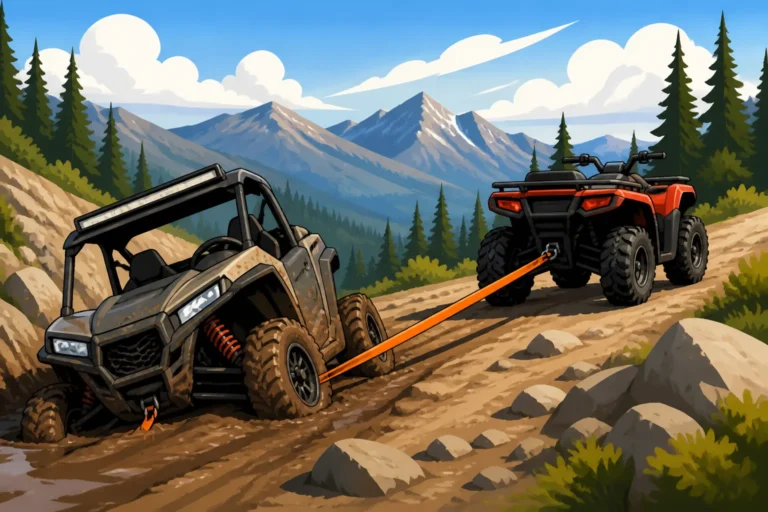
Do not ride around a fallen tree or washout by cutting across vegetation, climbing a slope, or making a new line beside the trail. When many riders take the same informal bypass, it can quickly become a wider second trail and increase erosion. If a safe turnaround is available, use it. If you cannot turn around safely, stay in a secure location and seek assistance rather than improvising a risky crossing.
Riders sometimes feel pressure to keep moving because a group is behind them or because they have traveled a long way to reach the route. That frustration is understandable, particularly on a remote trip, but forcing a machine through unstable ground can put people and equipment at risk. It may also damage a drainage feature or crossing that would otherwise have been repairable.
Report any closure signs, gates, or barriers you encounter and obey them. A temporary closure may be in place because of erosion, fire, maintenance, wildlife concerns, or unsafe conditions. Check Montana Trail Closures in Fire Season and Checking Montana Trail Status Before You Drive when planning a ride, and verify access information with the land manager when conditions are changing.
Share information responsibly with other riders
If other riders are approaching the hazard, warn them from a safe location without blocking the route or putting yourself in the way of traffic. A calm, simple warning such as “There is a washout just beyond the junction; I turned around” is more helpful than waving people toward an uncertain bypass.
When sharing a report with a riding group, distinguish what you personally observed from what you heard from someone else. Include the date, because a trail can change after rain, snowmelt, a fire, or repair work. If an agency posts a closure or update, share the official information rather than presenting an old photo or secondhand message as current.
Local clubs and volunteer trail groups may know who maintains a particular route, but check with the land manager before organizing work. Trail maintenance can involve permissions, safety requirements, tools, environmental protections, and coordination with other crews. Learn more about organized stewardship through Montana OHV Clubs and Trail Adoption and Montana Trail Crews and Summer Repairs. If you would like to volunteer, ask the relevant group or agency how to participate rather than starting repairs independently.
Reporting damage will not always lead to an immediate fix. Crews may need to inspect the site, prioritize urgent hazards, wait for suitable ground conditions, arrange equipment, or close a route until it can be repaired. Your role is to provide a clear, responsible report and avoid making the problem worse. That small effort can help the people managing Montana’s trails make better-informed decisions for the next rider.
Disclaimer
This article is for general informational purposes only and does not constitute professional advice. Laws, prices and regulations vary by location and change over time. Consult a qualified professional for guidance on your specific situation.