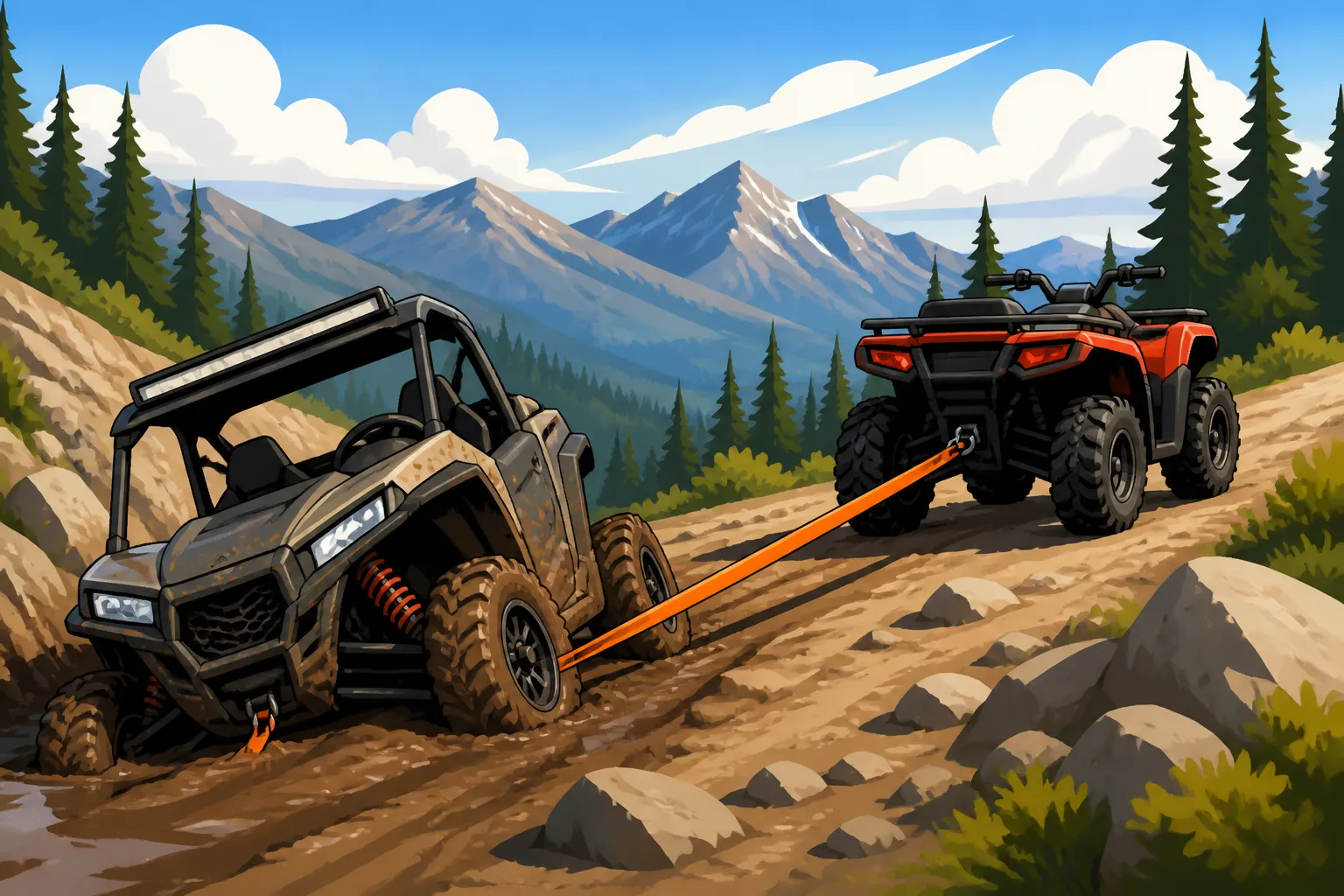
Towing Off a Remote Montana Trail
A disabled ATV or UTV can turn a beautiful Montana ride into a stressful problem fast, especially when the trail is steep, narrow, or far from cell service. This guide explains how to assess the machine, choose a safer recovery option, prepare for a tow, and reduce the chance of making a breakdown worse—or putting your riding group in danger.
Assess the Situation Before You Try to Tow
A machine that will not move under its own power is not automatically safe to tow. A damaged steering component, locked wheel, leaking fuel, or unstable position on a slope can make even a short pull hazardous. Take a moment to understand what has failed and what the terrain allows before anyone attaches a strap or winch line.
Stabilize the machine and check for immediate hazards
First, stop the group somewhere secure if you can. On a narrow trail or exposed shelf road, keep other machines away from the edge and out of the disabled machine’s path. Set the parking brake if it works, switch off the engine, and remove the key. If the machine is on a slope, do not assume the brake alone will hold it; use appropriate wheel chocks or other safe means of preventing movement, where the terrain allows.
Look for hazards that change the recovery plan: fuel or oil leaking, smoke, a hot or damaged battery, a wheel trapped against a rock, or a machine sitting at an unstable angle. Do not climb beneath a machine that could roll or shift. If anyone is injured, or the vehicle is at risk of rolling down a slope, prioritize people’s safety and contact emergency services or qualified assistance when possible. Avoid starting a recovery while someone is positioned downhill or in the likely path of a sliding machine.
A rider may be tempted to give the machine a hard pull just to get it off the trail. Resist that impulse. A sharp jerk can break a strap, damage a recovery point, or make a vehicle lurch unpredictably. If the machine cannot be stabilized or the recovery path is not clear, pause and consider bringing in experienced help rather than improvising.
Find out whether it can roll and steer
Before towing, check whether the wheels turn freely and whether the steering responds. A flat tire may be manageable on a stable, gentle route; a bent tie rod, jammed wheel, broken axle, or damaged steering system can make a rolling tow unpredictable. If a wheel is locked or the machine cannot be steered, dragging it may cause further damage and create a serious hazard.
Check the owner’s manual for towing instructions and restrictions. Some machines have specific procedures for moving them when the engine is off, and drivetrain or transmission components may be damaged if they are towed incorrectly. If you cannot identify the failure or the manual warns against towing, do not guess. A recovery shop, dealer, or experienced trail-recovery operator can help determine whether the machine should be winched, lifted, or transported on a trailer.
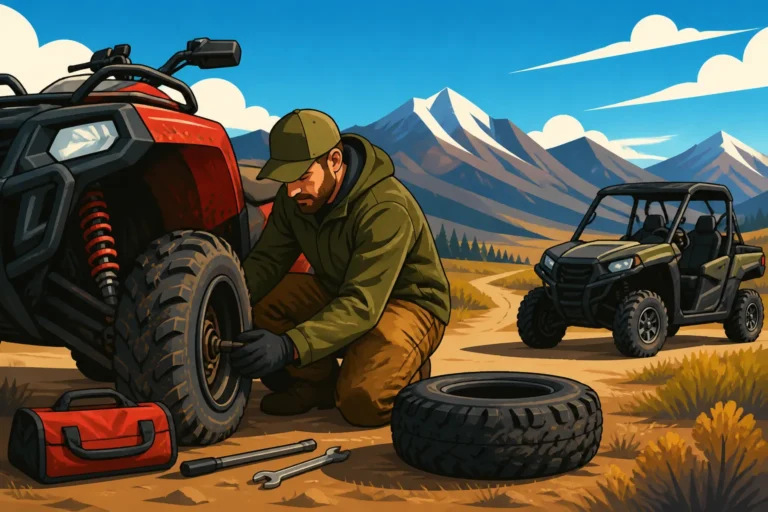
A quick inspection can also reveal whether a simple fix is safer than a tow. A loose battery connection, a flat tire, or a branch caught near a wheel may be repairable on the trail if the machine is stable and the repair is within your skills. For a remote breakdown, see [Fixing a Flat 60 Miles From the Nearest Shop] and plan ahead with [What to Carry on a Remote Montana Ride].
Choose a recovery method that matches the terrain
A gentle tow on a broad, level route is very different from recovering a machine on a steep, rocky, or muddy trail. Consider the slope, footing, width, visibility, and room to maneuver. A tow vehicle should have enough control to move the disabled machine without being pulled off line, and the route should not force either vehicle toward a drop-off, soft shoulder, or blind corner.
A winch may be more appropriate than a tow strap when the machine needs controlled movement over a short, difficult section. It still requires suitable equipment, a secure anchor, and a clear exclusion zone. A tree or other anchor should not be used unless the setup is appropriate and the anchor is sound; use a tree-saver strap when a tree is a suitable anchor. Never wrap a winch line directly around a tree. If the anchor, line, or attachment point is questionable, stop rather than testing it under load. The safety considerations in [Winching on a Steep Montana Trail] and [Recovery Gear for a Montana Shelf Road] are especially relevant on exposed terrain.
| Situation | Safer first consideration | Avoid |
|---|---|---|
| Stable machine on a broad, level trail | A slow, controlled tow using approved recovery points | Sudden acceleration or a jerking pull |
| Machine on a steep or exposed slope | Stabilize it and assess a controlled winch recovery or professional help | Pulling from the downhill side without a clear plan |
| Steering or a wheel is damaged | Check the manual and consider lifting or transporting the machine | Dragging it blindly around corners |
| Fuel leak, fire risk, or serious injury | Move people to safety and seek emergency assistance | Continuing a recreational recovery attempt |
| Recovery gear or anchor is not rated or understood | Stop and get qualified help | Guessing about capacity or using improvised attachment points |
Prepare for a Controlled Tow or Winch Recovery
Once you have decided that recovery is appropriate, set up the pull deliberately. The people involved need to know what is moving, where it is going, and who is directing the operation. A crowded trail, a group of anxious riders, and unclear hand signals are a recipe for someone stepping into the wrong place.
Use suitable equipment and approved attachment points
Read the equipment labels and the machine’s manual before connecting anything. Use recovery gear intended for the task, with adequate working capacity for the machines and conditions. The exact capacity needed depends on the vehicle, load, slope, surface, and recovery method, so do not rely on a rule of thumb or on a strap that simply looks sturdy.
Attach the line only to recovery points approved by the manufacturer. Do not connect a winch or tow line to a hitch ball, suspension arm, tie-down loop, bumper section, or other part that is not designed for recovery. Those components can fail under load or cause the machine to move in an unexpected direction. If the machine has no clear recovery point, consult the manual or stop and get knowledgeable assistance.
Do not treat a tow strap and a winch line as interchangeable. A strap intended for a controlled tow may behave differently from a winch line, and using one in the wrong way can create dangerous forces. Likewise, avoid improvised extensions, knots, damaged webbing, or hardware that is not rated for recovery. If you cannot confirm that the gear is suitable, do not load it.
Keep people clear of the line and the vehicles
Before applying tension, move bystanders well away from the machines, the line, and the direction of travel. No one should stand between the vehicles, beside a loaded line, or in the likely path of either machine if it shifts. A line or attachment that fails can move violently. Keep the recovery area as clear as the terrain permits, and make sure everyone understands the stop signal.
Use one person to direct the operation. The driver or winch operator should be able to see or clearly communicate with that person. Start with slack removed and tension applied gradually. For a tow, the disabled vehicle’s operator should be seated and ready to steer or brake if the machine can be controlled. If it cannot be controlled, do not tow it as though it were a normal rolling vehicle.
Stop immediately if the line shifts, the anchor moves, the recovery point bends, a tire slides toward an edge, or either machine behaves unexpectedly. Do not keep pulling harder to overcome a problem you have not diagnosed. A recovery that has started to go wrong is often safer to reset than to force through.
Plan the path and move in small, controlled stages
Choose the simplest route to a safe staging area, not necessarily the shortest route back to the trailhead. Avoid steep side slopes, tight turns, loose edges, and places where the tow vehicle could lose traction. On a narrow trail, you may need to reposition before moving the disabled machine. If there is no safe space to turn or pass, do not assume that a more powerful pull will solve the problem.
Move slowly and communicate continuously. Keep the line from snagging on rocks, roots, or brush. If the disabled machine can roll and steer, its operator should follow the tow vehicle’s movements and avoid sudden braking. If the terrain changes or the angle becomes uncomfortable, stop and reassess rather than continuing because the group is already partway through.
On a steep or uneven route, consider recovering only to a safer, wider location before deciding what comes next. Short, planned movements can reduce the chance of a line snagging or a machine sliding sideways. If you need a more detailed gear checklist for difficult terrain, [Recovery Gear for a Montana Shelf Road] offers a useful companion to this recovery plan.
Decide Whether to Tow, Repair, or Call for Help
There is no single best answer for every breakdown. A repair may be simple on a flat staging area, while the same repair on a steep trail could expose riders to unnecessary risk. The right choice depends on the machine’s condition, the route, the group’s experience, and whether you have the gear to complete the recovery safely.
A short tow may work when the machine is controllable
A slow tow may be reasonable if the disabled ATV or UTV can roll, steer, and brake, the route is stable, and both machines have suitable recovery points. Keep the distance and speed conservative, especially on loose gravel, mud, or uneven ground. The disabled operator should remain in control of the vehicle rather than being treated as cargo behind the tow vehicle.
Before moving, agree on a route and a clear stop signal. Avoid towing through traffic, down a steep slope, or along a trail edge if a safer option exists. Do not tow a machine with a flat or damaged wheel if that wheel could collapse, bind, or pull the vehicle off course. A tow that feels smooth on level ground can become unsafe as soon as the trail narrows or pitches downhill.
A tow strap is not a substitute for a trailer. If the machine is badly damaged, cannot steer, or needs to travel a long distance, arrange transport that supports it properly. Once it reaches a trailhead or accessible road, you may need a trailer, a truck with loading equipment, or a recovery service. [Montana Trailhead Parking and Staging] can help with thinking through access and staging before a ride, while [Towing a Trailer Behind an OHV in Montana] is relevant when the recovery plan involves towing a trailer with a machine.
Attempt a trail repair only when the setting is safe
A minor issue may be fixable if the machine is parked securely, the repair is within the group’s abilities, and the necessary tools and parts are available. A puncture, loose electrical connection, or debris caught near a wheel may be straightforward. A damaged steering component, broken suspension part, overheating problem, or fuel leak is a different matter. Do not attempt a repair that requires working beneath an unstable vehicle or handling a hazard you are not equipped to manage.
Think about the consequences of a repair that fails halfway back. A temporary fix that seems adequate in camp may not hold on a rough descent. If the machine will be carrying a passenger, climbing a grade, or crossing a remote section, be especially conservative. A repair should restore safe control, not merely get the engine running.
If you decide to stop and repair, tell the rest of the group what you are doing and keep the work area visible. Preserve enough daylight and fuel to reach a safe location. If the repair is taking longer than expected, do not let sunk time pressure you into a risky tow or a rushed ride back.
Call for assistance when the risk exceeds your capability
Professional help may be the safer option if the machine is near a drop-off, cannot steer, is trapped beneath another vehicle, or needs to be moved over difficult terrain. It is also sensible when your group lacks rated recovery equipment, the anchor is uncertain, or nobody has experience using a winch. A remote recovery can require specialized equipment and local knowledge that a recreational group may not have.
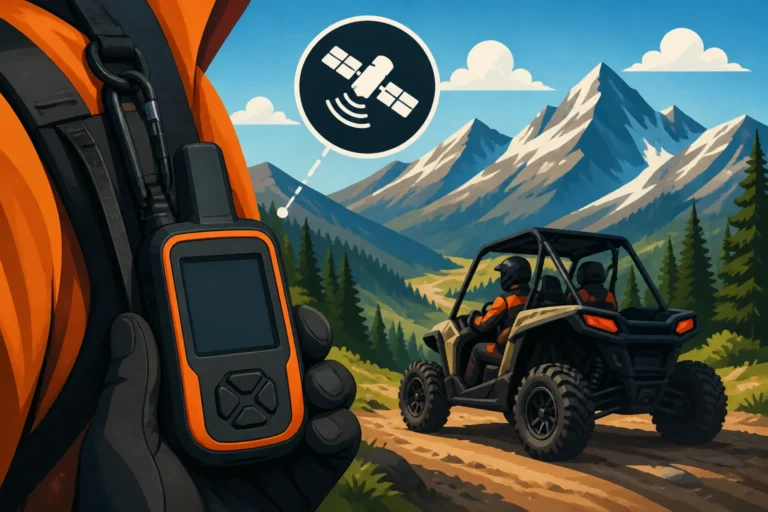
Montana’s distances and terrain can make a simple breakdown complicated. A machine disabled near the Bitterroot foothills, the Flathead National Forest, or a high route in the Custer Gallatin area may be far from a road where a truck can reach it. Share your location as accurately as possible, describe the machine and the problem, and explain whether anyone is injured or the vehicle is unstable. If cellular service is absent, a satellite messenger or similar communication device can be important; see [Cell Dead Zones in Western Montana] and [Carrying a Satellite Messenger in Montana].
Do not assume that any trail is open to a recovery vehicle or that a nearby road provides legal access to the machine. Check route rules and land-management information before planning a trip, and avoid driving off-route to reach a stranded rider. Tools such as onX Offroad can help riders review mapped routes and save information for offline use before leaving service, but map information should be checked against applicable land-management rules and posted closures.
Reduce the Chances of a Remote Recovery
The easiest recovery is the one you never need. You cannot prevent every flat tire or mechanical failure, but you can make a remote breakdown less likely to become a dangerous ordeal. A little preparation at home is far easier than discovering a missing strap, dead phone, or unclear route plan deep in the backcountry.
Match the machine and plan to the trail
Before leaving, compare the route’s width and difficulty with your machine. A full-size side-by-side may not fit a route intended for narrower vehicles, and a route that looks manageable on a screen may include steep grades, rocky sections, or tight turns. Review [Montana Trails Rated for Full-Size Rigs] and [Checking Montana Trail Status Before You Drive] when deciding whether a route suits your vehicle and the day’s conditions.
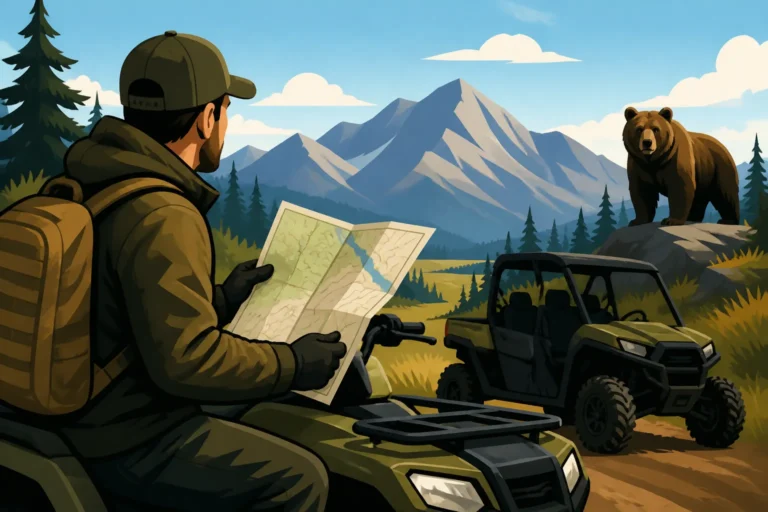
Do not rely on a single map or assume a trail is open because it appeared in an older trip report. Seasonal closures, snow, fire activity, washouts, and land-management restrictions can change where you can ride. Use onX Offroad or another mapping resource to plan the route and save maps for offline access, then cross-check important access details with official signs and land-management information. Downloading data before leaving service matters in places where a phone may show no signal.
Share your route and expected return time with someone who is not riding with you. Tell them what to do if you do not check in. For longer rides, choose a turnaround point and a time to head back rather than letting the group continue until daylight becomes a concern.
Carry recovery and communication gear you know how to use
Pack recovery equipment that is appropriate for your machine and learn how to use it before the trip. That may include rated recovery gear, gloves, a tire repair kit, basic tools, a first-aid kit, and a way to communicate when cellular coverage disappears. Check all equipment before departure for damage, corrosion, missing parts, or unclear ratings.
Practice simple recovery procedures in a safe, open area. Know where the manufacturer-approved recovery points are, how to apply a winch line safely, and how to keep everyone clear. It is much better to discover at home that a strap is too short or a winch control is unfamiliar than to work it out under pressure on a muddy slope.
A recovery plan should include people, not just equipment. Make sure each rider knows who is directing a recovery, how to signal stop, and where to stand. If you are riding alone, reconsider whether the route and conditions are appropriate; remote terrain is less forgiving when no one is available to help. [Riding Alone in the Montana Backcountry] and [What to Carry on a Remote Montana Ride] can help you prepare for that added responsibility.
Make a post-recovery plan before the machine reaches the trailhead
Getting the machine moving is only part of the problem. Decide how it will be transported once it reaches a road or staging area. Confirm that a suitable trailer or vehicle is available, that the loading approach is safe, and that you have the tie-down equipment needed to secure it. Do not leave a damaged machine in a place where it blocks a route or creates a hazard unless there is no safer alternative.
After a difficult recovery, inspect both machines and all recovery gear. Look for bent attachment points, damaged straps, winch-line wear, leaking fluids, loose tires, or unusual steering and brake behavior. A vehicle that made it out under tow may still be unsafe to ride or load without further inspection.
Finally, report a significant obstruction, trail damage, or unsafe condition to the appropriate land manager when practical. A damaged machine can be an inconvenience; an unmarked hazard left on a busy route can create trouble for the next rider. Good preparation, patient decision-making, and a willingness to stop when conditions are unsafe are what turn a remote breakdown into a manageable recovery.
Disclaimer
This article is for general informational purposes only and does not constitute professional advice. Laws, prices and regulations vary by location and change over time. Consult a qualified professional for guidance on your specific situation.