Buying Permits for a Group Trip
A group ride can involve several machines, riders, and permit rules, and one missed permit can disrupt the whole day. The key is to plan by machine, not by group: check each vehicle’s registration and residency status, confirm who is handling any rental paperwork, and buy the right permit before riding.
Plan permits by machine, not by rider
For a Montana OHV trip, start with a list of every ATV, UTV, and other off-highway vehicle the group expects to ride. Montana’s trail permit requirements generally attach to the machine, not to the number of people riding it. That means one permit does not cover every vehicle in a convoy, and a passenger does not normally need a separate machine permit simply for being a passenger.
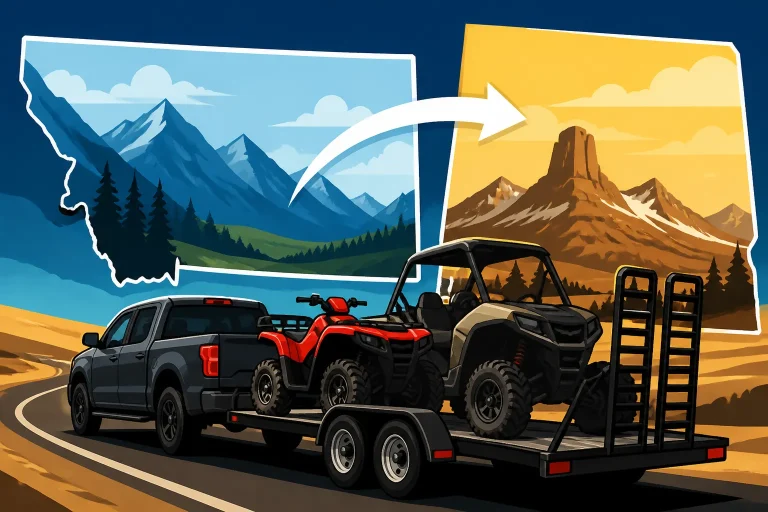
The first question is whether each machine is treated as a Montana resident machine or a nonresident machine. A Montana resident may use the applicable resident registration or trail-pass system. A visitor bringing a machine from another state may need Montana’s nonresident permit to ride on public trails. The requirements can depend on the machine’s status and where it will be used, so don’t assume that an out-of-state registration, plate, or decal substitutes for a Montana permit. Review Montana’s Non-Resident Temporary Use Permit and What Montana Riders Need Before They Ride before the group leaves.
| Group member’s machine | What to check before the trip |
|---|---|
| Montana-registered machine | Confirm registration and any required resident trail pass are current |
| Machine brought from another state | Check whether it needs Montana’s nonresident permit for planned public-land riding |
| Rental machine | Ask the rental shop whether the permit is included or handled by the shop |
| Borrowed machine | Confirm who is responsible for the permit and that it covers the machine’s use |
| Machine used only on private land | Check whether the planned riding stays entirely on land where public-land permit rules do not apply |
A practical group spreadsheet or checklist can prevent the most common problem: counting riders but not machines. Record the owner or renter, machine type, home-state status, permit status, and who will carry the paperwork. If a rider plans to switch between two machines, check the permit for each one. A permit for one vehicle should not be treated as transferable to another; see Permits for a Second Machine.
Permit rules are only one part of preparing. They do not automatically authorize a vehicle to ride on a road, guarantee access to a particular route, or override a land manager’s closures. Public-land access depends on the route and the rules for that location. Check the route’s current status and the applicable map before setting out.
Identify the right permit for every vehicle
For visitors, the main distinction is often whether the vehicle is registered in Montana or comes from outside the state. Montana has a nonresident OHV trail permit system for qualifying out-of-state machines. It is intended for trail use under Montana’s rules, not as a replacement for the machine’s home-state registration or as general permission to ride wherever a vehicle can physically travel. The details of what the permit covers are explained in What the Non-Resident Permit Covers.
For Montana residents, the relevant requirements may be tied to resident registration and the resident trail pass. A valid registration from another state does not automatically make a machine a Montana resident machine. If a group includes both Montana residents and visitors, don’t buy one type of permit for everyone without checking each vehicle’s status. See Montana’s Resident OHV Trail Pass for the resident side of the system.
A permit also does not settle every question about road use. Riding a public trail and riding a road section are different issues. A trail permit does not by itself make road riding legal, and route access can depend on local rules, road ownership, and posted restrictions. For a planned road segment, check Does the Non-Resident Permit Allow Road Riding? and the rules for that specific road.
Before buying, make sure the group has the right basic details for each machine. Useful information can include the machine’s registration status, home state, type, and identifying details. Check the seller or official licensing channel for the current application requirements rather than relying on a past trip’s paperwork. If a vehicle is borrowed, rented, newly purchased, or registered under a business, its situation may need extra checking.
Also ask whether the machine will actually be ridden on public trails. A vehicle kept on a trailer or used only on private property may be treated differently from one driven onto public riding areas. Don’t assume that a trip’s destination or the owner’s property status answers the question: a route may cross a different ownership or management boundary. The key is to check the land and route where the vehicle will operate. When a Montana Rider Needs No Permit can help clarify situations where a permit may not be required.
Buy and verify permits before the group travels
Once every machine has been classified, the group can decide who will purchase each permit. Montana permits may be available through official online licensing channels and other authorized outlets. The best option depends on the permit type and the timing of the trip. Online purchase can help a group organize in advance, while an in-person seller may be useful if someone needs help confirming the correct product. Check Buying a Trail Pass Through FWP Online Licensing for the online route and FWP Offices That Sell Trail Passes for in-person options.
Use one coordinator if that makes the process easier, but keep the responsibility clear. A person buying for several machines should make a separate entry for each vehicle, confirm that each purchase is associated with the correct machine, and save the confirmation or receipt. If the process requires the permit to be displayed on the vehicle, make sure it is attached as directed before riding. Where a Montana OHV Decal Goes covers placement; follow the current permit instructions if they differ.
A reliable process looks like this:
- List every vehicle. Include machines arriving on trailers, rental vehicles, and any backup machine someone might use.
- Record each vehicle’s status. Note whether it is Montana-registered, registered elsewhere, rented, or borrowed.
- Check the planned riding area. Confirm whether the routes are public trails, private land, roads, or a mix.
- Match each machine to the correct requirement. Use the permit and registration rules that apply to that vehicle, rather than buying one permit for the party.
- Purchase through an appropriate channel. Use the official licensing route or an authorized seller, and confirm current instructions.
- Save proof and display permits as required. Keep purchase records accessible and attach any decal according to its instructions.
- Recheck before departure. Make sure the permit is current, assigned to the right machine, and not left with a vehicle that is staying home.
Avoid waiting until the group reaches a trailhead to sort out permits. A seller may not be nearby, online service may be unreliable in an area with poor reception, and one person’s paperwork may not solve a problem for several machines. Buying early also gives the group time to correct a mistaken purchase or confirm an unclear vehicle status.
Carry proof in a way that remains available during the ride. A digital receipt can be useful, but it is sensible to keep the required machine display in place and have access to the relevant registration or permit information even if a phone battery runs down. Review Do You Carry Paperwork on a Montana Trail? for practical considerations about carrying documents.
Handle rentals, borrowed machines, and mixed groups carefully
A group may combine personal machines with rentals or borrowed vehicles. That creates a simple but important question: who is responsible for making sure each machine is properly permitted?
For a rental, ask the shop directly whether the required Montana trail permit is included, already attached, or must be purchased separately. Do not infer that the rental shop has handled it just because the machine is ready to ride. Check which vehicle the paperwork applies to and whether it covers the kind of riding planned. Rental terms may also restrict where the machine can go, independently of public-land permit rules. See Montana Permit Rules for a Rented Machine and [Does a Montana Rental Include the Permit?].
For a borrowed machine, agree with the owner in advance who will arrange the permit and provide any required documents. Confirm that a permit already attached to the vehicle is current and appropriate for the planned use. Don’t assume that a previous owner’s permit, a different vehicle’s permit, or a pass belonging to the rider can be used instead. The rules for borrowed machines are covered in Montana Permits for a Borrowed Machine.
A mixed-residency party should keep the paperwork organized by vehicle rather than by family, trailer, or riding group. For example, one trailer could carry both resident and nonresident machines. The fact that the machines are traveling together does not make their permit requirements identical. Write the permit status beside each machine on the trip list and have the owner or assigned rider confirm it before unloading.
Finally, check education and age requirements separately from permits. A trail pass does not replace any required safety education, and requirements can vary with the rider’s age and the type of riding. If the group includes young riders, check Montana OHV Safety Education Requirements and the applicable age rules before the trip.
A little coordination avoids roadside confusion: count machines, confirm each vehicle’s status, buy the correct permits, and make sure every rider knows which machine they are using. When one detail is uncertain, verify it with the relevant Montana licensing or land-management authority before the group heads out.
Disclaimer
This article is for general informational purposes only and does not constitute professional advice. Laws, prices and regulations vary by location and change over time. Consult a qualified professional for guidance on your specific situation.