Lights On at All Times in Montana
It's easy to assume that when the sun's out, your ATV or UTV's lights can stay off, especially if you're just zipping down a county road to get to a trail. But in Montana, riding your off-highway vehicle on public roads comes with specific rules, and one of the most frequently misunderstood is the requirement for your lights to be on all the time. This guide will demystify Montana's continuous lighting mandate, helping you understand why it's in place, where it applies, and how to ensure your machine is always compliant for a safe and legal ride.
The Mandate: Why Your Lights Must Be On
Montana's sprawling landscapes are a dream for OHV enthusiasts, but with that freedom comes responsibility, especially when sharing roads with traditional vehicles. The "lights on at all times" rule isn't just about visibility in low light; it's a critical safety measure designed to make your off-highway vehicle as noticeable as possible to other drivers, regardless of the time of day.
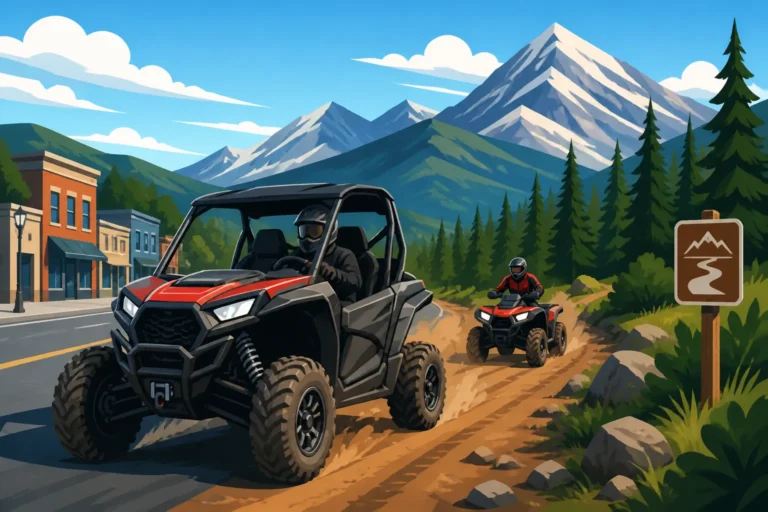
Think about it from a driver's perspective. Your side-by-side or quad might be a blur of excitement to you, but to someone in a truck or car, it's often smaller, faster, and harder to spot than they might expect, especially on dusty gravel roads or through the dappled light of tree-lined paths. Having your lights illuminated makes you stand out, reducing the risk of collisions. This isn't just a suggestion; it's a core component of [What Montana Requires on an OHV Road Ride] and a non-negotiable legal requirement when you venture onto public roadways.
The intent behind this rule is simple: enhance safety for everyone sharing the road. OHVs, by their nature, are designed for off-pavement use and often lack some of the standard safety features of street-legal cars and trucks, like turn signals or brake lights that are easily visible from a distance. Constant illumination helps bridge that gap, acting as a constant signal of your presence, even on the brightest Montana afternoon. It's a small adjustment that makes a big difference in preventing accidents, particularly in areas where roads might be narrow, winding, or have limited sight lines.
Enhancing Visibility Beyond Headlights
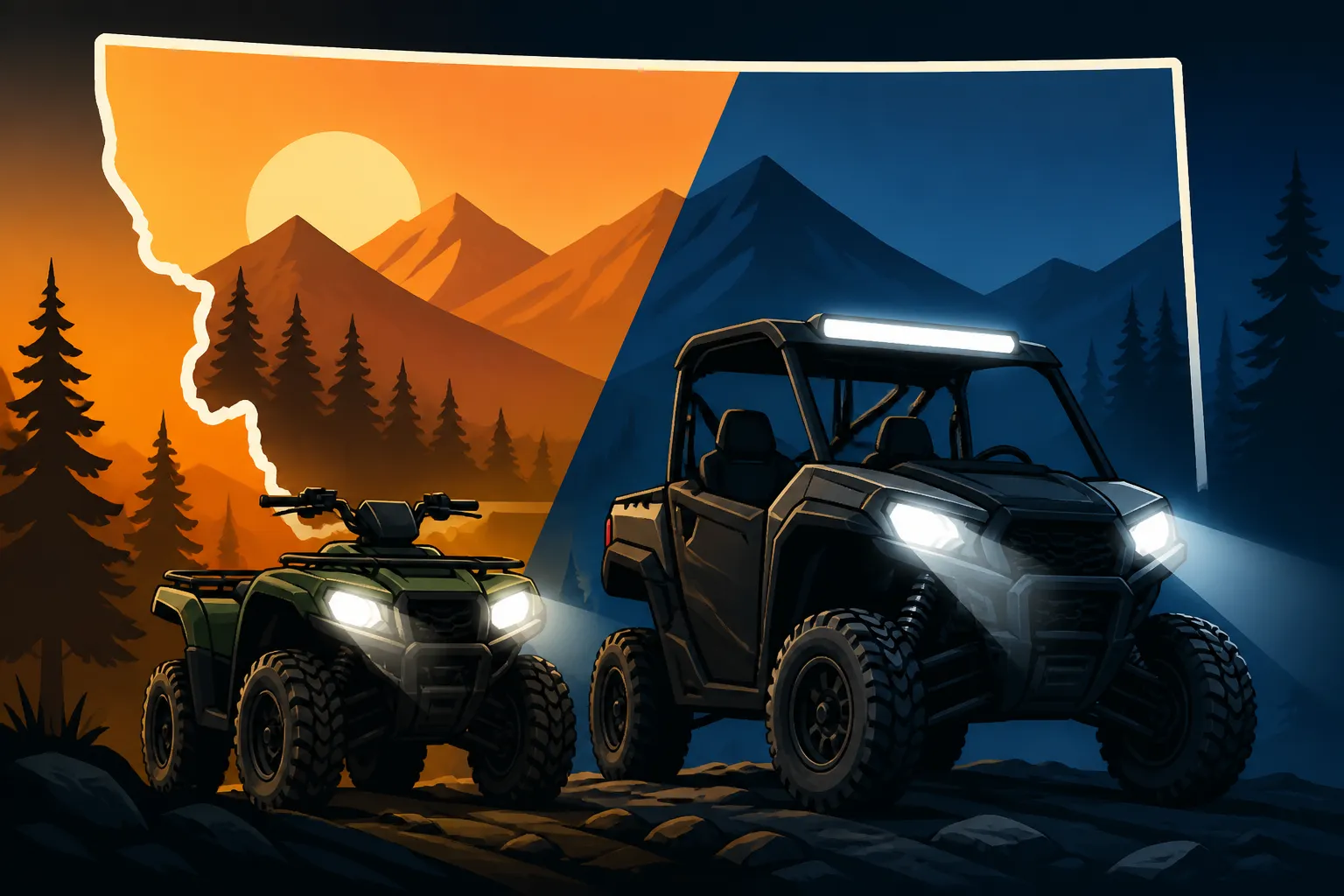
While headlights and taillights are the foundation, thinking beyond them can significantly increase your visibility. Many riders opt for additional lighting, especially if their machine's stock lights aren't particularly bright. This could include adding an LED light bar, which throws a much wider and brighter beam, or installing auxiliary taillights. The goal is to make your machine impossible to miss.
Consider the diverse conditions you might encounter: a dusty county road kicking up a cloud behind you, the blinding glare of a low sun in the late afternoon, or the shadowy stretches of a forest road. In all these scenarios, your lights are your best ally. Modern LED lighting is incredibly efficient and offers superior brightness compared to older halogen bulbs. Upgrading your lighting system is not only a good safety practice but can also improve your riding experience by giving you a clearer view of the path ahead, particularly if you find yourself out later than planned.
Remember, visibility isn't just about what you can see, but what others can see of you. Adding reflective tape to your machine, especially on the rear and sides, can also provide an extra layer of visibility, catching the light from other vehicles. These small, proactive steps can collectively make your OHV a much safer presence on any road you share with traffic, whether it's a bustling main street or a quiet backroad.
What "Lights On" Truly Means
When Montana law says "lights on at all times" for OHVs on public roads, it's referring to your primary forward-facing headlights and rear-facing taillights. This isn't just about having them functional; it means they need to be actively illuminated from the moment you enter a public road until you leave it. Think of it like a motorcycle: regardless of daylight, their headlights are typically always on for improved safety and visibility.
For most modern ATVs and UTVs, this is a straightforward flick of a switch. However, older models or those with basic electrical systems might require a bit more attention to ensure consistent operation. It's not uncommon for riders to forget, especially when they're used to riding solely on trails where such a rule might not be enforced. But on Montana's county roads, whether you're heading to a trailhead or just riding to a local diner, those lights need to be glowing.
This requirement also implies that your lighting system must be in good working order. A burnt-out bulb or a faulty wiring connection doesn't just reduce your visibility; it puts you in non-compliance with the law. Before you even leave your driveway or staging area, do a quick check: ensure both your headlight and taillight are bright and fully functional. This simple habit can save you from a traffic stop and, more importantly, a potential accident.
Headlight and Taillight Requirements
Montana law for OHVs specifically mandates at least one headlight and one taillight when operating on public roads. The headlight must emit a white light visible from a distance of 500 feet to the front, and the taillight must emit a red light visible from a distance of 500 feet to the rear. If your machine is equipped with multiple headlights or taillights, all of them should be functional and illuminated.
Beyond just being on, the brightness and color are critical. A dim, flickering light might technically be "on," but it doesn't meet the spirit of the law, which is about ensuring adequate visibility. For riders who spend a lot of time on roads, upgrading to brighter LED headlights and taillights can be a wise investment. Companies like SuperATV offer a wide range of replacement and auxiliary lighting options that significantly enhance visibility, often exceeding stock performance. This can be especially important on dusty roads where visibility can be compromised by the conditions themselves.
Remember, this isn't about using your high beams all the time, which can blind oncoming traffic. It's about having your standard running lights active. If your machine has brake lights, they should also be fully functional and illuminate when you apply the brakes, providing another crucial layer of communication to drivers behind you. Ensuring these basic components are correctly working is your first line of defense against both accidents and citations.
When Lights Are Mandatory, Not Optional
The "lights on at all times" rule isn't limited to dawn, dusk, or nighttime. It applies 24/7 whenever your OHV is operating on a public road in Montana. This includes sunny midday rides, overcast afternoons, and any other time visibility might be less than optimal due to weather, dust, or road conditions. It's a blanket rule, removing any ambiguity about when you should or shouldn't have your lights on.
Consider a typical scenario: you're leaving your campsite near the [Custer Gallatin Trails Near Bozeman] on a bright summer morning, planning to ride a short section of county road to access a different trail system. Even though the sun is high and the sky is clear, your lights must be on. The same applies if you're taking a quick trip into a small town like Red Lodge or West Yellowstone for gas or a bite to eat. [Riding an OHV Into West Yellowstone] or [Riding to a Cafe in a Montana Trail Town] all fall under this continuous lighting requirement.
The only times this rule wouldn't apply is if you are operating strictly on private property with the owner's permission, or on designated OHV trails that are explicitly not public roads. However, even on trails, many riders choose to keep their lights on for their own visibility and to make themselves more noticeable to other trail users, especially around blind corners or crests. It's a good habit to simply always ride with your lights on, no matter the context, reinforcing safe practices.
Roads Where Continuous Lighting Applies
The "lights on at all times" rule in Montana applies to any public road where OHV operation is permitted. This casts a wide net, encompassing everything from remote gravel county roads that crisscross farmlands and forests to paved roads within small towns that have adopted OHV ordinances. It's crucial for riders to understand that "public road" means any thoroughfare maintained by a government entity – state, county, or municipal – that is open for public vehicle travel.
This definition can sometimes be a point of confusion for riders, especially those new to Montana or unfamiliar with local regulations. Many assume "road legal" only means specific equipment is needed, not continuous operation. But the two go hand-in-hand. Whether you're crossing a state highway, cruising down a county road, or using city streets where permitted, your lights are expected to be on. Familiarity with [Which Montana Roads Allow OHVs] is key, as is understanding that the lighting rule applies to all of them.
It's not just about through-travel either. If you pull off to the side of a county road to consult a map, take a photo, or wait for your riding buddies, your lights should remain on. The moment you are operating or even temporarily stopped on the traveled portion or shoulder of a public road, you are subject to these regulations. This consistent application ensures that your machine is always a visible presence to other motorists, reducing unexpected encounters.
County Roads and Commissioner Approval
Many of Montana's most scenic OHV routes involve sections of county roads. These are often gravel, two-track, or lightly paved, connecting trail systems or providing access to remote areas. In many counties, commissioners have the authority to open these roads to OHV use, but that permission comes with conditions, including the continuous lighting requirement.
For example, a ride through the [Little Belt Mountains] or accessing the [Missouri River Breaks OHV Access] might involve miles of county-maintained roads. Even if these roads see minimal traffic, the rule still applies. It's part of the agreement for OHVs to share these routes. The local authorities, such as the sheriff's department, will enforce these rules as they patrol their jurisdictions. They want to see those lights on, not just for your safety, but for the safety of ranchers, logging trucks, and other local traffic that may not expect to encounter an OHV.
Before planning a trip that involves county roads, it's always wise to check with the specific county's regulations. While the statewide lighting rule is constant, the permissibility of OHVs on certain county roads can vary. However, once you are on an approved county road, the "lights on" mandate is universal. Don't rely on the assumption that a deserted road means rules don't apply. They do, and enforcement helps ensure continued access for all responsible riders.
Montana City Streets and Municipal Ordinances
While county roads are where most OHV road riding occurs, some Montana towns and cities have specific ordinances that allow OHVs on their streets for limited purposes, such as riding to a gas station or connecting to a trailhead. When you enter these municipal areas, the "lights on at all times" rule carries over. [Montana City Streets and Municipal Ordinances] often detail not just where you can ride, but also the equipment you must have, and continuous lighting is always a part of that.
Imagine riding your UTV through the quaint streets of a trail town like Seeley Lake or Lincoln to get lunch. Even though the speed limit might be low and traffic light, your headlights and taillights need to be on. These towns are making an effort to accommodate OHV recreation, and riders must reciprocate by adhering to all safety regulations. Failing to do so could jeopardize future OHV access in those communities.
It's about being a good neighbor and a responsible rider. When locals see OHVs following the rules, it fosters a positive relationship between the riding community and residents. Conversely, riders who flout basic safety rules, like not having their lights on, can quickly lead to public complaints and tighter restrictions. So, if you're taking advantage of the ability to [Fueling an OHV in a Montana Trail Town] or parking to grab a coffee, make sure your machine is fully illuminated.
Crossing and Intersecting State Highways
Montana law also allows for OHVs to cross state highways and, in some very specific, limited circumstances, ride along the shoulder for short distances to connect to another trail or road. When performing these maneuvers, your lights must absolutely be on. [Crossing a Montana Highway on an OHV] requires extreme caution, and maximum visibility is paramount.
A cross-highway intersection can be one of the riskiest points of an OHV ride on public land. These are high-speed environments where other drivers might not be expecting a slower, smaller OHV. Your illuminated lights serve as a critical visual cue, signaling your presence and intent. Before you even approach the intersection, ensure your lights are working.
It's a moment when every piece of safety equipment, from your helmet to your working lights, comes into play. You need to be seen, and you need to see clearly. This is not the time for a quick, "no one's watching" dash across the pavement. Respect the rules, respect the other drivers, and ensure your machine is a beacon of light against the backdrop of the Big Sky.
Consequences of Non-Compliance
Ignoring the "lights on at all times" rule isn't just about taking a risk with your safety; it carries legal ramifications in Montana. Law enforcement, including county sheriffs, local police, and game wardens, actively patrols areas popular with OHV users, and a missing or unlit headlight/taillight is an easy catch. The consequences can range from a simple warning to a significant fine, and in some cases, might even impact your riding privileges.
The primary goal of enforcement isn't to be punitive, but to ensure safety and compliance with the state's OHV laws. Officers are trained to spot violations that contribute to accidents or nuisances. An unlit OHV on a public road is a clear safety hazard, making it a priority for them to address. Nobody wants their adventure cut short by a citation, especially for something as easily preventable as forgetting to turn on a switch.
Beyond the legal penalties, the more serious consequence of non-compliance is the increased risk of an accident. An unlit machine is harder to see, increasing the chances of a collision with another vehicle, a pedestrian, or even wildlife. These accidents can lead to serious injuries, property damage, and a lifetime of regret. The small act of ensuring your lights are on is a vital step in protecting yourself, your passengers, and others on the road.
Fines and Citations
If you're caught operating your OHV on a public road in Montana without your lights on during the day, you could face a citation. While the specific fine amount can vary depending on the county and the discretion of the issuing officer, these aren't just slap-on-the-wrist warnings. [Montana OHV Ticket Costs by Violation] can add up quickly, especially if combined with other infractions.
A typical fine for a lighting violation might be in the range of several tens to hundreds of dollars, potentially similar to a minor traffic infraction for a car. But it's not just the monetary cost. A citation can also mean lost time dealing with court dates, processing fees, and the general hassle that comes with legal proceedings. It's a preventable headache that takes away from the enjoyment of your riding experience.
In addition to direct fines, repeat offenses or severe safety violations could lead to further penalties, such as points on your driver's license (if the state links OHV violations to your driving record) or even the temporary suspension of your OHV registration. It's always best to err on the side of caution and ensure you're fully compliant with all Montana OHV laws to avoid these unwanted consequences.
Safety Risks and Accidents
The most dire consequence of riding without your lights on is the increased risk of a crash. Data consistently shows that vehicles with their lights on, even during daylight hours, are more visible and therefore less likely to be involved in accidents. For smaller, less conspicuous OHVs, this effect is even more pronounced.
Imagine a situation: you're riding a gravel county road, and a logging truck is approaching a blind curve. If your lights are on, the truck driver might catch a flicker of light earlier, giving them more time to react. If your lights are off, you might not be seen until it's too late. Similarly, other OHV riders on shared trails or roads, particularly those on dirt bikes that are even smaller, rely on visual cues to avoid collisions.
Beyond other vehicles, consider the natural hazards of Montana's roads. Wildlife frequently crosses roads, and a visible machine is more likely to be avoided by an animal, or at least give you more time to react. [Montana OHV Crash Reporting] highlights the unfortunate reality of off-highway vehicle accidents, and taking every precaution, including continuous lighting, is essential to keeping yourself and others safe. A little bit of light goes a long way in preventing a lot of hurt.
Ensuring Your Machine is Compliant
Making sure your ATV or UTV is always compliant with Montana's "lights on at all times" rule is a straightforward process that starts with regular maintenance and smart upgrades. It's not just about flipping a switch; it's about making sure that switch actually works and the lights it controls are bright and reliable. This proactive approach will save you headaches, keep you safe, and ensure you can enjoy Montana's trails and roads worry-free.
Start by making pre-ride checks a habit. Before every outing that involves public roads, walk around your machine and visually confirm that both your headlights and taillights illuminate brightly. Test your brake lights too. If anything looks dim, flickers, or isn't working, address it immediately. Carrying spare bulbs (if applicable to your system) or a basic tool kit for minor repairs can be a lifesaver on a longer trip.
Consider your machine's age and usage. Older models, or those that have seen a lot of hard use, might have corroded wiring or worn-out components that affect lighting performance. Investing in modern, durable lighting solutions can greatly enhance both reliability and visibility. This isn't just about meeting the minimum legal standard; it's about exceeding it for your own peace of mind and safety.
Maintenance Checks and Bulb Replacement
Regular maintenance is the cornerstone of a compliant lighting system. Check your bulbs frequently for signs of dimming or burn-out. Even if a bulb is still technically working, if it's significantly dimmer than it should be, it's not providing adequate visibility. Electrical connections can also corrode, especially in a dusty, wet, or muddy environment. Periodically inspect wiring harnesses for damage, frayed wires, or loose connections.
If you find a burnt-out bulb, replace it promptly. Ensure you're using the correct type and wattage specified for your machine to avoid electrical issues. Sometimes, a persistent issue with a light might point to a deeper electrical problem, such as a failing regulator/rectifier or a weak battery. If you're not comfortable troubleshooting electrical issues yourself, take your machine to a qualified mechanic.
Don't forget about your machine's battery. A weak battery can lead to dim lights, especially if other accessories are drawing power. Ensure your battery terminals are clean and tight, and that your charging system is functioning correctly to keep your battery topped off. A healthy electrical system is crucial for reliable lighting, ensuring your "lights on at all times" mandate is met without fail.
Upgrading for Better Visibility
Many stock OHV lighting systems are designed for basic trail use and may not provide optimal visibility for road riding. If you frequently ride on public roads, upgrading your lighting can be a game-changer. Aftermarket LED light bars, brighter headlights, and more powerful taillights are readily available and can significantly improve how well you see and are seen.
For instance, companies like SuperATV offer a wide array of LED light bars that cast a much wider and brighter beam than typical stock headlights. This not only makes you more visible during the day but also dramatically improves your nighttime vision, helping you spot obstacles, wildlife, and road hazards far in advance. You can also find plug-and-play LED replacement bulbs for your existing headlight and taillight housings, providing a significant boost in brightness with minimal effort.
When considering upgrades, think about the full spectrum of road-legal requirements. If your machine doesn't have turn signals or adequate brake lights, which are often part of a street-legal conversion, consider adding these as well. While the "lights on at all times" rule focuses on continuous illumination, having a full suite of functional, bright lights makes your machine safer and more communicative to other road users. Always ensure any aftermarket lights are properly installed and wired to avoid draining your battery or causing electrical problems.
Ensuring All Road-Legal Equipment is Functional
While the focus here is on continuous lighting, remember that this is just one piece of the puzzle for legal road riding in Montana. Your machine needs to meet several other requirements, and it's wise to check them all simultaneously. This includes having proper brakes ([Brakes a Montana Road Ride Requires]), a working horn ([Montana Horn Requirements for Road Use]), appropriate mirrors ([Mirrors Montana Road Riding Calls For]), and a spark arrestor and muffler ([Muffler and Exhaust Noise Limits in Montana]).
Before hitting any public road, do a quick walk-around and test all your lights – headlights, taillights, and if you've added them for road-legal use, turn signals, perhaps from a SuperATV kit. Honk your horn. Check your mirrors for proper adjustment and clarity. Make sure your brakes engage firmly and smoothly. These are all interconnected safety features that contribute to a safe and legal ride.
Remember that [Montana's Safety Education Requirement] also plays a role, particularly for younger riders. Adhering to all rules, from lighting to age requirements, demonstrates responsible riding and helps maintain access to Montana's diverse OHV opportunities for everyone. It's a comprehensive approach to safety that ensures your adventures remain thrilling and trouble-free.
| Requirement | Description | Visibility Impact | Legal Mandate |
|---|---|---|---|
| Headlights | White light, visible 500 ft forward. | Essential for forward visibility and being seen. | On at all times on public roads. |
| Taillights | Red light, visible 500 ft rearward. | Critical for rear visibility, especially from behind. | On at all times on public roads. |
| Brake Lights | Illuminate when brakes are applied. | Warns following traffic of deceleration. | Required for road-legal operation. |
| Turn Signals | Amber, front and rear, visible 500 ft. | Communicates intent to turn or change lanes. | Required for road-legal operation. |
| Mirrors | Rearview mirror, minimum one on left. | Allows rider to see traffic approaching from behind. | Required for road-legal operation. |
| Horn | Audible at 200 ft. | Alerting device for hazards. | Required for road-legal operation. |
Disclaimer
This article is for general informational purposes only and does not constitute professional advice. Laws, prices and regulations vary by location and change over time. Consult a qualified professional for guidance on your specific situation.