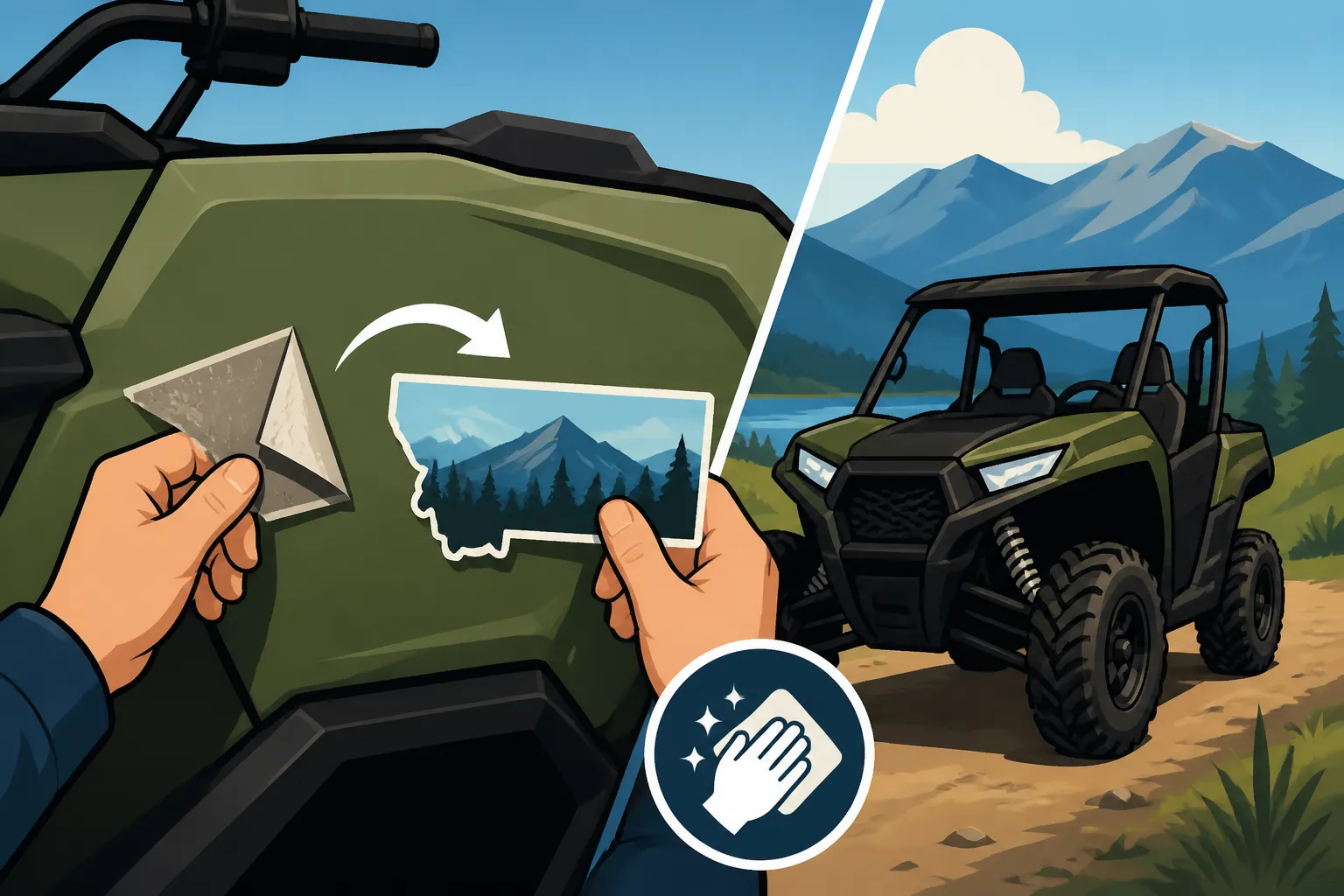
Replacing a Montana OHV Decal
It's happened to almost all of us who spend any real time on the trails: you head out for a ride, or maybe you’re just doing some routine maintenance, and you notice your beloved Montana OHV decal is either gone, mangled, or so faded you can barely read it. This can be more than just an aesthetic annoyance; it can actually put a wrench in your riding plans, leading to questions from law enforcement or land managers. This guide is all about navigating the sometimes-frustrating process of getting a replacement decal for your ATV or UTV in Montana, ensuring you stay legal and ready for your next adventure.
Why Your OHV Decal Matters in Montana
Many riders, especially those new to the state or to owning an off-highway vehicle, might see the decal as just a sticker. But in Montana, that little piece of adhesive paper is much more than that. It’s your official stamp of approval, proof that your machine is properly registered and that you’ve contributed to the state’s OHV program which helps maintain the trails we all love. Ignoring a missing or damaged decal can lead to real headaches.
The Legal Requirement for Display
Montana law is pretty clear: if you’re operating an off-highway vehicle on public lands or designated OHV routes, it needs to be registered, and that registration is marked by a visible decal. This isn't just a suggestion; it’s a mandated part of being a responsible rider in the state. The decal serves as an immediate visual cue to game wardens, sheriff's deputies, or forest rangers that your machine is good to go. Without it, you might find yourself needing to explain your situation roadside, which nobody wants to do when they’d rather be riding. The state wants to ensure that all machines using public resources are contributing their fair share, and the decal is the simplest way to enforce that.
It’s worth noting that the placement of this decal isn't arbitrary either. You can find specific guidelines on [Where a Montana OHV Decal Goes], often dictating that it must be clearly visible, typically on the rear of the machine. This ensures that enforcement officers can easily spot it without having to get too close or interrupt your ride unnecessarily. If your decal is missing, even if you have your registration papers in your pocket, an officer might still pull you over to verify. It's much smoother if everything is in plain sight as required.
Consequences of a Missing or Damaged Decal
Riding without a valid, visible decal is essentially riding an unregistered machine in the eyes of the law. While you might have the actual registration certificate tucked away, the decal is the immediate evidence. The consequences can range from a warning—if you’re lucky and the officer is feeling lenient—to a citation and a fine. These fines can definitely put a damper on your trail budget, and nobody wants to spend their hard-earned money on a ticket when it could be going towards gas or new gear. Beyond monetary penalties, it can also lead to a temporary cessation of your riding day, as an officer might ask you to trailer your machine until the issue is resolved.
Imagine planning a big trip to the Flathead National Forest, driving hours to the trailhead, only to have your day cut short because a piece of tape wore off your decal and made it unreadable. It's not just the financial penalty, but the lost time and ruined plans that really sting. Moreover, repeated violations could lead to more serious issues, although typically for a first offense with a valid registration certificate in hand, you're more likely to get a warning or a minor citation. However, it's always best to avoid the situation entirely by ensuring your decal is current and properly displayed. Penalties for an unregistered machine can be significant, so having a good decal is key to avoiding those problems.
What the Decal Actually Signifies
At its core, the OHV decal signifies two main things: current registration and the payment of fees that support Montana’s OHV program. When you register your ATV or UTV, you’re paying into a fund that helps with trail maintenance, facility development, and administrative costs for managing motorized recreation across the state. So, every time you see that decal, it's a small reminder that you're contributing to the sustainability of the sport here in Montana.
For many years, Montana offered a "permanent" OHV registration, which meant you registered the machine once, and that was essentially it for the life of your ownership. Even with a permanent registration, you still needed a current decal. The concept of [What Permanent OHV Registration Includes] meant less annual hassle, but the need for a visible decal remained steadfast. Without that decal, that "permanent" status is essentially invisible to anyone checking your machine on the trail. It’s the visual evidence that all the necessary paperwork and fees have been handled, allowing you to enjoy the vast and beautiful landscapes Montana offers without a worry.
Common Reasons for Needing a Replacement Decal
Life on the trails, and even just in the garage, can be tough on OHV decals. They’re designed to be durable, but they’re not invincible. Understanding why they might need replacing can help you prevent future issues, or at least prepare you for when the inevitable happens. From simple wear and tear to unfortunate incidents, there are many scenarios that lead riders to their county treasurer's office for a new sticker.
Lost, Stolen, or Vandalized Decals
One of the most frustrating reasons to need a new decal is when it’s gone missing due to theft or vandalism. While it might seem odd for someone to steal an OHV decal, it does happen, either out of mischief or perhaps to try and pass off an unregistered machine as legitimate. If your decal is outright missing and you know you applied it correctly, theft is a distinct possibility. Similarly, vandalism can leave a decal torn, scratched, or defaced to the point where it's no longer readable or legally compliant.
In these situations, it’s often a good idea to file a police report, especially if the decal was stolen or your machine was vandalized. While not always strictly required for a replacement decal, having a report can serve as official documentation of the incident, which might be helpful if questions arise later. When you go to the county treasurer's office, explaining that the decal was stolen or vandalized provides clear context for your request. Sometimes, if there are questions about ownership (perhaps you just purchased the machine and the decal vanished), having a well-documented bill of sale, perhaps generated through a service like LawDepot, can strengthen your proof of ownership, even if it's not directly related to the decal itself. It shows you’re a meticulous owner.
Damage from Weather, Wear, or Accidents
The Montana elements are notoriously harsh, and OHV decals bear the brunt of it. Intense summer sun can fade them to illegibility, making the year and registration number impossible to distinguish. Freezing winters, especially with ice scrapers or pressure washers, can cause them to crack, peel, or even come off entirely. This is a particularly common issue, and many riders wonder [When an OHV Decal Peels Off Over Winter]. It’s a recurring problem that signals the need for a replacement come spring.
Beyond natural wear and tear, accidents on the trail can also rip or damage decals. A fender bender, a brush with a tree, or even just gear rubbing against the sticker repeatedly can destroy it. If your machine has been in a significant accident that required repairs to the bodywork where the decal was located, you’ll almost certainly need a replacement once the repairs are complete. It’s always best to check your decals periodically, especially before a big trip, to ensure they’re still in good shape and fully visible.
Incorrect Placement or Transfer Issues
Sometimes, the decal itself isn't damaged, but it was applied incorrectly from the start. Perhaps it’s in a location that’s not easily visible, or it’s partially obscured by another accessory. While less common, this can still necessitate a replacement if an enforcement officer deems its current placement non-compliant. It’s always a good idea to consult the Montana Fish, Wildlife & Parks guidelines or ask at the county treasurer’s office for the recommended placement, especially if you’re unsure.
Another less frequent scenario involves purchasing a used machine where the previous owner had applied the decal improperly, or perhaps the original registration was for a different machine and the decal was mistakenly transferred. While Montana's "permanent" registration is tied to the machine itself and not the owner for its initial lifespan, the decal represents that specific machine's registration. If there’s any doubt about the decal matching the machine, or if you’ve recently purchased a machine and the existing decal seems questionable, it’s safer to apply for a replacement. Ensuring the decal correctly reflects your machine’s current, valid registration is crucial for smooth riding.
The Step-by-Step Process for Replacing Your Montana OHV Decal
Getting a replacement decal in Montana is usually a straightforward process, but like anything involving government agencies, it requires knowing where to go and what to bring. Being prepared can save you a lot of time and frustration, allowing you to get back on the trails sooner rather than later.
Where to Go: County Treasurer's Office
The primary place to handle your OHV registration and decal needs in Montana is your local County Treasurer's Office. This is the same office where you’d register your car, truck, or boat. Even though the Montana Department of Fish, Wildlife & Parks (FWP) oversees OHV programs, the actual registration and decal issuance are decentralized to the county level. You can generally walk into any county treasurer’s office across the state to handle this, though it’s often easiest to go to the one in the county where you reside or where the machine is primarily stored.
Before you make the trip, it’s always a good idea to check their specific hours of operation, as these can vary by county and can sometimes be affected by holidays or staff availability. A quick call or a visit to their county website can save you a wasted trip. Many counties now offer online appointment scheduling, which can also help streamline your visit during peak times. Remember, these offices handle a lot of different transactions, so showing up prepared and during off-peak hours can make your experience much smoother.
Essential Documents You'll Need
When you head to the County Treasurer’s Office, you’ll need to bring a few key documents to prove ownership and facilitate the replacement process. The most important document will be your current [Proof of Ownership for a Montana Title]. This is typically the machine's title. If you have the original registration certificate, that's excellent to bring as well. Even if the decal is missing, having the current registration paperwork proves your machine is already in the system.
Here’s a general checklist of what you should aim to bring:
- Your machine’s title: This is crucial proof of ownership. If you're still making payments and the bank holds the title, bring your most recent registration receipt or lien holder information.
- Your current OHV registration receipt/certificate: Even if the decal is gone, this shows it was registered.
- Your photo identification: A valid driver's license or state ID is required.
- Payment for fees: Be prepared for a small fee for the replacement decal.
- A Bill of Sale (if recently purchased and title not yet transferred): If you've just bought the machine and are still waiting on the new title, a robust bill of sale (like one you might create using LawDepot's templates for legal forms) is essential. This helps bridge the gap in ownership proof. Remember, LawDepot offers customizable legal documents that could be very useful for formalizing such transactions, ensuring you have solid paperwork for any future needs.
- Police report number (if stolen/vandalized): As mentioned, while not always strictly mandatory for the decal itself, it's good practice to bring if applicable.
Having these documents organized and ready will significantly speed up your visit. The staff at the treasurer's office are there to help, but they can only process your request efficiently if you provide them with the necessary information and proof.
The Application and Fees Involved
Once you’re at the County Treasurer's Office with your documents, you'll likely fill out a simple application form for the replacement decal. This form will ask for basic information about your OHV (make, model, VIN) and the reason for the replacement (lost, damaged, stolen). Make sure to have your VIN handy, as it's the primary identifier for your machine in the registration system. You can often find this number stamped on the frame of your ATV or UTV.
There is typically a small fee associated with replacing an OHV decal in Montana. This fee is generally quite modest, designed to cover the administrative costs of printing and issuing a new decal, rather than being a substantial revenue generator. While I cannot give you a precise figure, expect it to be a nominal amount, generally in the single-digit dollar range. It’s always best to check with your specific county treasurer's office for the most current fee schedule before you go. You can also get an idea of [Montana OHV Registration Cost at the Treasurer] which would cover the initial registration, and the decal replacement fee is usually a fraction of that. Be prepared to pay with cash, check, or credit/debit card, depending on the county's accepted payment methods. Once the fee is paid and the paperwork processed, you’ll usually receive your new decal on the spot, ready for immediate application.
Special Considerations for Decal Replacement
While the general process is fairly straightforward, there are a few scenarios that might introduce slight variations or require extra thought when replacing your Montana OHV decal. It’s worth being aware of these possibilities to ensure a smooth experience no matter your situation.
What if Your Registration is Expired or Needs Renewal?
This is a critical point: a replacement decal is typically issued for an existing, valid registration. If your OHV’s registration itself has expired (which is not usually the case for "permanent" registrations, but could apply to temporary permits or if the machine was never permanently registered), you won’t just get a new decal. You'll need to renew the underlying registration first. While Montana's "permanent" OHV registration doesn't technically expire as long as you own the machine, you might need to confirm the status if there's any doubt, especially if you bought the machine used and are unfamiliar with its history.
If you have a machine that falls under a different registration category or perhaps a temporary permit that does expire, you'll address both the renewal of the registration and the replacement of the decal in the same visit to the county treasurer. They will first update your registration status and then issue the appropriate decal. This ensures that the new decal reflects an active and legal registration status. It's always a good idea to clarify with the treasurer's office if you're unsure about the current status of your machine's registration, especially if it’s been stored for a while or if you're uncertain about how [Does a Montana OHV Registration Ever Expire?] really applies to your specific machine.
Replacing Decals for Multiple Machines
If you're a multi-machine household or manage a small fleet for a business, you might find yourself needing to replace decals for several ATVs or UTVs at once. The process is essentially the same for each machine, but you'll need to bring the necessary documentation (title, registration receipt, etc.) for each individual OHV. Each replacement will also incur its own separate fee.
While it might seem like a hassle, processing multiple machines at once is perfectly acceptable at the County Treasurer's Office. Just be prepared with all the paperwork organized by machine to make the clerk's job easier. It might be helpful to create a checklist for each machine before you go, including VINs, year, make, and model, to ensure nothing is missed. If you’re dealing with a business fleet, you might also be registering the OHVs under the business name, which requires additional documentation for [Registering an OHV Under a Montana Business]. Make sure you have all corporate papers or LLC registration details, such as those that can be handled through a service like LawDepot for business formation documents, ready if you're handling business-owned machines.
Handling a Damaged Decal During Winter or Off-Season
Montana winters can be long, and many OHVs are put into storage for months. It's common to discover a damaged or peeled decal when you pull your machine out of storage in the spring. Perhaps it was subjected to freeze-thaw cycles, or maybe you bumped it with a snow shovel. The good news is that you don't need to rush to the treasurer's office in the middle of a blizzard. You can generally wait until closer to the riding season.
However, if you plan on doing any winter riding – perhaps on plowed roads where OHVs are allowed or for ranch work – you’ll need that decal even in the off-season. In such cases, replace it as soon as you notice the damage. For seasonal discoveries, planning a trip to the county treasurer just before you start your spring riding will ensure you're compliant when the trails open. Just remember that if you ride at all on public lands, you need that valid decal, regardless of the time of year. So, if your decal comes off in December, and you plan to ride again in January, don't wait until April to get a new one.
Preventative Measures and Best Practices for Decal Longevity
Nobody wants to repeatedly replace their OHV decal. Not only is it a minor cost, but it's also a hassle to take time out of your day to visit the county treasurer. Taking a few proactive steps can significantly extend the life of your decal and help you avoid future replacements. A little care goes a long way in protecting your investment and keeping you on the trails without unnecessary interruptions.
Proper Placement and Application Tips
The initial application of your decal is crucial for its longevity. First, always make sure the surface where you're applying the decal is perfectly clean, dry, and free of any grease or wax. Use rubbing alcohol to clean the area thoroughly and let it dry completely. Any dirt or residue will prevent the adhesive from bonding properly, leading to premature peeling.
Second, apply the decal in a warm environment. Applying a decal in freezing temperatures can compromise the adhesive, making it less likely to stick securely. Once applied, use a squeegee or a credit card to firmly press out any air bubbles, working from the center outwards. This ensures maximum adhesion across the entire surface. Finally, double-check that you're applying it in a legally compliant and visible location. Montana law often specifies that it must be displayed prominently on the rear of the machine. Taking the time to do it right the first time can prevent issues down the line. If you're unsure about the best spot, revisit resources like [Where the Decal Goes on the Rear] for specific guidance.
Protecting Your Decal from the Elements
Once applied, your decal will face the brunt of Montana's weather. While you can't control the sun or snow, you can take steps to protect it. When washing your OHV, be mindful around the decal. Avoid directing high-pressure sprayers directly at the edges, as this can lift the adhesive. Hand-washing around the decal is often a safer bet.
During storage, especially over winter, consider covering your OHV or storing it in a garage or shed. This protects not only the decal but also the rest of your machine from UV degradation and extreme temperature fluctuations. If your machine is regularly exposed to the elements, you might even consider applying a clear protective film or a coat of clear spray sealant (designed for vinyl graphics) over the decal. This adds an extra layer of defense against fading and peeling, helping it withstand the rigors of Montana's varied climate. Think of it as sunscreen for your decal!
What to Do If You Suspect Theft
If your decal disappears unexpectedly and you suspect theft, your first step should be to thoroughly check your machine and surrounding area. Sometimes, decals can peel off and fall unnoticed. If it's truly gone and you suspect foul play, filing a police report is a wise move. This creates an official record of the incident. It’s also important to secure your machine, if possible, to prevent any further theft or tampering.
When you go to replace the decal, bring a copy of the police report with you to the County Treasurer's Office. This substantiates your claim of theft. Furthermore, if you want to ensure all your ownership documents are in order for future peace of mind, especially if you're formalizing proof of ownership after an informal sale, services like LawDepot can assist. They offer forms such as affidavits that can be used to legally declare the circumstances of a lost or stolen item. While not directly required for a decal replacement, having robust, legally sound documentation of your machine’s ownership and any incidents can be invaluable for any potential insurance claims or future transactions. It’s always better to be over-prepared when it comes to legal documentation for valuable assets.
Summary of Decal Replacement Process
To help visualize the key steps and requirements for replacing your Montana OHV decal, here’s a quick overview:
| Action / Reason | Required Documents | Where to Go | Estimated Fee (Check Local) | Key Considerations |
|---|---|---|---|---|
| Lost / Stolen Decal | Title, current registration receipt, Photo ID, (Police Report) | County Treasurer's Office | Small fee | File police report if stolen. |
| Damaged / Faded Decal | Title, current registration receipt, Photo ID | County Treasurer's Office | Small fee | Inspect regularly, protect from elements. |
| Incorrectly Applied Decal | Title, current registration receipt, Photo ID | County Treasurer's Office | Small fee | Ensure proper surface prep and placement. |
| Recently Purchased (No Title) | Bill of Sale (e.g., from LawDepot), Photo ID, VIN info | County Treasurer's Office | Small fee | Ensure solid bill of sale to prove ownership. |
| Expired Registration | Title, Photo ID, proof of insurance (if applicable) | County Treasurer's Office | Full renewal + decal fee | Renew registration first, then get decal. |
Being prepared with the right paperwork and knowing the process will always make your visit to the county treasurer a breeze. Keep your documentation safe, and enjoy your rides on Montana's incredible trails!
Disclaimer
This article is for general informational purposes only and does not constitute professional advice. Laws, prices and regulations vary by location and change over time. Consult a qualified professional for guidance on your specific situation.