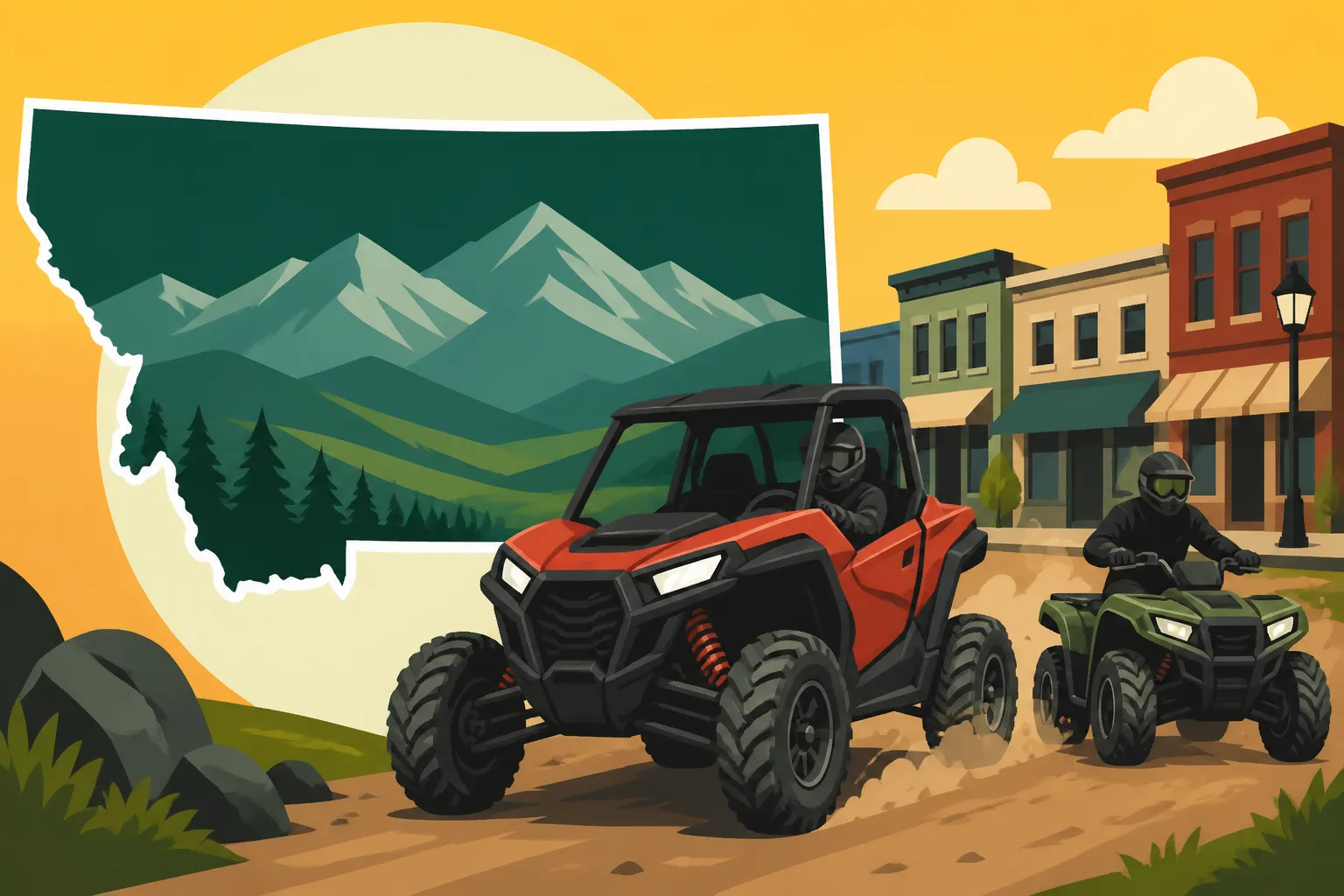
Montana Towns With Blanket OHV Ordinances
Oh, the joy and the headache of figuring out where you can actually ride your beloved ATV or UTV in Montana! So many of us dream of hitting the trails, maybe grabbing a burger in town, or even just getting to a gas station without having to load the machine onto a trailer. But then you hear whispers of "road legal" and "ordinances," and suddenly, it feels like navigating a legal minefield. This guide is here to unravel the mystery of Montana towns that embrace off-highway vehicles with blanket ordinances, helping you understand exactly what that means for your ride, your gear, and your peace of mind.
Understanding Local Control Over Montana OHV Access
Montana is a big state, and while the state sets some fundamental rules for off-highway vehicles (OHVs), a lot of the nitty-gritty about where you can ride on public roads falls to local jurisdictions – namely, counties and incorporated towns. This can feel like a patchwork quilt of regulations, which is a major source of frustration for riders who just want to enjoy their machines without fear of a ticket.
The Role of County Commissioners and Municipalities
At the county level, commissioners have the power to designate certain county roads as open or closed to OHVs. This often happens in areas where there's a strong recreational riding community, or where roads provide vital links between trail systems. But a county opening its roads doesn't automatically mean a town within that county also welcomes OHVs on its streets. That's where municipal ordinances come into play.
Towns and cities, being incorporated entities, have their own authority to create ordinances governing traffic within their boundaries. For a long time, many towns simply prohibited OHVs on their streets. This made sense from a safety perspective for some, but it also created a huge barrier for riders looking to access local services or connect with nearby trails. Imagine being able to ride for miles on Forest Service roads, only to have to trailer your machine for the last two blocks into a small town for gas or lunch. It's enough to make you just stay out in the sticks!
Navigating the Patchwork of OHV Laws
The result of this shared authority is that you can't assume that if one town allows OHVs, all towns do, or even that an open county road extends into the town limits. It truly requires a bit of homework before you drop the tailgate. Riders often express confusion and even anger when they get cited in a town they thought was OHV-friendly, only to find out they were mistaken about a specific street or local requirement. This "don't know until you know" situation is exactly what blanket ordinances aim to simplify, bringing clarity to where and how you can ride within a municipality. It's about creating a predictable environment for both residents and visitors.
What a "Blanket Ordinance" for OHVs Truly Means
When a Montana town adopts a "blanket OHV ordinance," it's essentially making a broad declaration that off-highway vehicles are welcome on most or all of its municipal streets, under certain conditions. This is a significant shift from the default assumption that OHVs are generally prohibited. It's a proactive step many communities take to support recreation, boost tourism, and make life easier for residents who use their machines for both work and play.
Beyond Individual Street Designations
Historically, some towns might have designated a few specific streets for OHV access, perhaps leading to a trailhead or a gas station. While helpful, this often meant riders still had to meticulously study maps and signage, leading to confusion and inadvertent violations. A blanket ordinance, by contrast, removes much of that ambiguity. It says, "Yes, come on in!" usually with some common-sense caveats.
Think of it like this: instead of a scattered list of "you can ride here, but not here," a blanket ordinance flips the script to "you can ride pretty much everywhere unless it's specifically prohibited." Typically, these prohibitions are for safety reasons, like main state highways running through town, busy commercial districts, or areas near schools. It’s about creating a consistent and predictable experience for the rider, so they can focus more on their destination and less on stressing about every intersection. This ease of access can be a huge draw for riders, especially those traveling from out of state with their machines for extended trips.
Standard Requirements for Road-Legal OHVs in Town
Even with a blanket ordinance, your OHV isn't suddenly exempt from basic road-legal requirements. These aren't local rules, but state-level mandates that apply whenever an OHV operates on a public road, regardless of whether it's a county road or a town street. These requirements are put in place for everyone's safety, ensuring your machine is visible and controllable in a mixed-traffic environment.
Here's what Montana generally expects:
- Headlights and Taillights: Your OHV needs at least one headlight and one taillight, and they must be on at all times when operating on a public road. This isn't just for night riding; it's about daytime visibility.
- Brakes: Functional brakes on all wheels. This is pretty standard stuff, but essential for road safety.
- Muffler and Spark Arrester: Your machine needs a muffler to keep noise levels reasonable and a spark arrester to prevent wildfires, especially crucial in Montana's dry summers.
- Rear-view Mirror: At least one rear-view mirror is usually required. This helps you keep an eye on traffic behind you, just like in a car.
- Horn: A working horn is necessary to alert other drivers or pedestrians.
- License Plate or Decal: You need current [Montana OHV Decals and Rear Placement] showing your machine is registered. Remember, even if a town has a blanket ordinance, you still need to be properly registered with the state.
- Insurance: Liability insurance is a must for any OHV operating on a public road. Just like with your car, this protects you and others in case of an accident.
- Driver's License: The operator needs a valid driver's license. This isn't the place for unlicensed riders, even if they're otherwise experienced.
While a blanket ordinance streamlines where you can ride, these fundamental equipment and operator requirements are non-negotiable. Many riders turn to aftermarket accessories from companies like SuperATV to ensure their machine meets these standards, especially for things like mirrors, turn signals, and durable light kits that are up to the task of regular road use.
Montana Towns Known for OHV-Friendly Ordinances
Montana has several communities that have recognized the value of OHV tourism and local use, opting for blanket ordinances to make access easier. These towns often serve as popular staging areas for trail riding or are nestled within vast public lands, making them natural hubs for OHV enthusiasts. While specific rules can change, these are some examples of communities that have historically been very welcoming.
West Yellowstone: The Gateway Town
Perhaps one of the most well-known OHV-friendly towns in Montana is West Yellowstone. Sitting right on the western edge of Yellowstone National Park, it's a prime destination for outdoor recreation, including snowmobiling in winter and ATV/UTV riding in warmer months. The town's economy is heavily reliant on tourism, and they've made a concerted effort to accommodate OHV users.
West Yellowstone's blanket ordinance allows OHVs on most town streets, providing critical links to numerous trailheads and national forest roads in the surrounding Gallatin National Forest. This means riders can stay in town, fuel up, grab groceries, and then directly ride their machines out to the trails without trailering. It’s incredibly convenient and a huge draw for visitors. However, riders still need to be mindful of traffic laws, speed limits, and pedestrian areas. You also can't just cruise into Yellowstone National Park on your OHV; access rules for the park itself are much stricter. But for getting around town and to the vast trail network beyond, West Yellowstone offers an excellent model of OHV integration.
Other Notable OHV-Friendly Communities
While West Yellowstone might be the most famous, several other Montana towns and regions have also adopted or are considering similar welcoming stances:
- Red Lodge: Located near the scenic Beartooth Highway and surrounded by the Custer Gallatin National Forest, Red Lodge is another popular spot for outdoor enthusiasts. The town has made efforts to accommodate OHV riders, understanding that it's a significant part of their visitor base, especially those looking to explore the Beartooth country.
- Lincoln: Nestled in the heart of the Lolo National Forest, Lincoln is a small community that embraces its role as a recreation hub. It's often cited as an example of a town that has worked with local OHV clubs to ensure good access to trails directly from town.
- Georgetown Lake Area (near Anaconda/Philipsburg): While not a single town with a blanket ordinance, the communities and roads around Georgetown Lake are incredibly popular with OHV users. Many roads here are open to OHVs, allowing for exploration of the Anaconda-Pintler Wilderness area, though strict wilderness boundaries are always enforced.
- Southeast Montana Towns: Some smaller towns in Eastern Montana, especially those serving as agricultural centers, may have more relaxed attitudes toward OHV use on town streets, particularly for residents using them for local work or transportation. However, these are often more informal allowances rather than codified "blanket ordinances," so always verify locally.
It's absolutely critical to remember that specific rules, designated roads, and even the existence of an ordinance can change. Before you head out, always double-check the local municipal codes or contact the town clerk's office for the most current information. What was allowed last year might have changed, and the last thing you want is a citation to spoil your trip. Checking locally helps avoid surprises and ensures you're riding respectfully within the community's expectations.
Ensuring Your OHV is Ready for Town Streets
Even if a town has a blanket ordinance, your machine needs to meet certain criteria to be considered "street legal" in Montana. This isn't just about avoiding a ticket; it's about your safety and the safety of others sharing the road. Converting a trail-ready OHV into a street-legal one often involves adding specific components and ensuring everything is in good working order.
Essential Equipment for Road Use
Beyond the basic requirements like working headlights, taillights, and brakes, there are other pieces of equipment that are either legally required or highly recommended for town riding. Think about how much different riding on a busy town street is compared to a quiet dirt trail. You're sharing space with cars, trucks, pedestrians, and cyclists, so visibility and communication become paramount.
Here's a deeper dive:
- Mirrors: While Montana law generally calls for at least one rear-view mirror, having side mirrors (especially for a UTV or side-by-side) dramatically improves your situational awareness. Many aftermarket suppliers, like SuperATV, offer robust mirror kits designed specifically for OHVs that can withstand trail abuse but still provide clear visibility on the road.
- Turn Signals: Believe it or not, Montana law doesn't explicitly require turn signals on OHVs for road use, unless they are required by the manufacturer for the specific vehicle to operate on public streets. However, for practical safety, having turn signals is a huge advantage. Hand signals are legal but can be difficult to see or execute while operating your machine, especially if you're holding on tight over bumps. Adding a [Lights On at All Times in Montana] kit with integrated turn signals is a smart upgrade for anyone planning regular town access.
- Windshield: While not strictly mandated, a windshield significantly enhances comfort and safety by protecting you from wind, bugs, and kicked-up debris. Many side-by-sides come with them, but ATV riders might consider handlebar-mounted wind deflectors.
- Seat Belts/Restraints: For UTVs and side-by-sides, ensure all passengers are using the manufacturer-installed seat belts or harnesses. These are crucial safety features that are just as important on a paved street as they are on a rough trail.
- Tires: If you're frequently transitioning between trails and pavement, consider a tire designed for mixed terrain. Aggressive mud tires can be noisy, wear quickly, and offer less grip on asphalt, while street-oriented tires might struggle on muddy trails.
Making sure your machine is properly equipped is not just about compliance; it's about being a responsible rider. A well-equipped OHV is safer for you, your passengers, and everyone else on the road.
Operator Requirements: License, Age, and Insurance
It's not just the machine that needs to be ready; the operator does too. Montana has clear rules about who can drive an OHV on public roads. These rules are in place to ensure that anyone operating a motor vehicle in a shared environment has the necessary skills and awareness.
| Requirement | Description |
|---|---|
| Driver's License | Any person operating an OHV on a public road in Montana must possess a valid driver's license. This means a standard automobile driver's license, not just an OHV safety certificate. This is a critical point that many new riders or out-of-state visitors sometimes overlook, leading to [Driver's License Rules for Montana Road Riding]. |
| Age Restrictions | While a valid driver's license is the primary requirement for road use, Montana also has specific age rules for OHV operation in general. For example, riders aged 12 to 15 need to complete an approved OHV safety course to operate an OHV on public lands and roads. However, for riding on an open public road, the driver's license rule generally takes precedence. Always check [Montana's Rule for Riders Aged 12 to 15] for specific nuances. |
| Insurance | [Liability Insurance for Montana Road Riding] is mandatory when operating an OHV on any public road in Montana. This provides financial protection in case you are at fault in an accident causing injury or property damage. You should carry proof of this insurance with you, just as you would for a car. |
| Safety Course | While not strictly required for licensed adult drivers on roads, the Montana OHV Safety Education Course is highly recommended for all riders, especially if you're new to the sport or plan to ride off-road extensively. It teaches crucial safety practices and responsible riding etiquette. |
Understanding these personal requirements is just as important as equipping your machine. If you're bringing a machine from out of state, be sure your home state's licensing and safety certificates are recognized, but remember the Montana driver's license requirement for road operation is universal.
Navigating Town Streets with Your OHV
Once your machine is properly equipped and you meet the operator requirements, riding through a Montana town with a blanket OHV ordinance can be a fantastic experience. It opens up opportunities for exploring, connecting with local businesses, and reaching new trailheads. However, it's still crucial to approach town riding with caution and respect, remembering you're sharing the road with various types of traffic.
Rules of the Road: Speed, Signals, and Parking
Even in an OHV-friendly town, you're expected to follow all standard traffic laws. An OHV isn't a free pass to ignore stop signs or speed limits. In fact, due to their different handling characteristics and visibility compared to cars, it might be wise to be even more cautious.
- Speed Limits: Obey all posted speed limits. Many town streets will have lower limits than rural roads, often 25 mph or even 15 mph in residential or school zones. OHVs can feel fast at low speeds, so keep a close eye on your speedometer. [Montana Speed Limits for OHVs on Roads] apply here.
- Traffic Signals and Stop Signs: Treat all traffic signals and stop signs exactly as you would in a car. Come to a complete stop, yield to pedestrians, and proceed only when it's safe.
- Lane Discipline: Ride single file on roads and use appropriate lane positioning. Don't weave in and out of traffic or ride two abreast unless the lane is wide enough and local ordinance specifically permits it (which is rare).
- Signaling: While turn signals might not be legally required for all OHVs, using them (if you have them) or clear hand signals is vital for communicating your intentions to other drivers and pedestrians.
- Parking: When you pull into town for lunch or supplies, park your OHV legally and responsibly. Look for designated parking areas or regular parking spots where a car would fit. Don't block sidewalks, driveways, or fire hydrants. Parking your machine outside a local cafe is part of the charm of these towns, but make sure you're not causing an obstruction.
Etiquette and Respect for Residents
Riding your OHV through town is a privilege, and maintaining that privilege relies heavily on riders demonstrating courtesy and respect for residents and other road users. Nothing sours local sentiment faster than noisy, reckless, or inconsiderate OHV operation.
- Noise Levels: While your machine needs a muffler and spark arrester, some aftermarket exhausts can still be quite loud. Be mindful of engine noise, especially in residential areas or late at night/early in the morning. Avoid unnecessary revving. Nobody wants their quiet afternoon shattered by a passing OHV.
- Dust Control: If you're on a gravel road transitioning into town, try to minimize dust. Slow down, especially when passing homes or businesses.
- "Wave" Culture: Montana is known for its friendly wave. A simple nod or wave to pedestrians or other drivers can go a long way in fostering good relationships.
- Respect Private Property: Stay on marked roads and trails. Do not trespass on private property, even if it looks like a shortcut. [Montana Trespass Rules Along Roads] are strictly enforced.
- Community Engagement: Consider joining or supporting local OHV clubs. These groups often work with towns and land managers to maintain trails, address concerns, and advocate for responsible riding, contributing positively to the perception of OHV users.
By being a responsible and considerate rider, you're not just ensuring your own enjoyment; you're helping to preserve OHV access for everyone in these welcoming Montana towns.
Challenges and Future Considerations for Town Access
While blanket ordinances are a fantastic step forward for OHV access in many Montana towns, the landscape of regulations is always shifting. There are ongoing challenges and discussions that riders should be aware of, as they can influence future access. It's a constant balancing act between recreation, safety, and community needs.
Resident Concerns and Balancing Interests
Even in towns that have embraced OHVs, there can still be concerns from residents who might not ride. Noise, dust, perceived safety risks, and the sheer volume of machines during peak season can be points of contention. Local governments are constantly trying to balance the economic benefits of OHV tourism with the quality of life for their permanent residents.
For example, a small town might welcome riders to fuel up and grab a meal, but local residents might push for stricter enforcement of speed limits or noise ordinances if they feel their peace is being disrupted. This often leads to ongoing discussions at county commission and city council meetings. Sometimes, what starts as a blanket ordinance might see specific streets or hours restricted based on community feedback. Active and engaged OHV clubs play a crucial role here by acting as liaisons between riders and residents, fostering understanding, and proposing solutions.
The Ever-Evolving Regulatory Environment
Laws and regulations, especially those pertaining to vehicles, are rarely static. As OHV technology advances, as vehicle types like low-speed vehicles and golf carts gain popularity, and as communities grow, the rules can change. What constitutes a "street legal" modification can also be a point of debate, especially with products designed for performance from companies like SuperATV that might push the boundaries of typical road use.
State legislatures might introduce new bills impacting OHV definitions or statewide requirements, and county commissioners or town councils might amend their ordinances based on new data, accident statistics, or public input. For instance, discussions about helmet laws, passenger restrictions, or where certain classes of OHVs can operate are always present. [Montana OHV Bills Riders Are Watching] can significantly impact future access.
It’s also important to distinguish between towns that have a true blanket ordinance and those where OHV use is "tolerated" but not officially sanctioned, or where only specific, limited roads are open. The latter can lead to confusion and unintended violations. Always seek official, current information.
Advocating for Continued Access
For riders, staying informed and engaging responsibly are the best ways to ensure continued access. This means:
- Respecting All Rules: Strictly adhere to all traffic laws, speed limits, and noise regulations within towns.
- Being a Good Ambassador: Demonstrate courteous behavior. Your actions reflect on the entire OHV community.
- Staying Informed: Keep an eye on local government websites, community forums, and OHV club newsletters for updates on ordinances and proposed changes.
- Participating in Public Comment: If local meetings are held to discuss OHV access, attend and offer constructive input. Share your positive experiences and articulate the economic benefits and responsible practices of the OHV community.
- Supporting Local Businesses: When you ride through an OHV-friendly town, make an effort to patronize local gas stations, restaurants, and shops. This demonstrates the economic value you bring to the community, reinforcing the positive impact of OHV tourism.
By understanding the current state of affairs and actively participating in the conversation, the OHV community can help shape a positive future for town access in Montana. These ordinances are a testament to communities recognizing a valuable recreational and economic activity, and it's up to us as riders to uphold that trust.
Disclaimer
This article is for general informational purposes only and does not constitute professional advice. Laws, prices and regulations vary by location and change over time. Consult a qualified professional for guidance on your specific situation.