Do You Need a Driver’s License to Ride a Montana Road?
One of the biggest head-scratchers for folks looking to enjoy Montana's incredible scenery from the seat of their ATV or UTV is figuring out the rules for riding on roads. It's not uncommon for riders, especially those new to the state or coming from places with different laws, to feel completely lost about whether they even need a driver's license just to get from point A to point B on a paved or gravel road. This guide is here to untangle that confusion, explaining exactly what Montana expects from you regarding driver's licenses when you're taking your off-highway vehicle (OHV) onto public roadways.
The Core Montana Requirement: Driver's License for Public Road Use
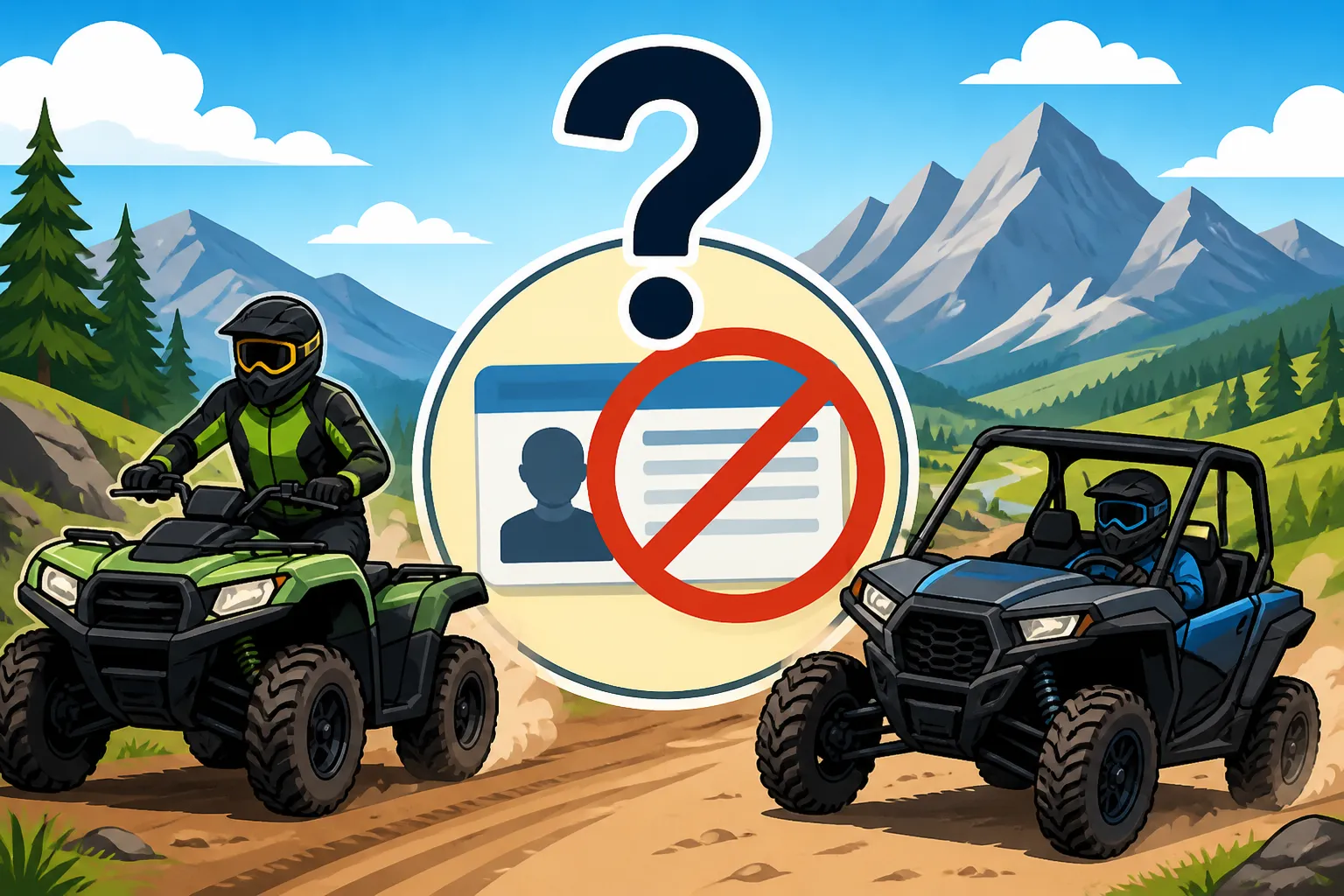
Alright, let's cut right to the chase because this is where most of the questions begin. In Montana, if you plan to operate your ATV or UTV on any public street, road, or highway where other motor vehicles are allowed, you absolutely need a valid driver's license. It’s not just a suggestion; it’s a legal requirement. Think of it this way: when you're sharing the road with cars, trucks, and motorcycles, the state wants to ensure that you, the operator, have demonstrated a baseline level of driving competence and knowledge of traffic laws, which is what a driver's license signifies. This applies whether you're just cruising a short distance to a trailhead or running into a small town for gas.
Why a Driver's License Matters on Paved and Gravel Roads
The moment your tires leave private property and touch a public road, you're operating under a different set of rules. The driver's license requirement isn't about the machine itself, but about the person controlling it and the environment they're in. Public roads, even quiet gravel ones, present hazards like blind corners, oncoming traffic, and local wildlife. A licensed driver is expected to understand right-of-way, speed limits, and how to safely navigate these situations. Without a license, there's no state-verified assurance that you possess this fundamental knowledge.
For example, imagine you're heading out from your cabin on a county road to get to a favorite fishing spot. You might think, "It's just a mile on gravel, no big deal." But that mile is still a public thoroughfare. If you encounter a local rancher hauling hay or a family SUV heading the other way, you're expected to react appropriately, signal turns if applicable, and maintain a safe speed. That's the stuff learned and tested for a driver's license. For more details on what your machine needs to have, check out [What Montana Requires on an OHV Road Ride].
The Exception for Youth Riders: Safety Certificates and Supervision
Now, Montana does have specific provisions for younger riders, but these are generally for off-road use or under very strict conditions, not typically for independent road riding. For kids aged 12 to 15, they can operate an OHV if they possess a valid OHV safety certificate and are under the direct supervision of an adult. However, this exception mostly applies to trails and designated riding areas, not necessarily public roads shared with general traffic. When it comes to venturing onto the shoulder of a county road or crossing a state highway, the driver's license requirement for the operator almost always comes into play, regardless of a safety certificate.
If your child is under 16 and wants to ride on roads, the general rule is that they can't legally operate an OHV on a public street or highway. There are very limited exceptions, often involving agricultural work or specific municipal ordinances. But for recreational road riding, a valid driver's license is the standard. It's crucial for parents to understand [Montana Road Rules for Young Riders] to ensure their kids are safe and legal. These rules are in place for everyone's safety, protecting not just the young rider but also other road users.
Understanding Montana's Road Classifications and OHV Access
Montana is a vast state with all sorts of roads, from bustling interstates to remote two-tracks. Not all roads are created equal when it comes to OHV access, and understanding these distinctions is key to knowing where your driver's license requirement applies. Even if you have a license, you still can't just ride your ATV or UTV anywhere. You need to know which roads are open and which are closed to OHVs, and what equipment your machine needs to be legal for the road sections.
| Road Type | OHV Access Generally | Driver's License Requirement (If Allowed) | Notes |
|---|---|---|---|
| Interstate Highways | No Access | N/A | Absolutely no OHV riding, except for crossing. |
| US & State Highways | No Riding Along | Yes (for crossing) | May cross at designated intersections. No riding on the highway. |
| County Roads (Paved) | Varies by County | Yes | Commissioners may open or close specific roads. Check local rules. |
| County Roads (Gravel) | Varies by County | Yes | Often more lenient, but still requires local ordinance. |
| City/Town Streets | Varies by Ordinance | Yes | Many towns have specific ordinances. Check before you ride. |
| Forest/BLM Roads | Often Allowed | Yes | Check MVUMs for specific routes. Registration & permit required. |
City Streets, County Roads, and Highways: Where You Can and Can't Ride
This is where it gets a bit nuanced. While a driver's license is mandatory when operating on public roads, the ability to ride your OHV on those roads depends heavily on local jurisdiction. State highways (like US-93 or MT-200) generally restrict OHVs to only crossing at intersections, with no actual travel along the highway itself. Attempting to ride the shoulder of a state highway can lead to serious trouble. [Crossing a Montana Highway on an OHV] is a quick maneuver, not a scenic tour.
County roads are often the most flexible, but this flexibility comes with a caveat: it's up to individual County Commissioners to decide which roads, if any, are open to OHVs. Some counties have open policies, while others are very restrictive. It's vital to check with the specific county's sheriff's office or website. Similarly, towns and cities have their own municipal ordinances. Places like Red Lodge or West Yellowstone might have open street access for OHVs to facilitate tourism, allowing riders to get to restaurants or gas stations, but this is always decided at the local level. Always look up [Montana Towns That Allow OHVs on Their Streets] before you plan your ride through any community.
Equipping Your Machine for Montana Road Riding
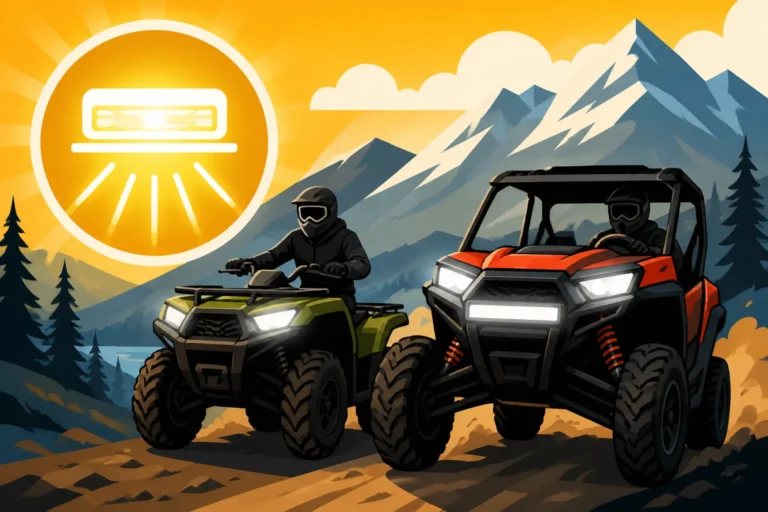
Beyond having a driver's license, your OHV itself needs to be properly equipped to be road-legal in Montana, even if it's just for a short jaunt. This isn't just about safety; it's about making sure your machine is visible and controllable in a mixed-traffic environment. We’re talking about headlights, taillights, brake lights, mirrors, and a horn. Many factory OHVs come with some of these, but often not all. You might need to add aftermarket accessories to meet the full requirements.
Consider durable components that can stand up to Montana's varied terrain, from the smooth pavement to the roughest gravel roads. Companies like SuperATV offer a wide range of road-legal kits and accessories, from turn signal kits to mirrors, that can help get your machine up to snuff. These upgrades ensure you can signal your intentions clearly and see traffic around you, vital elements of road safety that complement having a valid driver's license. Don't forget, [Montana Headlight Rules After Dark] and [Brake Requirements for a Montana Road Ride] are non-negotiable.
Consequences of Riding Without Proper Credentials
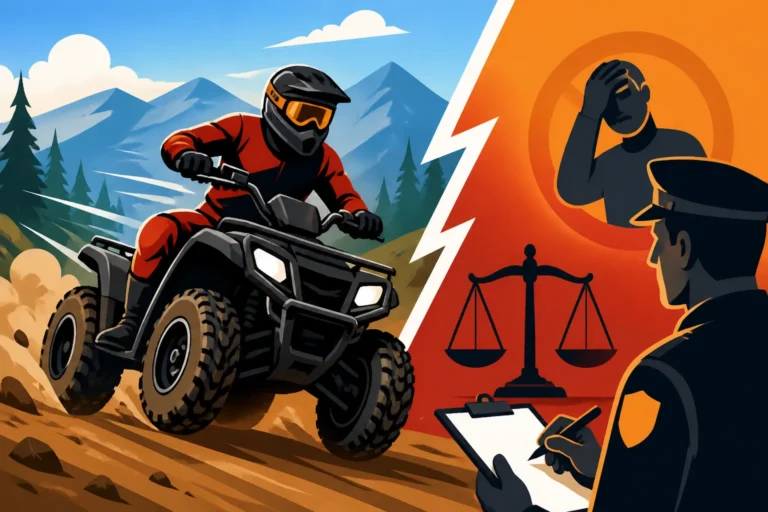
Thinking about just "winging it" and hitting the road without a driver's license, or with an improperly equipped machine, is a really bad idea in Montana. The consequences can range from inconvenient fines to much more serious legal and financial headaches, especially if you're involved in an accident. The wardens and local law enforcement around here take OHV safety and compliance seriously, especially with the increased popularity of these machines.
Fines, Penalties, and Legal Ramifications
Operating an OHV on a public road in Montana without a valid driver's license is a violation that can result in a significant fine. But it's not just the fine you have to worry about. If you're stopped, your machine could be impounded, and you might even face additional charges if other violations are discovered, like an unregistered machine or missing safety equipment. It could even affect your ability to get or renew a driver's license in the future. Nobody wants their riding trip to end with a tow truck and a court date, especially when a little preparation can prevent it. Learn more about [Montana Fines for Illegal Road Riding] to understand the full scope of potential penalties.
Moreover, if you are involved in an accident while operating an OHV on a public road without a license, the legal ramifications can escalate dramatically. You could be held personally liable for damages, injuries, or even worse. This isn't just about a simple traffic ticket anymore; it can become a civil and even a criminal matter depending on the severity of the incident. It’s far better to ensure you have all your ducks in a row – including a valid driver's license and proper OHV registration, as detailed in [Registering an OHV in Montana] – before you ever put a tire on a public road.
Insurance Implications After an Incident
One of the most overlooked, yet potentially devastating, consequences of riding without a driver's license is how it impacts your insurance coverage. Most ATV or UTV insurance policies have clauses that explicitly state coverage is void if the operator is not legally licensed to operate the vehicle. This means if you're involved in an accident on a public road, and you don't have a valid driver's license, your insurance company could deny any claims for damages to your machine, medical bills, or liability for damage to other property or persons.
Imagine the scenario: you're riding a county road, you swerve to avoid a deer, and you hit a fence. Without a driver's license, your insurance might not pay for the damage to your UTV or the fence, leaving you on the hook for thousands of dollars. Now, if someone else is injured, or their vehicle is damaged, the financial burden could be immense. It’s a huge risk that simply isn't worth taking. Always make sure you're covered, both legally with a license and financially with appropriate insurance, as discussed in [Insuring an ATV in Montana]. Don't assume your auto insurance will cover it; dedicated OHV insurance is usually required.
Disclaimer
This article is for general informational purposes only and does not constitute professional advice. Laws, prices and regulations vary by location and change over time. Consult a qualified professional for guidance on your specific situation.