Montana Road Rules for a 15-Year-Old
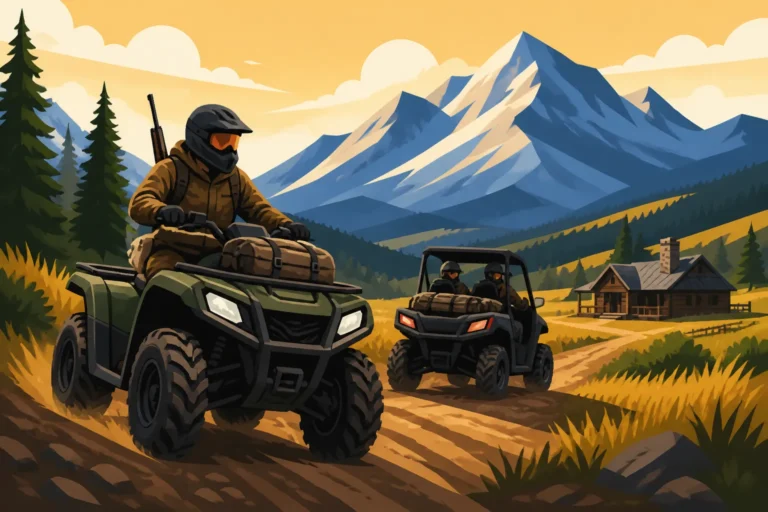
It’s a common scenario in Montana: a 15-year-old rider, eager to gain a little more independence, wants to take their ATV or UTV out on the county roads or even into a small town for gas. But for parents and young riders alike, the question of what’s truly legal and safe can feel like navigating a maze. This guide aims to demystify Montana's road rules for 15-year-olds operating off-highway vehicles, laying out the requirements, restrictions, and essential safety considerations you need to know to stay legal and enjoy the ride responsibly.
Understanding Montana's Core Age and Licensing Rules for OHVs on Roads
Montana has specific rules about who can ride an off-highway vehicle (OHV) on public roads, and these rules change depending on the rider's age. For 15-year-olds, it's not as simple as just hopping on and going. There are clear pathways to legal road access, but they come with important stipulations.
The Baseline: 12-15 Year Olds and Road Use
For riders aged 12 to 15, the ability to operate an OHV on a public road in Montana hinges primarily on two critical factors: safety education and adult supervision. Unlike a fully licensed adult, a 15-year-old does not possess a standard driver's license that automatically grants them permission to drive a street-legal vehicle, which an OHV often becomes when on approved roads.
The law understands that young riders might be capable, but they still need structure and guidance. Therefore, a 15-year-old can generally only operate an OHV on certain public roads if they meet these criteria. We're talking about designated county roads where local commissioners have granted OHV access, or within specific towns that have passed ordinances allowing OHV use on their streets. This absolutely does not extend to state highways, interstates, or other high-speed, high-traffic thoroughfares. Those are strictly off-limits, no matter how tempting a shortcut might seem. The rationale is simple: the risks on such roads are significantly higher, and a 15-year-old, even a skilled rider, may not have the judgment or experience to navigate them safely among cars and trucks moving at highway speeds. It's about ensuring a safe environment for everyone sharing the road.
Safety Education: A Non-Negotiable Step
Before a 15-year-old can even think about riding an OHV on any public road in Montana, they must complete an approved OHV safety education course. This isn't just a suggestion; it's a legal requirement. Think of it as the foundational knowledge that equips young riders to make smart decisions and understand the responsibilities that come with operating a powerful machine in shared spaces.
The [Montana Safety Course Cost] is generally reasonable, and the course itself is designed to cover a wide range of critical topics. It delves into everything from basic machine operation and maintenance to safe riding practices, understanding trail etiquette, recognizing hazards, and crucially, the specific laws and regulations that apply to OHVs in Montana. Many of these courses are available online, offering flexibility for busy schedules, but some in-person options might also be available through local organizations or dealerships. Upon successful completion, the rider receives a safety certificate, which acts as their official proof of having met this educational requirement. It’s important to remember that this safety certificate is not a driver's license. It certifies OHV operating competence and legal knowledge, but it doesn't grant the same privileges as a motor vehicle driver's license. It's solely for OHV operation, particularly when venturing beyond private property onto public lands and roads where legal requirements are stricter. This certificate should be carried by the rider whenever they're operating the machine on public lands or roads.
Adult Supervision: Who Needs to Be There?
Even with a safety certificate in hand, a 15-year-old rider isn't typically allowed to just head out on their own on Montana roads. The law often mandates direct adult supervision. This means a responsible adult, usually 18 years or older and sometimes with specific licensing requirements themselves, must be present.
The specifics of "supervision" can vary slightly, but generally, it means the adult is either riding on the same OHV as a passenger (if the machine is designed for it and legal for passengers) or, more commonly, riding their own OHV in close proximity to the supervised youth. The intent is for the adult to be able to immediately intervene if necessary, provide guidance, and ensure the young rider is adhering to all rules and safety practices. This isn't just about avoiding a ticket; it's about real-time mentorship and the safety net provided by an experienced rider. If a 15-year-old is riding with a group, the supervising adult must be clearly designated and understand their responsibility for that specific young rider. This adult is essentially signing off on the young rider's presence on the road and assumes a level of liability. It's not a burden to take lightly, and it's essential for everyone's peace of mind, especially on unfamiliar routes or in changing conditions. The concept of supervision emphasizes a graduated approach to responsibility, allowing young riders to gain experience in a controlled and supportive environment before they are expected to navigate complex situations independently.
Vehicle Equipment and Specific Road Operation Requirements for Young Riders
Riding an OHV on Montana roads isn't just about who's riding; it's also about what they're riding and how. To transition from a trail machine to a road-legal vehicle, your ATV or UTV needs to meet certain equipment standards, and the rider needs to understand how to operate it safely within traffic.
Equipping the OHV for Road Use
Just because your side-by-side or quad is a beast on the trails doesn't mean it's ready for the asphalt. Montana law requires specific equipment for any OHV operating on public roads, and these rules are especially important for young riders. Think about it: you're no longer just dodging trees; you're sharing space with cars, trucks, and potentially even bicycles. Visibility and the ability to signal your intentions become paramount.
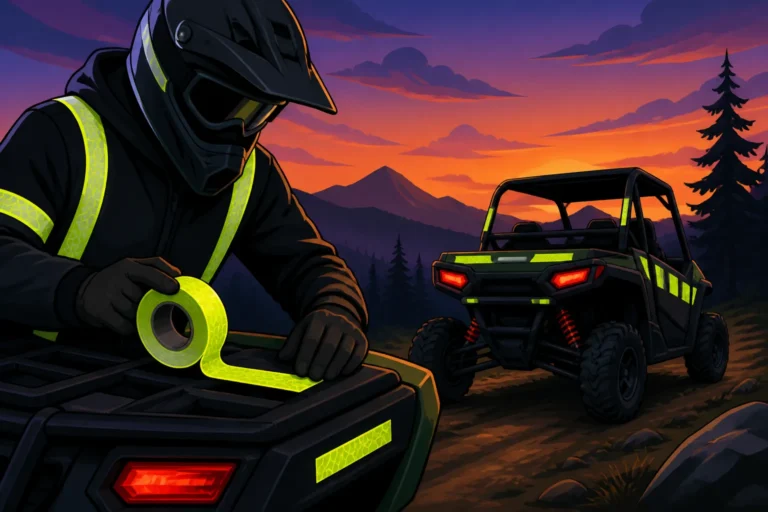
First and foremost, your OHV needs proper [Headlight and Taillight Rules in Montana]. This means at least one headlight (which must be on at all times during road operation, even in daylight) and at least one taillight. Brake lights are also crucial to warn vehicles behind you when you're slowing down. Many stock machines come with these, but it’s vital to ensure they’re functioning correctly and are bright enough for road use. Next, you’ll need at least one mirror, but ideally two, to give you a clear view of traffic approaching from behind. Checking [Mirrors Montana Road Riding Calls For] will confirm the specifics, but generally, a left-side mirror is the minimum. A functional horn is also required for signaling other drivers or pedestrians. Finally, your machine needs a spark arrestor on the exhaust system to prevent fires, a standard safety feature on most OHVs but worth double-checking. For those looking to upgrade their machine to meet these road-legal requirements, companies like SuperATV offer a range of aftermarket kits and accessories, from street-legal signal kits to mirrors and horns, making it easier to equip your ATV or UTV for safer road travel. It's about being seen, being heard, and being able to react to the flow of traffic.
Personal Protective Gear: Helmets and Eye Protection
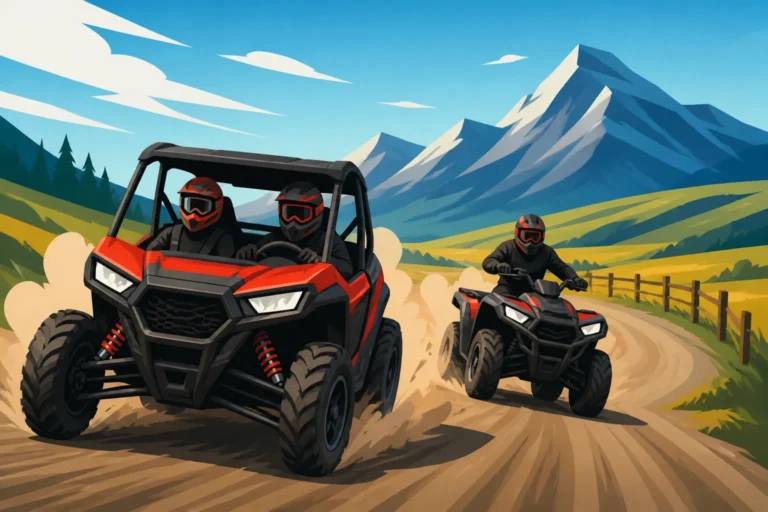
Safety gear is not optional when you're a young rider on a Montana road. In fact, specific regulations are in place to ensure maximum protection for minors. The most prominent of these is the helmet law. For any rider under the age of 18 operating an OHV on a public road, a helmet is absolutely mandatory. This isn't just about a potential bump on the head; it’s about protecting against serious, life-altering injuries.
The [Montana Helmet Rules for Riders Under 18] typically specify that the helmet must be a DOT-approved model, meaning it meets specific safety standards for impact protection. A bicycle helmet, for example, won't cut it. It needs to be properly fitted, securely fastened, and in good condition – no cracks, no frayed straps. Beyond the helmet, eye protection is also a critical component. Whether it's a helmet with a full face shield, goggles, or safety glasses, your eyes need to be shielded from dust, debris, insects, and wind. Any of these elements can impair vision, leading to a dangerous situation, especially for a less experienced rider navigating traffic. Wearing the right gear isn't just about compliance; it's about minimizing risk and ensuring that a fun ride doesn't turn into a tragic accident. Parents should always model good behavior by wearing their own helmets, even if they are over 18 and not legally required to do so, reinforcing the importance of safety for their younger counterparts.
Speed Limits and Road Etiquette
Operating an OHV on a public road means becoming a part of the traffic ecosystem, and that comes with a different set of rules than ripping through the backcountry. For a 15-year-old, understanding and adhering to speed limits and proper road etiquette is crucial for both their safety and the public's perception of OHV riders.
First, speed limits are not suggestions; they are laws. While you might be able to open up your machine on a wide-open trail, county roads and town streets have posted limits that must be respected. Even on roads where no specific OHV speed limit is posted, the general limit for secondary roads applies, and often local ordinances will impose even stricter limits within town boundaries. You can find more detail on [Speed on a Montana County Road], but generally, common sense dictates that you should always operate at a speed appropriate for the conditions – whether that's dust, gravel, other vehicles, or simply visibility. Beyond speed, road etiquette is about being predictable and courteous. Use your turn signals (if equipped, otherwise hand signals are necessary and legal) well in advance of a turn. Maintain a safe following distance from other vehicles. Don’t ride erratically or weave in and out of traffic. If you're riding in a group, maintain a single file line, especially on narrower roads, and avoid blocking traffic. When passing parked cars or approaching pedestrians, slow down and be prepared to stop. And remember, loud exhaust systems, even those with proper spark arresters (see [Mufflers and Spark Arresters in Montana]), can be a nuisance in residential areas. It’s important to be a good neighbor and ambassador for the OHV community. Parking also has its own rules; you can't just leave your machine anywhere. Treat it like any other vehicle in terms of parking legally and not obstructing traffic or driveways.
Navigating Approved Roads and Local Ordinances
One of the biggest areas of confusion for OHV riders, especially young ones, when it comes to road use in Montana, is figuring out where it's actually legal to ride. It's not a blanket permission; access is highly localized and depends on a patchwork of state law, county decisions, and city ordinances.
County Roads vs. State Highways: Know the Difference
It's absolutely critical to understand the distinction between different types of roads in Montana. For OHVs, particularly those operated by 15-year-olds, not all roads are created equal, and some are definitively off-limits. The golden rule here is: never assume you can ride your OHV on a state highway or interstate. These major thoroughfares are designed for high-speed, street-legal vehicles and pose an extreme danger to OHV operators. There are very specific, limited circumstances (like direct crossings) where an OHV might briefly interact with a state highway, but continuous travel is almost universally prohibited.
The focus for legal OHV road use generally shifts to county roads. Even then, it's not a free-for-all. Individual county commissions hold the power to decide if and where OHVs can operate on the county roads within their jurisdiction. These decisions are made by [County Commissioners and Montana County Roads] and are often influenced by local community input, safety concerns, and the type of roads in question (e.g., paved vs. gravel, low traffic vs. higher traffic). Some counties are more open to OHV road use than others, designating specific routes or areas where it's allowed. It is essential to check the specific regulations for the county you plan to ride in. A great resource is often the county sheriff's office or the county website, which may have maps or lists of approved roads. Always consult resources like [Which Montana Roads Allow OHVs] to ensure you're on a legal route. Riding on a closed county road can lead to citations, fines, and even vehicle impoundment, penalties that nobody wants to face, especially a young rider and their supervising adult.
Town and City Ordinances: The Local Loophole
Beyond county roads, some towns and cities in Montana have taken the initiative to pass their own local ordinances allowing OHVs on certain municipal streets. This is often done in communities that are popular hubs for outdoor recreation, where riders might need to travel short distances on city streets to access trailheads, gas stations, restaurants, or lodging. A prime example of this can be seen in places like [Riding an OHV Into West Yellowstone], where OHV access on specific streets is permitted to support the recreational tourism industry.
However, these local ordinances are never carte blanche. They almost always come with their own unique set of rules and restrictions. These might include:
- Designated Routes: Only specific streets within town may be open to OHVs. You can't just ride anywhere.
- Hours of Operation: There might be time restrictions, such as no OHV use after dark or before a certain morning hour.
- Speed Limits: Often, urban speed limits are much lower than even on county roads.
- Noise Restrictions: Towns are more sensitive to engine noise, especially at certain times.
- Specific Equipment Requirements: Some towns might reiterate or add to state-level equipment rules.
The burden is always on the rider to know and follow these local rules. Before entering any town or city on an OHV, especially with a 15-year-old operating the machine, it is vital to research that municipality's specific ordinances. A quick call to the town clerk's office or checking the city's official website can save you a lot of grief. Violating a town ordinance, even unknowingly, can result in fines and negative interactions with local law enforcement, which can spoil an otherwise great riding experience.
The Importance of Permission and Staying Legal
Ultimately, the responsibility for knowing and following all OHV laws and regulations, particularly concerning road use, rests squarely with the rider and, in the case of a 15-year-old, their supervising adult. It's not enough to simply have the right equipment or the safety certificate; you must also know where you're allowed to ride and how to do so legally.
Riding illegally, whether it's on a prohibited road, without proper registration, or without the required safety gear, carries real consequences. These can range from citations and significant fines (see [Montana Penalties for an Unregistered OHV in Montana]) to having your machine impounded. Beyond the legal repercussions, riding where you shouldn't or doing so unsafely erodes public trust and gives the entire OHV community a bad name. This can lead to more restrictions, less access, and a harder time for everyone who enjoys responsible riding. Always ensure your machine is properly registered with a valid [Montana's Resident OHV Trail Pass], even if you’re primarily using it for road access to trails, as many road-legal designations still require the base registration for any public land use. Before any ride, especially with a young operator, take the time to plan your route, confirm the legality of your chosen roads, and ensure all riders are properly equipped and informed. Responsible riding is the best way to preserve and expand OHV access for future generations.
| Feature | 12-15 Year Olds on Montana Roads | 16+ Year Olds on Montana Roads (with Driver's License) |
|---|---|---|
| Safety Certificate | Required | Required if no driver's license; recommended otherwise |
| Driver's License | Not required (OHV safety cert.) | Required for independent operation |
| Adult Supervision | Mandatory | Not mandatory (if licensed) |
| Helmet (DOT) | Mandatory | Mandatory if under 18; recommended for all |
| Eye Protection | Mandatory | Mandatory |
| Headlights On | Mandatory (day and night) | Mandatory (day and night) |
| Taillight/Brakes | Required | Required |
| Mirrors | Required | Required |
| Horn | Required | Required |
| Spark Arrestor | Required | Required |
| Roads Permitted | County roads (by commission), specific town streets (by ordinance) | Same as 12-15 year olds, but with independent operation |
| State Highways | Generally Prohibited | Generally Prohibited |
| Interstates | Strictly Prohibited | Strictly Prohibited |
Disclaimer
This article is for general informational purposes only and does not constitute professional advice. Laws, prices and regulations vary by location and change over time. Consult a qualified professional for guidance on your specific situation.