Golf Carts in a Montana Retirement Community
Many folks moving into a beautiful Montana retirement community often envision leisurely rides around the neighborhood in their golf cart, perhaps heading to the clubhouse or visiting friends. However, the reality of where and how you can legally operate a golf cart in the Big Sky Country can be a bit more complex than simply hitting the green. This guide will walk you through the specifics of golf cart use within and around Montana retirement communities, ensuring your rides are always enjoyable and within the bounds of the law.
What's the Difference? Golf Carts, Low-Speed Vehicles, and OHVs in Montana
Before you even think about putting the pedal to the metal, it's absolutely crucial to understand the distinctions between golf carts, low-speed vehicles (LSVs), and off-highway vehicles (OHVs) in Montana. This isn't just bureaucratic jargon; it directly impacts where and if you can ride your machine. Getting this wrong can lead to fines, confusion, or even an uncomfortable chat with local law enforcement, especially if you venture beyond your community's private roads.
Defining Your Ride: Golf Cart vs. LSV
A traditional golf cart, as its name suggests, is primarily designed for use on golf courses. It's typically slower, has a maximum speed that rarely exceeds 20 mph, and isn't built with standard automotive safety features like turn signals, headlights, or proper brake lights that meet highway standards. Because of these limitations, a regular golf cart generally isn't considered "street legal" on public roads in Montana without specific modifications and classifications. It's built for controlled environments, not for sharing asphalt with cars and trucks.
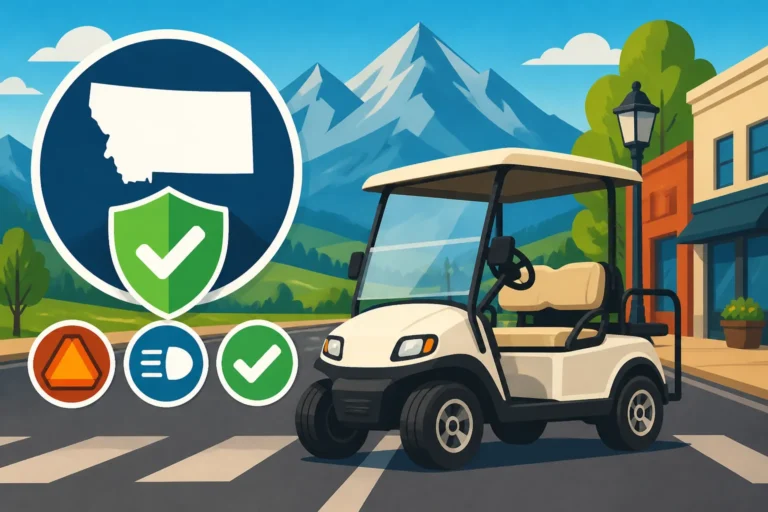
Then we have the Low-Speed Vehicle, or LSV. This is where things get interesting for retirement community residents. An LSV is a vehicle that can hit speeds between 20 mph and 25 mph, and importantly, it's manufactured to meet federal safety standards for low-speed vehicles. This means it comes equipped with things like headlights, taillights, stop lamps, turn signal lamps, rearview mirrors, a parking brake, and a Vehicle Identification Number (VIN). In many states, including Montana, these features allow an LSV to be legally operated on certain public roads, typically those with speed limits of 35 mph or less, once it's properly titled and registered. Think of it as a golf cart's more sophisticated, road-ready cousin.
OHVs and Your Retirement Community
An Off-Highway Vehicle (OHV) is another beast entirely. This category primarily includes ATVs (All-Terrain Vehicles) and UTVs (Utility Terrain Vehicles, often called side-by-sides). These machines are built for rugged, off-road conditions, with powerful engines, knobby tires, and suspension designed to tackle trails, mud, and uneven terrain. While some UTVs can be made street-legal in Montana through significant modifications and specific registration processes, they are fundamentally different from golf carts or LSVs. Trying to register a standard golf cart as an OHV in Montana won't work, as they don't meet the performance or design criteria.
The key takeaway here is that a golf cart, fresh off the dealership floor or from its previous life on the links, is very different from an LSV. If your dream is to cruise beyond the confines of your community's private paths, you're likely looking at needing an LSV or making significant, compliant modifications to your golf cart. [Registering a Low-Speed Vehicle in Montana] involves a different set of steps than registering an OHV, and understanding this is your first step to legal cruising.
Riding Your Golf Cart: Inside and Outside the Retirement Community Gates
Once you understand what kind of machine you have, the next burning question is: where can you actually drive it? For residents of Montana retirement communities, this usually boils down to the internal roads within the community itself, and then potentially some limited access to external public roads. The rules can be surprisingly nuanced, blending state law with local ordinances and even private community bylaws.
Within the Community: Private Roads and Pathways
Most retirement communities are built with their own network of private roads, pathways, and common areas. On these private properties, the rules for golf cart use are primarily set by the community's homeowners' association (HOA) or management company. This is usually where you'll find the most freedom to operate your golf cart. These internal roads are not considered public highways, so state registration laws for motor vehicles often don't apply, though safety rules absolutely should. Your HOA might have specific speed limits, curfews, or rules about who can drive (e.g., minimum age, licensed drivers only).
It's common for communities to allow golf carts for everything from a quick trip to the community pool, visiting a neighbor, or heading to the communal dining hall. However, this freedom comes with the responsibility of knowing and following your community's specific guidelines. Don't assume that just because it's private property, there are no rules. These rules are in place for everyone's safety and to maintain the peaceful enjoyment of the community. Always get a copy of your HOA's rules regarding golf cart usage as soon as you move in, or before you make a purchase.
Venturing Out: Public Roads Near Your Community
This is where the distinction between a golf cart and an LSV becomes critical. Generally, a standard golf cart is not legal to operate on public roads in Montana. Public roads, even small county roads or quiet residential streets outside your community gates, are subject to Montana state law. These laws require vehicles to meet certain safety and registration standards. [Montana City Streets and Municipal Ordinances] often dictate specific rules, and a golf cart usually doesn't cut it.
If your retirement community has external roads with speed limits of 35 mph or less adjacent to it, and you're operating a properly registered Low-Speed Vehicle (LSV), then you might be able to use those roads. However, this is not a blanket permission. You must check with your local city or county government for specific ordinances. Many Montana towns might allow LSVs on their streets, but it's entirely dependent on local policy. Never assume you can take your LSV on a public road without verifying the local rules first. An LSV will need to be titled and registered, and you'll need a valid driver's license to operate it on public streets. [Montana Rules for a Golf Cart on a Town Street] are a key reference point here.
Summary of Golf Cart vs. LSV Use
To help clarify, here's a quick comparison of general use cases:
| Feature/Category | Standard Golf Cart (Not LSV) | Low-Speed Vehicle (LSV) |
|---|---|---|
| Design Speed | Typically under 20 mph | 20-25 mph |
| Safety Features | Basic (e.g., brakes, often no turn signals, headlights) | Federal standards (headlights, turn signals, mirrors, etc.) |
| Public Road Use | Generally not permitted (unless local exception) | Permitted on roads 35 mph or less (if registered/local ordinance allows) |
| Private Community Use | Usually permitted (per HOA/management rules) | Usually permitted (per HOA/management rules) |
| Montana Registration | Not typically registered for road use | Required for public road use (title, plates, decal) |
| Driver's License | Often not required on private property (per HOA rules) | Required for public road use |
| Insurance | Recommended on private property, required for public road use | Required for public road use (liability) |
This table provides a general overview, but remember that specific community rules and local ordinances can always add another layer of complexity.
Outfitting Your Golf Cart: Accessories and Street-Legal Considerations
So, you've assessed your options and perhaps you're thinking about upgrading your golf cart or purchasing an LSV to give you a bit more freedom. Or maybe you just want to make your existing cart safer and more comfortable within the community. When it comes to outfitting your ride, there are plenty of options, but always keep legality and safety at the forefront, especially if you plan to venture beyond private property.
Essential Upgrades for Community Safety and Comfort
Even if you're only planning to use your golf cart strictly within your retirement community's private roads, certain accessories can significantly improve safety and your overall riding experience. For instance, a durable windshield can protect you from dust, wind, and unexpected Montana weather changes. Investing in a good set of side mirrors, or even a rearview mirror, can drastically improve your visibility, helping you avoid collisions with other golf carts, pedestrians, or even wildlife that might wander onto community paths. Aftermarket LED light kits can also make your cart more visible, especially during dawn or dusk hours, enhancing safety for everyone.
Think about utility, too. If you're hauling groceries from the community store or a bag of clubs to the course, adding a cargo box or basket can make life much easier. Many brands offer solutions that bolt right onto your existing frame. A sturdy roof isn't just for sun protection; it offers defense against those sudden Montana rain showers. For parts and accessories that stand up to the elements, companies like SuperATV offer a robust selection of golf cart and UTV accessories, from roofs and windshields to lighting solutions that can make your ride both safer and more practical for community life.
Street-Legal Conversions: What it Takes to Be an LSV
If your goal is to ride on public roads where allowed (i.e., local ordinances permit LSVs on roads with speed limits 35 mph or less), converting a standard golf cart into a street-legal LSV requires significant modifications to meet federal safety standards. This isn't just about bolting on a few lights; it's about a comprehensive upgrade to meet specific requirements. These typically include:
- Headlights: Must be DOT-approved and bright enough for safe night driving.
- Taillights and Brake Lights: Clearly visible from the rear, with brake lights activating when the pedal is pressed.
- Turn Signals: Front and rear, clearly indicating your intended direction.
- Reflectors: Strategically placed to enhance visibility.
- Windshield: Automotive-grade safety glass (AS1 or AS2) that won't shatter on impact.
- Mirrors: At least one rearview mirror (often two side mirrors are preferred for better visibility).
- Seatbelts: For all seating positions.
- Horn: Audible from a certain distance.
- Parking Brake: Reliable and functional.
- Speed Capability: Must be capable of speeds between 20 mph and 25 mph.
This can be a costly and involved process, and it's essential to ensure all components meet the required standards. It's often easier and more cost-effective to purchase a new LSV that is already manufactured to these specifications. However, if you're determined to modify your existing cart, reputable accessory providers like SuperATV can provide many of the necessary components, such as full DOT-approved windshields, robust turn signal kits, and durable mirrors designed for off-road and low-speed vehicle applications. Always ensure any modifications you make are in compliance with federal LSV standards and Montana's specific requirements if you plan on registering it for road use. [What Montana Requires on an OHV Road Ride] offers insights into general road requirements that can apply to LSVs.
Navigating Rules: HOAs, Local Ordinances, and Staying Compliant
The landscape of golf cart regulations in Montana retirement communities is a fascinating intersection of private property rules, local government ordinances, and state vehicle laws. Understanding how these layers of governance interact is key to hassle-free enjoyment of your ride. Ignorance of these rules isn't bliss; it can lead to fines, loss of privileges, or even legal issues.
Understanding Your HOA's Role
Your Homeowners' Association (HOA) plays the most immediate and influential role in regulating golf cart use within your private retirement community. HOAs have the authority to create and enforce specific rules that go beyond state law, as long as they don't contradict existing laws. These rules are usually outlined in your community's Covenants, Conditions, and Restrictions (CC&Rs) or a separate set of community guidelines. Common HOA rules might include:
- Designated Paths: Restricting golf carts to specific roads or pathways and prohibiting them on sidewalks or common green spaces.
- Speed Limits: Often lower than posted road limits to ensure pedestrian safety.
- Age Requirements: Specifying a minimum age for drivers, sometimes requiring a valid driver's license even on private property. [Do You Need a Driver's License to Ride a Montana Road?] is a good general reference, though HOA rules might differ on private property.
- Hours of Operation: Limiting use during late-night or early morning hours to maintain quiet enjoyment.
- Guest Policies: Rules about visitors operating golf carts.
- Safety Equipment: Requiring certain lights, reflectors, or even [Montana Helmet Rules for Riders Under 18] if the community allows younger riders in specific areas.
- Registration/Permits: Some HOAs might require their own internal registration or sticker system for golf carts, even if they aren't registered with the state.
It is absolutely imperative to obtain and thoroughly read all HOA documents pertaining to golf carts. If something is unclear, reach out to your HOA board or management for clarification. They are the primary authority for day-to-day operation within the community.
Local Ordinances and County Commissioner Decisions
Beyond your HOA, local municipal (city) or county governments have the power to create ordinances that affect golf cart and LSV use on public roads within their jurisdiction. This means that even if you have a properly registered LSV, its use on local public streets depends on whether the city council or county commissioners have passed an ordinance allowing it. Many smaller Montana towns are increasingly considering or adopting these ordinances to accommodate their growing retirement populations and tourism.
For example, a specific town might pass an ordinance stating that LSVs (not just golf carts) are permitted on public roads where the posted speed limit is 25 mph or less. However, they might also require additional lighting, insurance, or other safety measures. These local rules can vary dramatically from one community to the next, even within the same county. Always check with the local police department or county sheriff's office for definitive information on golf cart and LSV laws for any public roads you plan to use. Ignoring these local ordinances can result in [Fines for an Unregistered OHV in Montana] or other penalties if your machine doesn't comply.
Importance of Compliance and Responsible Riding
Staying compliant isn't just about avoiding tickets; it's about safety and maintaining good neighborly relations. When you operate your golf cart or LSV, whether on private community roads or approved public streets, always:
- Drive Safely: Adhere to posted speed limits (both community and public), yield to pedestrians, and be aware of other vehicles.
- Stay Sober: Alcohol and operating any vehicle, even a golf cart, do not mix.
- Respect Private Property: Avoid cutting across lawns or entering areas not designated for vehicle traffic. [Montana Trespass Rules Along Roads] are important to remember, even if you just veer off a bit.
- Maintain Your Vehicle: Ensure your lights, brakes, and tires are in good working order. A well-maintained vehicle, perhaps with parts from a trusted supplier like SuperATV for any upgrades or repairs, is a safer vehicle.
- Carry Necessary Documentation: If you're on public roads, always have your driver's license, registration, and proof of insurance with you.
By understanding the rules set by your HOA, local government, and the state, and by operating your golf cart or LSV responsibly, you can fully enjoy the freedom and convenience they offer within your Montana retirement community. It's all about enjoying the ride while respecting the rules of the road, whether that road is privately owned or part of the public infrastructure.
Disclaimer
This article is for general informational purposes only and does not constitute professional advice. Laws, prices and regulations vary by location and change over time. Consult a qualified professional for guidance on your specific situation.