Riding a County Road After Dark in Montana
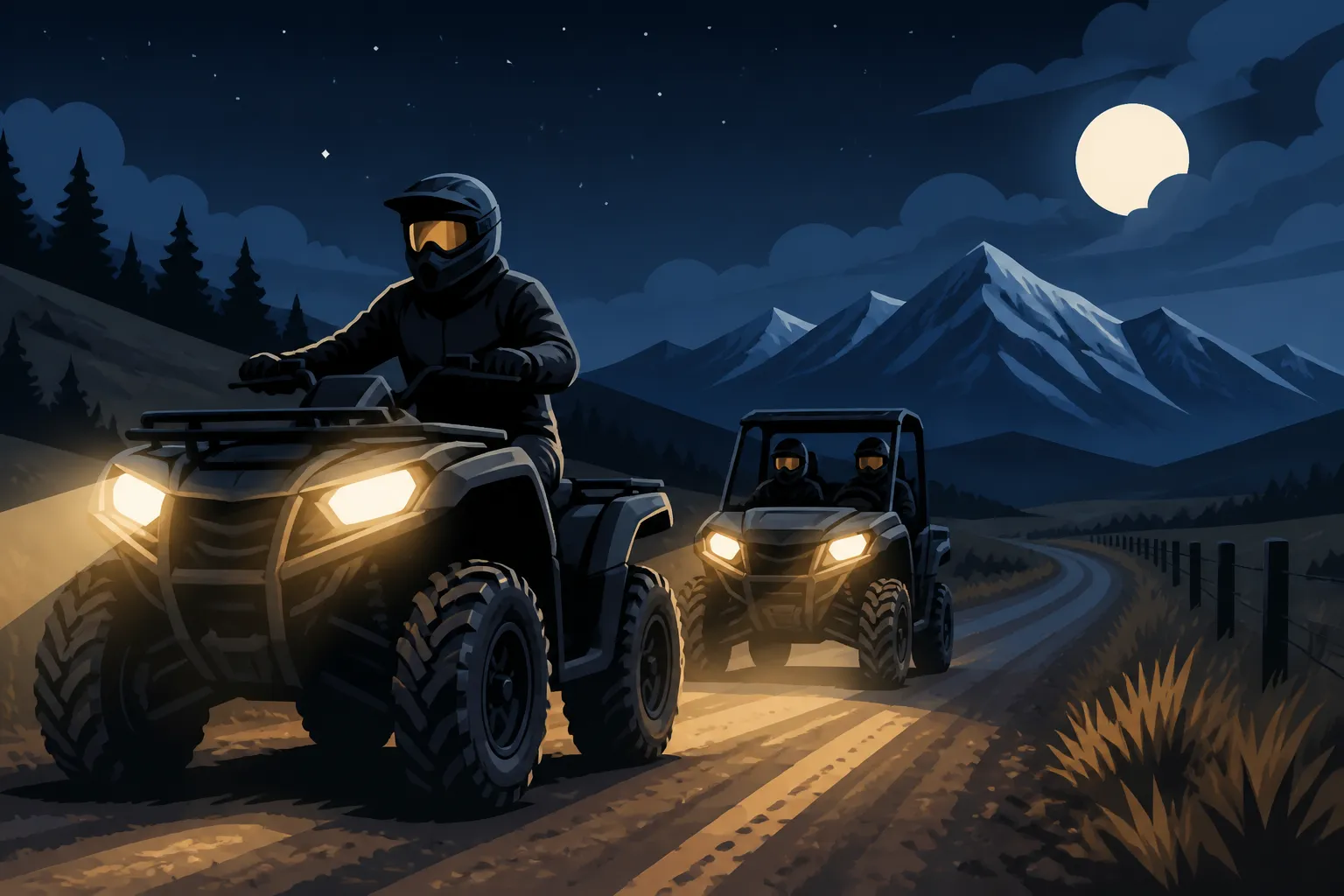
A county road can look quiet after sunset, but darkness makes an ordinary ride more demanding: drivers may not expect an ATV or UTV, gravel can hide potholes, and a route that seems open may not be legally available to OHVs. This guide explains how to check road access, prepare your machine and riders, and make a safer decision before riding after dark in Montana.
Confirm the county road is open to OHVs
Check permission for the exact road section
A county road is not automatically open to every kind of vehicle. Whether an ATV or UTV may use it can depend on the road’s ownership, local decisions, posted restrictions, and the conditions attached to a particular route. Permission to ride one stretch does not necessarily mean you can continue through town, cross a highway, or use a connecting road.
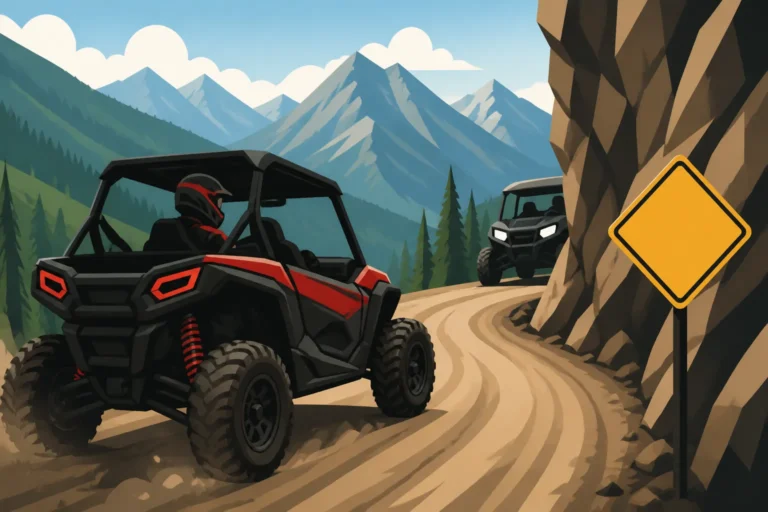
Start by identifying the precise road segment you intend to ride. Look for posted signs and route information, and check with the relevant county or local authority if the status is unclear. This matters especially after dark, when you may pass a sign or closure notice without noticing it until you are already committed to the route. Do not assume that a familiar road remains open year-round or that a quiet road is unrestricted.
The distinctions can be confusing when a route crosses different kinds of land or connects to a municipal street. [Why Montana Road Access Depends on Who Owns the Road] explains why ownership and jurisdiction can affect access. For the wider rules around public-road riding, see [Riding an OHV on the Road in Montana]. Treat those as starting points for checking your route, not as a substitute for verifying the status of the specific road you plan to use.
If your trip crosses a county line, passes through a town, or connects with a state highway, check each part separately. A legal road section does not automatically make the next section legal. Likewise, a route that is open during the day may have a posted restriction or temporary closure that changes where you can ride. Conditions can also change during fire season or after road damage; [Montana Road Closures During Fire Season] offers related guidance on why checking for closures matters.
Make sure the machine and rider meet road-use requirements
Legal access and road-ready equipment are separate questions. Even if a county road is open to OHVs, the machine may still need to meet applicable requirements for that kind of road use. The rules can concern items such as lighting, braking equipment, mirrors, or other safety equipment. Requirements may vary with the route and the vehicle’s intended use, so check the rules that apply to your situation rather than relying on a list from another state.
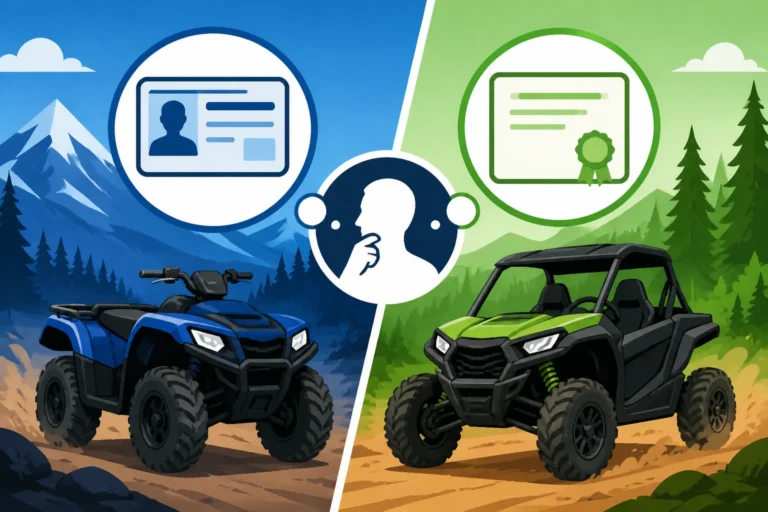
It is also worth confirming who may operate the machine on the road. Age, licensing, and safety-education requirements can depend on the rider and circumstances. A teenager who is comfortable on a family ranch may not automatically be eligible to operate the same machine on a public road. Review [What Montana Requires on an OHV Road Ride], [Driver's License Rules for Montana Road Riding], and [Montana Helmet Rules for Riders Under 18] before planning a trip with younger riders.
A practical way to think about the checks is:
| Before the ride | What to verify | Why it matters after dark |
|---|---|---|
| Route access | The exact road section is open to OHVs | Darkness can make signs and junctions harder to spot |
| Local restrictions | Town, county, and temporary rules along the route | Rules may change at a boundary or during a closure |
| Machine equipment | Required road-use equipment is present and working | A defect that is easy to overlook in daylight can be serious at night |
| Rider eligibility | The operator meets applicable age, license, or education rules | A familiar off-road ride may have different requirements on a public road |
| Visibility | Lights, reflectors, and clothing are clean and functioning | Other drivers need to recognize the machine early |
If one of these checks is unresolved, delay the road ride until you can confirm it. “It’s only a short distance” is not a reliable safety plan or a legal exception.
Prepare the ATV or UTV for low visibility
Inspect lighting before leaving
Headlights are essential for seeing the road, but they also help other road users notice you. Check that the lights turn on, stay on, and illuminate the area ahead without being blocked by mud, cargo, a windshield, or accessories. Check the rear lighting as well. Dust, rain, and dirty lenses can reduce visibility even when a light technically works.
Look over the wiring and switches, too. A light that flickers when the machine hits bumps may fail at the least convenient point. If your machine has multiple lighting settings, learn how to use them before you leave. Avoid aiming a high-intensity beam in a way that blinds oncoming drivers. More light is not automatically better if it makes it harder for others to see.
For equipment questions, [Headlight and Taillight Rules in Montana] and [Lights On at All Times in Montana] are useful related reads. Confirm the applicable requirements for your route and machine, and do not assume an accessory light replaces equipment that is legally required. Keep in mind that an auxiliary light can improve visibility but cannot make an otherwise closed road legal to ride.
Aftermarket lighting is one area where riders may compare options, including products from SuperATV. If you consider an accessory, check whether its installation, beam pattern, and use are appropriate for public-road riding. SuperATV is a product option to research, not a guarantee that a machine meets Montana or local road requirements. A proper pre-ride inspection matters regardless of the brand or type of light installed.
Check tires, brakes, controls, and visibility
Before a night ride, inspect the tires for damage and make sure they are suitable for the surface you expect. Gravel roads may have loose rock, washboard, soft shoulders, and ruts that are difficult to judge under a headlight. Brakes should respond predictably, and the throttle and steering should move freely. If a control feels unfamiliar or inconsistent, sort it out before entering a public road.
Secure anything you are carrying. A loose strap, tool, or piece of cargo can shift over rough ground, interfere with a control, or catch in a wheel. On a UTV, make sure passengers are seated properly and that doors or restraints are used as intended. A passenger who leans out to see better can create a serious risk, especially when the road surface changes unexpectedly.
Visibility is not just a machine issue. Wear clothing that makes you easier to see, and keep any reflective material clean and unobstructed. A dark jacket may blend into the roadside from a driver’s perspective, even if you can clearly see approaching headlights. Do not rely on a whip flag, reflective tape, or an accessory light as a substitute for operating carefully and using the road only where OHVs are permitted.
If your lighting setup includes an aftermarket product from SuperATV, or another maker, test it on a private area before riding near traffic. Check that it does not create glare, throw distracting light into a driver’s eyes, or leave dark areas directly in your path. Keep a basic repair kit appropriate to your machine and route, but do not let extra equipment give you a false sense of security on a road with limited shoulder space.
Ride cautiously once the sun goes down
Adapt your speed and position to what you can see
At night, your safe speed is limited by how much road you can see and how quickly you can stop. That may mean riding much slower than you would in daylight, even if the posted limit is higher. On gravel, dust from another vehicle can turn a short stretch into a low-visibility zone. Ease off the throttle and increase following distance rather than trying to ride through a cloud you cannot see beyond.
Stay alert for hazards that can appear suddenly: potholes, cattle, wildlife, farm equipment, parked vehicles, gates, washouts, and people walking along the roadside. A bend that feels gentle during the day can hide a steep shoulder or an oncoming vehicle at night. Keep enough room to respond without making a sudden move into a ditch or the path of another road user.
Avoid assuming that a driver has seen you just because you can see their headlights. Oncoming lights can make it harder for a driver to distinguish a small OHV from the roadside background. Keep your lights on as required, use a predictable line, and avoid abrupt lane changes. If you need to stop, choose a visible, stable location well away from moving traffic whenever possible.
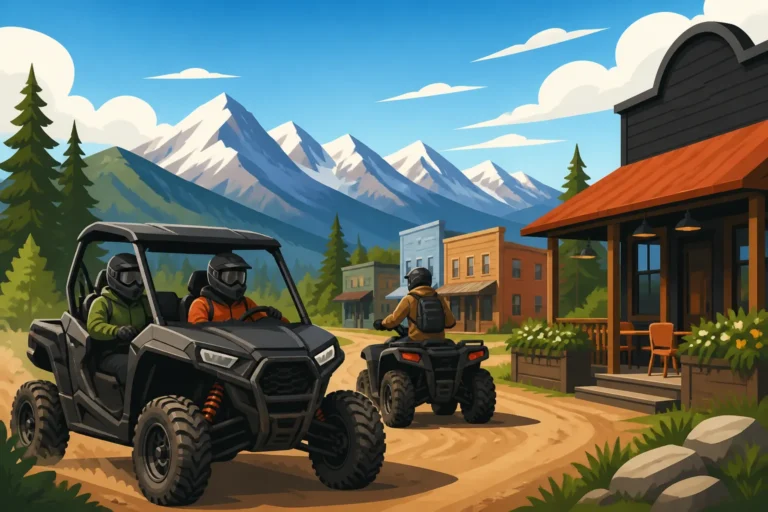
Riding through a small town brings additional challenges: parked cars, pedestrians, intersections, and changing rules. [Riding a Gravel Road Into Town] is a useful companion topic for thinking through the transition from an open gravel stretch to a populated area. Take special care at junctions and do not assume that a road ride allowed outside town continues legally through municipal streets.
Know when to turn around
A night ride is not the right time to push through uncertainty. Turn back or stop safely if a light fails, weather reduces visibility, dust hangs in the air, or the road becomes rougher than expected. The same applies if you reach a sign, gate, or junction and cannot confirm that the route remains open. A short delay is far better than riding into a restricted area or continuing with equipment that is no longer working.
Plan a turnaround point before you leave, especially if the route is unfamiliar. Tell someone where you are going and when you expect to return. Carry a charged phone, but do not depend on cell service in rural areas. If the route has limited coverage, plan how you would contact help and what you would do if the machine could not be driven back.
It can also help to set a simple group rule: if the lead rider cannot clearly see the road ahead, the group slows down or stops. Keep riders together without tailgating, and agree in advance on how the group will communicate at intersections. A UTV group travelling with separate machines should avoid leaving a slower rider behind in the dark, especially on roads with uneven surfaces or poor shoulders.
The most useful decision is sometimes to leave the machine parked and use another way to get home. That is especially true if you cannot confirm access, the lights are unreliable, or the road conditions have changed. Reviewing [Montana Road Rules Riders Get Wrong] can help catch common assumptions before a routine trip becomes a stressful one.
Use a simple before-and-during ride plan
Follow a deliberate pre-ride sequence
A short checklist can prevent the familiar last-minute scramble of discovering a dead light or an unclear route after everyone is already wearing helmets. Before departure, complete these steps in order:
- Confirm the route. Identify each road section, check for restrictions and closures, and note where the route enters a town or meets a highway.
- Confirm eligibility and equipment. Check that the rider and machine meet the requirements for the planned road use.
- Inspect the machine. Test front and rear lights, brakes, tires, steering, and controls. Secure cargo and check passenger restraints where applicable.
- Set a turnaround plan. Agree on a time or condition that means the group will head back, such as worsening dust, a failed light, or an uncertain junction.
- Tell someone your plan. Share the route and expected return time, especially if the area has unreliable cell coverage.
- Reassess at sunset. If the ride is running late, do not let the original plan override changing conditions. A route that felt manageable in daylight may not be suitable after dark.
For example, imagine a group leaving a ranch road near dusk to reach a nearby town. One rider notices that the rear light is intermittent, and the group is unsure whether the final stretch is a county road or a town street. The tempting response is to continue because the destination is close. A better choice is to stop somewhere safe, resolve the equipment issue, and confirm the route before proceeding. If either point remains uncertain, turn back or arrange another ride.
Keep upgrades and accessories in perspective
Accessories can help address a specific visibility problem, but they should be evaluated as part of a complete setup. A brighter light does not compensate for an unapproved route, poor tires, a tired operator, or a lack of room to stop. Before adding equipment, consider whether it will interfere with existing lights, create glare, or make the machine harder to control or inspect.
SuperATV may come up while researching ATV and UTV accessories, including lighting-related products. Compare any option against the actual need: seeing the road, being seen by others, or both. Then check its installation instructions and whether the setup is appropriate for the use you have in mind. A product name alone does not establish that a particular machine or road configuration is compliant.
Most importantly, do not treat accessory lighting as permission to ride on a road that is closed or restricted to OHVs. Confirm the route first, prepare the machine second, and make the ride only if the conditions still feel manageable. If darkness, dust, traffic, or fatigue has reduced your ability to react, the safest decision is to stop and change the plan.
Disclaimer
This article is for general informational purposes only and does not constitute professional advice. Laws, prices and regulations vary by location and change over time. Consult a qualified professional for guidance on your specific situation.