Riding to a Montana Elk Camp
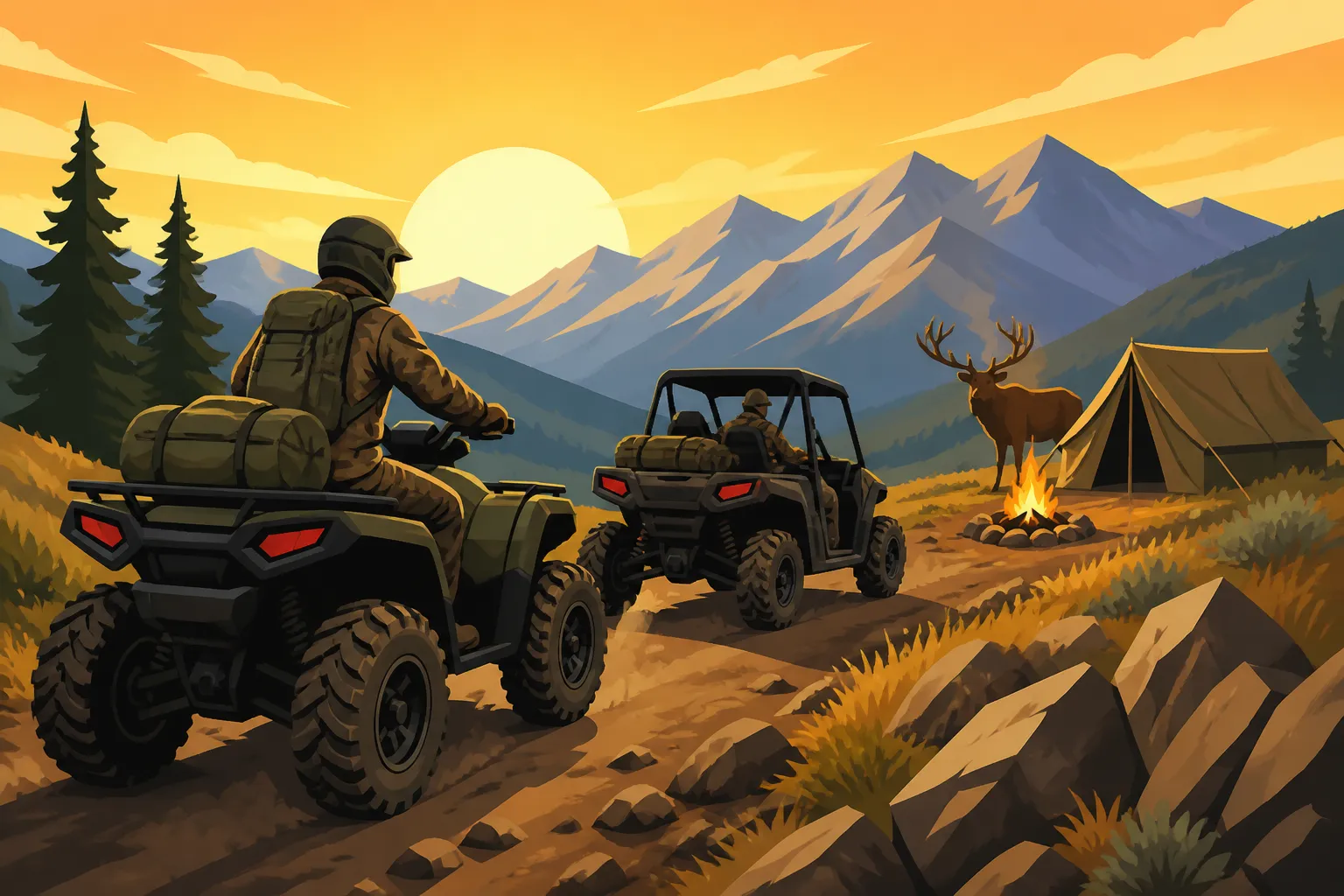
Riding an ATV or UTV to an elk camp can save time and spare a long walk, but a machine’s registration or a hunting license does not automatically make every route legal. The key is checking land access, route restrictions and permit requirements before you unload. Here’s how to plan a Montana elk-camp ride without confusing hunting access with OHV access.
Check the route and land status before you ride
Start with the exact route from the trailer or road to camp. A route that looks rideable on a map—or that hunters have used before—may cross land where motorized travel is restricted. Confirm the land manager, the route’s current status and whether your machine is allowed.
On national forest land, use the current Motor Vehicle Use Map for the specific forest or district. It identifies routes open to motorized travel and may show seasonal restrictions. A road or trail marked open for one class of vehicle may not be suitable or legal for another. Learn how to read one with Reading a Montana Motor Vehicle Use Map. On Bureau of Land Management land, check the applicable route information and closures as well. Rules can differ across a boundary, even when the ground appears continuous.
Do not treat a route as open just because it is signed, graded or shown on a general-purpose mapping app. Signs, gates and closure orders matter, and seasonal access can change. A forest road may be open to highway vehicles while an adjoining trail is closed to OHVs. Likewise, reaching an open road does not give you permission to continue across private land.
Before the trip, identify:
- The landowner or managing agency for each part of the route
- The route’s approved motorized use and any machine-width restriction
- Seasonal closures and current fire or maintenance restrictions
- Any private-land crossings and the permission required
- A legal turnaround or parking point if the route ends before camp
The route to camp is not necessarily the route you can use for hunting or retrieving game. A machine may be allowed on a designated road but prohibited from traveling cross-country to an animal or a downed elk. Keep that distinction clear when planning your hunt. For related hunting-season considerations, see Montana Rules During Hunting Season and Packing Out an Elk by OHV.
Private ground and hunting access are separate questions
Permission to hunt a parcel does not necessarily include permission to drive an ATV or UTV across it. Ask the landowner or manager specifically about motorized access, the route you may use, where you can park and whether you can leave the machine there. If your route crosses more than one parcel, permission from one owner does not cover the next.
Public hunting access also does not mean every motorized route is open. Access programs and public-land boundaries can be complicated, so check the rules for the specific parcel and route. For private hunting access, Montana Block Management Land and OHVs explains why permission and vehicle use should be confirmed separately. If a route or parcel is posted, do not assume the sign is irrelevant because you have a hunting license or permission elsewhere; review Riding Posted Ground in Montana before crossing.
Keep a backup plan. If a gate is closed, a route is restricted or a landowner’s permission does not cover motorized travel, park where access is lawful and continue on foot, or choose another authorized route. Do not bypass a gate or ride around a closure.
Sort out permits, registration and hunting rules
Several kinds of authorization may be relevant, and they serve different purposes. An OHV permit or pass does not grant land access. A vehicle registration does not automatically satisfy trail-use requirements. A hunting license does not authorize motorized travel on a closed route.
For public-land OHV riding, check the requirements that apply to your residency, machine and intended use. Montana has separate permit or pass rules for residents and nonresidents, and a registration from another state should not be assumed to replace Montana’s public-land requirements. Start with Montana’s Non-Resident Temporary Use Permit if you are visiting, and What Montana Charges an Out-of-State Rider for the broader visitor-permit picture. Confirm current requirements with Montana Fish, Wildlife & Parks and the relevant land manager before leaving home.
| Question | What to verify | What the answer does not automatically allow |
|---|---|---|
| Do I need a Montana OHV trail permit or pass? | Requirements for your residency, machine and public-land use | Riding on a closed route or private land without permission |
| Is my machine registered? | Whether registration is required for the machine and how it will be operated | Using every public trail or forest road |
| May I ride this road or trail? | The current route designation, seasonal status and vehicle limits | Leaving the route to reach a hunting spot |
| May I hunt this parcel? | Hunting access, season rules and any landowner conditions | Driving across the parcel unless motorized access is included |
| Can I carry or transport hunting equipment on the machine? | Current hunting regulations and applicable road or firearm rules | A general exemption from OHV or route restrictions |
For a more focused overview of public-land machine requirements, see Montana Permit Rules on Public Land. If you are riding on a Forest Service road, also check Montana Rules on Forest Service Roads. The road’s status and restrictions still matter even if you have the correct pass.
Treat permits as separate from road access
A trail pass or permit is not the same thing as permission to ride a public road. Route access depends on the specific road, who manages it and whether OHVs are allowed there. A road may be closed to OHVs, open only during certain periods or subject to local restrictions. If your route includes a county road or a road through a town, check the rules for that segment too.
The reverse is also true: being legally allowed on a road does not necessarily mean your machine has met all trail-permit, registration or equipment requirements. If your trip uses both public roads and designated trails, check each part of the route rather than assuming one credential covers the whole ride.
Out-of-state registration can make the paperwork especially easy to misread. Montana does not offer blanket recognition that makes every other state’s registration a substitute for Montana’s permit rules on public trails. Check Reciprocity Montana Does Not Offer and Riding a Montana Machine in Another State if you are planning a cross-border trip or relying on an out-of-state credential.
Finally, check hunting regulations separately from OHV requirements. Carrying a firearm, bow or other hunting equipment while riding can involve rules beyond trail access. Regulations may depend on the equipment, the season and the circumstances. Do not rely on a hunting license as proof that every way of transporting gear or traveling to a hunting area is permitted.
Plan the ride and the camp setup
A legal route still needs to be practical for your machine and your camp gear. A narrow trail, steep grade or tight turn may not suit a wide UTV with a loaded rack or trailer. Check the route’s width restrictions, surface and elevation changes, and compare them with your machine’s dimensions and load. A route that works for a small ATV may be a poor fit for a full-size side-by-side.
Keep the load secure and within the machine’s limits. Heavy gear can affect braking, steering and stability, especially on rough or sloped ground. Pack fuel and food so they cannot shift, and keep essential equipment accessible without blocking controls or visibility. If you are carrying a firearm or archery equipment, secure it safely and check the applicable hunting and transport rules before riding.
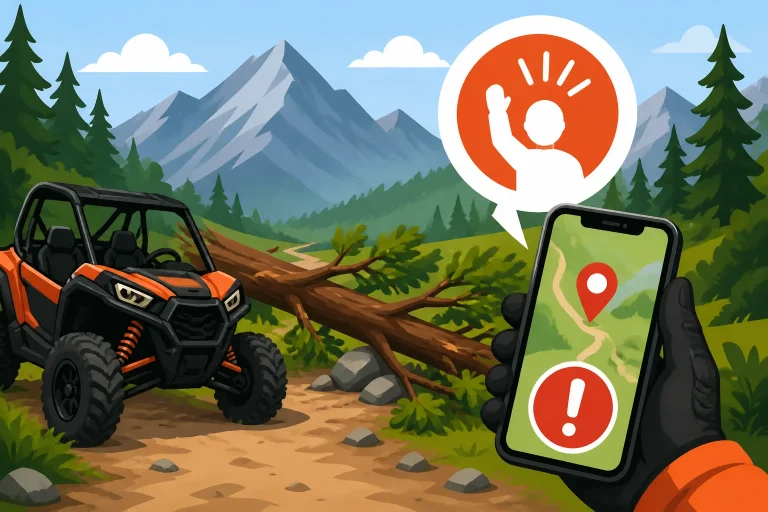
For a remote camp, have a paper map or offline route information in addition to a phone. Cell service may be unreliable, and a route app can be out of date or show roads that are not open to motorized use. Share your planned route and expected return time with someone who is not on the trip. A simple plan should include:
- The legal route in and the planned parking or camp location
- A backup route or turnaround point
- The machine, permit and registration details for each rider
- A check-in time and what to do if you miss it
- The location of fuel, tools, first-aid supplies and recovery equipment
Camp placement also has rules. A campsite beside a road is not automatically an authorized campsite, and permission to ride to an area does not necessarily mean you can camp there. Check the land manager’s camping rules, fire restrictions and any limits on vehicle parking. Avoid blocking a route, gate or trailhead, and do not leave a machine where it could obstruct other users or emergency access.
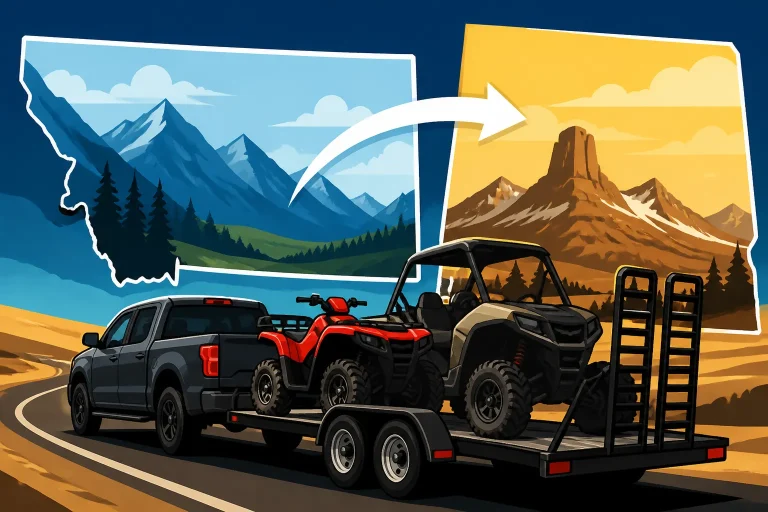
If you are staging a machine on a trailer rather than riding it from your home or lodging, make sure the parking and unloading location is appropriate. Montana Permits for a Machine Left on a Trailer can help clarify what to check when a machine is transported to a riding area but not ridden there.
Keep the route footprint small
Once you reach camp, stay on authorized routes. Avoid cutting across meadows, moving around wet or damaged trail sections, or creating a new track to get closer to a hunting location. Riding off the designated route can damage soil and vegetation, create conflict with other users and expose you to enforcement. A short detour is still a detour.
Use extra caution around other hunters, hikers, livestock and vehicles. Reduce speed where visibility is limited, be ready to stop and give other users room. Do not assume that a quiet road is empty simply because traffic is light. At camp, secure the machine, keep food and fuel handled safely, and follow the site’s fire and waste rules.
If an elk is harvested, stop and check the legal route and retrieval rules before using an OHV. The fact that the machine got you to camp does not mean you can ride it to the animal or overland to haul the meat. Use authorized roads and trails only, and follow current hunting regulations. If the route is unsuitable or motorized travel is prohibited, plan another lawful way to retrieve the animal.
A practical pre-ride checklist
Before heading to elk camp, confirm each of these rather than relying on a single map, pass or hunting document:
- Route: Is every segment open to your machine, and are seasonal restrictions in effect?
- Land: Does the route cross private parcels, and do you have permission for motorized access?
- Permit: Do you have the required Montana trail permit or pass for your residency and machine?
- Registration: Are the machine’s registration and ownership documents in order for the way it will be used?
- Hunting: Have you checked current season, equipment and transportation rules?
- Camp: Is the campsite permitted, and may you park or leave the machine there?
- Machine and load: Can your ATV or UTV fit the route, carry the load securely and turn around safely?
- Backup plan: Do you have a lawful alternative if a gate, closure or weather condition prevents access?
The most common mistake is treating hunting access, OHV access and vehicle paperwork as one approval. They are separate checks. Verify them before the trip, keep to authorized routes and be prepared to leave the machine behind if the final part of the way to camp is not open to motorized travel.
Disclaimer
This article is for general informational purposes only and does not constitute professional advice. Laws, prices and regulations vary by location and change over time. Consult a qualified professional for guidance on your specific situation.