Driver’s License or a Safety Certificate
One of the most common questions and biggest sources of confusion for off-highway vehicle (OHV) riders in Montana, especially those hoping to take their ATV or UTV on a scenic county road, revolves around what kind of documentation they actually need to carry. It's not always as simple as just having a driver's license, and for younger riders, the rules can feel like a labyrinth. This comprehensive guide is here to untangle the requirements, explaining whether a driver's license, a safety certificate, or a combination of both is necessary to legally enjoy Montana's varied terrain, particularly when you venture onto public roads.
The Core Question: What Does Montana Actually Require for Road Riding?
Navigating Montana's OHV regulations can sometimes feel like trying to read a treasure map written in a foreign language. You hear snippets here and there about driver's licenses, safety courses, and age limits, and it's easy to get overwhelmed. For anyone planning to roll their ATV or UTV onto a public road in the Big Sky State, understanding the distinction between a driver's license and a safety certificate is absolutely paramount. It's not just about staying legal; it's about staying safe and avoiding an unexpected conversation with a local sheriff or game warden.
The Driver's License Mandate for Public Roads
Let's cut right to the chase for most adult riders: if you intend to operate your ATV or UTV on any public road in Montana, you generally need a valid driver's license. This isn't unique to OHVs; it's a standard requirement for operating any motor vehicle on public thoroughfares. Montana, like many states, sees an ATV or UTV on a public road as another form of motor vehicle, and thus, the operator must be properly licensed. This means possessing a standard driver's license, the kind you use to drive your car or truck. Commercial driver's licenses also qualify, of course.
The frustration here is real for many riders. You might spend 99% of your time on dedicated trails or private land, never needing a driver's license for that kind of riding. But then, you want to connect two trails via a short stretch of gravel county road, or maybe ride into a small trail town for gas and lunch, and suddenly, you're subject to the same licensing requirements as any other motorist. It feels like an unexpected hurdle, particularly if you’re a skilled off-road rider who hasn't needed a street license for years. Unfortunately, the law doesn't make exceptions for perceived skill levels; it’s about public safety and consistent enforcement. So, before you even think about putting tires on a public road, make sure that driver's license is current and in your wallet.
When a Safety Certificate Comes into Play
While a driver's license is the primary requirement for adults on public roads, a safety certificate plays a crucial role for a specific demographic: younger riders. In Montana, an OHV Safety Education Certificate is primarily designed for individuals between the ages of 12 and 15 who wish to operate an OHV. This certificate demonstrates that the rider has completed an approved safety course, understanding the fundamentals of safe operation, trail etiquette, and the rules of the road. It's about ensuring these younger operators have a baseline of knowledge before they hit the trails or, in very specific situations, certain public roads.
It’s vital to understand that this safety certificate is not a substitute for a driver's license on all public roads. For a 12 to 15-year-old to operate an OHV on a public road where permitted, they typically need both the safety certificate and direct supervision by a licensed adult. The certificate alone doesn't grant unfettered access to county roads or city streets. Think of it as a crucial component of their overall eligibility, but not the sole golden ticket. It's an essential layer of safety and legal compliance, especially for the budding generation of riders. This certificate serves to educate and protect, but it operates within a larger framework of age and licensing requirements.
Age, Vehicle Type, and the Road Riding Conundrum
The rules surrounding driver's licenses and safety certificates in Montana aren't one-size-fits-all. They often pivot on the age of the rider and, to some extent, the type of machine being operated. This can make planning a family riding trip, or even a solo jaunt, a bit more complicated than just gassing up and going. Understanding these age-specific nuances is key to ensuring everyone in your riding party is legal and safe, especially if you plan to incorporate any road riding into your adventure.
Rules for Riders Under 16 on Montana Roads
For our younger riders, the rules are quite specific and designed with their safety and developing judgment in mind. In Montana, if you are between 12 and 15 years old and want to operate an OHV, you are generally required to possess an OHV Safety Education Certificate. This certificate, which we touched on earlier, signifies you've completed an approved safety course. However, merely having the certificate isn't enough to freely cruise public roads. Even with a safety certificate, a rider in this age bracket must be under the direct supervision of a person 18 years of age or older who holds a valid driver’s license. This adult supervisor must be readily available to assist and monitor the young rider, typically riding alongside them or in a very close proximity. It’s about more than just being in the same general area; it’s about active oversight.
Furthermore, it's worth noting that even with a certificate and supervision, there might be specific limitations on where a 12-15 year old can ride on public roads, and what size or type of machine they can operate. Some local ordinances might restrict younger riders more severely than state law, and certain road classifications might be entirely off-limits. For a deep dive into specifics, you might want to review [Montana Rules for a 12-Year-Old on a Road]. It’s a carefully crafted system meant to introduce young people to the joys of OHV riding responsibly, without exposing them or other motorists to undue risk. Always check local rules wherever you plan to ride, as county commissioners and city councils have the authority to create their own ordinances regarding OHV access on local roads.
Adults and the Driver's License Expectation
Now, for those 16 years of age and older, the picture simplifies considerably, though it's still crucial to be clear. If you are 16 or older, a valid driver's license is the primary, indispensable requirement for operating an OHV on any public road in Montana. There’s no ambiguity here. Just as you wouldn’t drive a car without a license, you cannot legally operate an ATV or UTV on public roads without one. This applies whether you're connecting trails, heading into town, or simply crossing a paved road to get to another section of off-road terrain. The expectation is that you are a licensed motor vehicle operator.
This can sometimes create a conundrum for seasoned off-roaders who, for whatever reason, may not possess a current driver's license. Perhaps they never got one, or it expired, or they lost their privileges. If that's your situation, and you wish to use your OHV on any public road, you must obtain a valid driver's license. There are very limited exceptions, such as specific agricultural exemptions on private or designated roads, but these are typically narrow in scope and do not apply to general recreational road riding. For a broader understanding of what's expected, take a look at [Driver's License Rules for Montana Road Riding]. The bottom line for adults is clear: license up if you plan to hit the pavement or gravel on your quad or side-by-side.
Understanding "Public Road" and "Private Land" Exemptions
The distinction between where you need a driver's license or safety certificate and where you don't often hinges on the type of land or road you're on. Montana's vast landscapes include a complex patchwork of public roads, private lands, and designated trails, each with its own set of rules. Misunderstanding these boundaries can lead to trouble, from fines to trespassing accusations. Let’s clarify these crucial differences.
Defining Public Roads Where a License Is Critical
When Montana law talks about "public roads" in the context of OHV operation, it's referring to any road maintained by a governmental entity – federal, state, county, or municipal – that is open to public vehicular traffic. This includes county gravel roads, paved state highways (for crossing purposes or where specifically permitted), and city streets that have been opened to OHVs by local ordinance. The moment your tires touch one of these surfaces, you are generally subject to motor vehicle laws, including the requirement for a valid driver's license. Even if you're just crossing a highway to get from one side of a trail system to another, that brief moment on the public thoroughfare typically triggers the licensing requirement. It’s not just about prolonged travel; it's about any access.
The authority for opening or closing specific public roads to OHV traffic often lies with local government. County commissioners have significant say over county roads, while city councils control municipal streets. This means that access can vary greatly from one jurisdiction to another, leading to a patchwork of rules even within the same state. Before planning a route that involves public roads, it's always wise to check with the local county sheriff's office or city hall for specific ordinances. For a more comprehensive look at these intricacies, check out [Riding an OHV on the Road in Montana] and [Montana City Streets and Municipal Ordinances]. Ignorance of these local rules is no excuse, and a short, seemingly harmless road connection can quickly become a legal headache without the proper documentation.
Exceptions: Riding on Private Land and Agricultural Use
Fortunately for riders, not every turn of the wheel in Montana requires a driver's license or safety certificate. When you're operating an OHV exclusively on private property with the landowner's express permission, the state's driver's license and safety certificate requirements generally don't apply. This means if you own a ranch, have access to a friend's sprawling property, or are riding at a designated off-road park on private land, you don't need a license or certificate for yourself or your minor passengers (though common sense and parental supervision are always advised for safety). The landowner sets the rules for their private domain.
Beyond private land, Montana also recognizes specific exemptions for agricultural or ranch use. If your ATV or UTV is primarily used for work on a farm or ranch, such as herding cattle, hauling feed, or maintaining fences, and its operation on a public road is incidental to these agricultural purposes, you might fall under an exemption. These machines are considered implements of husbandry. However, these exemptions are typically narrowly defined and don't extend to recreational riding. You can’t claim an agricultural exemption just because you once hauled a bale of hay with your side-by-side if you primarily use it for weekend trail rides. Always be clear on the specific conditions of these exemptions, which often require the machine to be specifically designed or modified for agricultural tasks. For more information, a good starting point is [Farm and Ranch Exemptions in Montana]. It's crucial not to conflate these specific work-related exemptions with a blanket pass for recreational road riding.
The Safety Course: What It Teaches and Who Needs It
Beyond just having a license or a certificate, there's an educational component that Montana emphasizes for OHV operators. The safety course is not merely a hoop to jump through for younger riders; it's a valuable tool designed to instill good habits, build awareness, and ultimately, prevent accidents. Understanding its curriculum and its relevance to different rider demographics is essential for a holistic approach to safe and legal OHV operation.
Montana's OHV Safety Education Requirements
Montana's OHV Safety Education Course is a comprehensive program designed to equip riders with the knowledge and skills necessary to operate off-highway vehicles safely and responsibly. While it is mandatory for riders aged 12 to 15 who wish to operate an OHV, especially if they plan to do so on public lands or permitted roads, it is highly recommended for all riders, regardless of age or experience level. The course typically covers a broad range of topics, including: the proper use of safety gear (like helmets and eye protection), pre-ride inspections of the machine, environmental awareness and ethical riding practices (such as staying on marked trails and minimizing impact), common hazards encountered on trails, basic maintenance, and, importantly, the specific laws and regulations pertaining to OHV use in Montana.
Even if you've been riding for years, taking a refresher course can be incredibly beneficial. Regulations change, new safety technologies emerge, and sometimes, old habits need a gentle nudge towards safer practices. The course helps to standardize knowledge across the riding community, ensuring everyone understands the baseline expectations for responsible operation. For a detailed breakdown of what's expected and who needs it, you can consult [Montana's Safety Education Requirement]. It's an investment in safety that pays dividends in preventing accidents and preserving access to Montana's incredible riding opportunities.
Online Courses and Approved Providers
Recognizing the diverse schedules and locations of its residents and visitors, Montana offers flexible options for completing the OHV Safety Education Course. One of the most convenient methods is through approved online course providers. These online platforms allow riders to complete the curriculum at their own pace, from the comfort of their home, making it accessible even for those in remote areas of the state or out-of-state visitors planning a trip. These courses are typically interactive, incorporating videos, quizzes, and simulations to make the learning experience engaging and effective.
In addition to online options, there may be opportunities for in-person courses offered by certified instructors, often through local OHV clubs, community education programs, or even dealerships. These in-person courses can provide hands-on experience and direct interaction with an expert, which some learners find more beneficial. Regardless of the format, it's crucial to ensure that the course you choose is approved by the State of Montana. This guarantees that the curriculum meets all necessary state requirements and that the certificate you receive will be recognized. For a list of reputable and authorized providers, checking [Approved Online Course Providers] is an excellent first step. Choosing an approved provider ensures your efforts to become certified are officially recognized, giving you peace of mind and legal compliance.
Consequences of Riding Without Proper Documentation
Riding an ATV or UTV in Montana is an incredible experience, but it comes with responsibilities. Ignoring the requirements for driver's licenses, safety certificates, or other essential documentation isn't just a minor oversight; it can lead to significant headaches, including fines, penalties, and even potential legal action. Understanding what law enforcement expects and the repercussions of non-compliance is crucial for any rider venturing onto Montana's roads and trails.
What a Montana Warden Asks For
If you're out riding on public land or a permitted road in Montana, there's always a chance you might encounter a game warden, sheriff's deputy, or other law enforcement officer. These officials are responsible for enforcing OHV regulations, ensuring public safety, and protecting natural resources. When they stop a rider, they typically ask for several key documents to verify compliance. First and foremost, they will almost certainly ask for your driver's license if you are an adult operating on a public road, or your OHV Safety Education Certificate if you are a minor where required. They will also likely request proof of ownership for the machine, such as registration papers, and evidence of current OHV registration decals. Depending on the situation and location, they might also ask for proof of liability insurance, especially if you're on a road that requires it.
Being prepared with these documents, readily accessible and in good order, can make a stop quick and stress-free. Many riders keep a laminated copy of their registration and insurance in a waterproof bag on their machine. It’s always best to be polite, cooperative, and provide the requested information promptly. Being argumentative or unable to produce the necessary paperwork can quickly escalate a routine stop into a much more serious situation. For a detailed list of what to expect, refer to [What a Montana Warden Asks a Rider For]. Think of it as demonstrating your commitment to responsible recreation.
Fines and Penalties for Non-Compliance
The consequences of operating an OHV without proper documentation in Montana can range from a minor citation to more severe penalties, depending on the specific violation and whether it's a repeat offense. Riding on a public road without a valid driver's license for adults, or without a safety certificate and proper supervision for minors, can result in fines. These fines are often comparable to those issued for similar infractions involving other motor vehicles. Beyond monetary penalties, repeat offenses could lead to a suspension of riding privileges or even impoundment of your machine in extreme cases.
It's also important to remember that these penalties are separate from any fines you might incur for other violations, such as riding on closed trails, operating an unregistered machine, or lacking required safety equipment like a helmet (if applicable). For instance, an unregistered OHV can lead to its own set of fines, which might be compounded if you're also riding without a license on a public road. While specific dollar amounts for fines can vary by county and local ordinance, it's safe to say that getting caught without the right paperwork will always be more expensive and time-consuming than simply ensuring you're compliant before you head out. Don't let a small oversight turn your fun day into a costly one. You can find more information about general penalties in articles like [Fines for an Unregistered OHV in Montana], which often touch on various compliance issues.
Equipping Your Machine for Road Legality
Beyond simply carrying the right papers, making your ATV or UTV road-legal in Montana involves equipping the machine itself with specific features. It's a two-pronged approach: you, the operator, need to be properly licensed, and your machine needs to meet certain standards. Many riders get excited about performance upgrades or cosmetic changes, but for those venturing onto public roads, functional accessories for safety and compliance are paramount.
Necessary Equipment Beyond Licensing
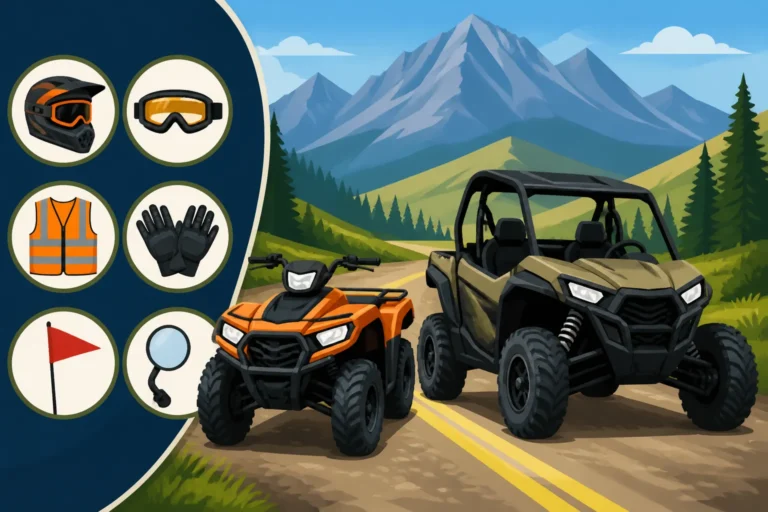
Operating an OHV on Montana's public roads isn't just about having a driver's license or safety certificate; it also means your machine needs to be outfitted with specific equipment to meet street-legal standards. These requirements are in place to ensure the safety of the OHV operator and other motorists sharing the road. While the exact list can vary slightly depending on the local ordinances of the specific county or town, generally, a road-legal OHV must have:
- Headlights and Taillights: These must be operational and on at all times when riding on a public road, even during daylight hours.
- Brakes: A properly functioning brake system, often requiring at least two independent braking systems.
- Muffler and Spark Arrester: To control noise and prevent wildfires, especially when accessing public lands.
- Rear-View Mirror: Typically at least one, properly mounted to provide a clear view of the rear.
- Horn: An audible warning device for signaling other drivers.
- Turn Signals: While not always explicitly required for all roads, many towns and counties that allow OHV access on streets will mandate them.
Many manufacturers don't equip ATVs and UTVs with all these features from the factory, as their primary design is for off-road use. This is where the aftermarket industry, with companies like SuperATV, comes into play. You can find a wide range of road-legal kits, mirrors, turn signal systems, and upgraded horns specifically designed for various OHV models. These kits are invaluable for riders looking to bridge the gap between trail and road. However, always double-check that any aftermarket parts you install meet Montana's specific legal standards. You can get more details on what your machine needs to display by consulting [What Montana Requires on an OHV Road Ride]. Remember, having the right gear isn't just about avoiding a ticket; it's about making your ride safer for everyone.
The Importance of a Well-Maintained Machine
Beyond simply adding the required accessories for road legality, the overall condition and maintenance of your ATV or UTV are critically important. A machine might have all the right lights and mirrors, but if its brakes are worn, tires are bald, or steering components are loose, it poses a significant safety risk on public roads. Unlike a wide-open trail where speeds are often lower and hazards are more predictable (though still present!), road riding involves sharing space with cars, trucks, and other vehicles traveling at higher speeds. Your machine needs to be responsive, stable, and reliable.
Before venturing onto any public road, perform a thorough pre-ride inspection. Check tire pressure and tread depth, test your brakes for firm response, ensure all lights (headlights, taillights, brake lights, turn signals) are working correctly, and confirm your horn is audible. Listen for unusual noises, check for fluid leaks, and inspect steering and suspension components for excessive play. Investing in quality parts from reputable brands, and regular preventative maintenance, ensures your machine is not only compliant with equipment laws but, more importantly, safe to operate. A well-maintained OHV is a safe OHV, and safety should always be the top priority, whether you’re on the gnarliest trail or a smooth county road.
| Rider Age | Driver's License Required for Public Roads | OHV Safety Certificate Required (for OHV operation) | Adult Supervision Required for Public Roads | Common Road Access Limitations |
|---|---|---|---|---|
| Under 12 | No (Generally cannot operate OHV on public roads) | No (Cannot obtain until 12) | Yes (Cannot operate OHV on public roads) | Generally prohibited from public road operation; may ride on private land with owner permission & adult supervision. |
| 12-15 | No (Too young for driver's license) | Yes (Required for public/recreational use) | Yes (Must be 18+ and licensed, direct supervision) | Limited to designated county roads/city streets if permitted by local ordinance; specific engine size rules may apply. |
| 16+ | Yes (Valid driver's license) | No (Safety course recommended but not mandatory for licensed adult) | No | Access depends on specific county/city ordinances; must adhere to all motor vehicle laws. |
Disclaimer
This article is for general informational purposes only and does not constitute professional advice. Laws, prices and regulations vary by location and change over time. Consult a qualified professional for guidance on your specific situation.