Crossing an Interstate on a Quad
It's a common thought for many off-highway vehicle (OHV) enthusiasts, especially when you're out exploring Montana's vast and beautiful landscapes: "Can I just hop on the interstate for a minute to get to the other side?" Maybe you see your trail on the opposite side of the highway, or you just need to get to a gas station that looks so close, but a huge highway stands in your way. This guide is here to tackle that exact frustration and explain the rules, realities, and very real dangers of trying to cross or ride on an interstate highway with your quad or side-by-side in Big Sky Country.
The Blunt Reality of Interstate Crossings for OHVs in Montana
Let's get straight to it: The short answer to whether you can ride your ATV or UTV on a Montana interstate is a firm and resounding no. It's a question that pops up a lot, especially when a mapped trail seems to get cut off by a major highway, or a convenient-looking bridge beckons. But the rules are clear, and for very good reasons. Ignoring them can lead to serious consequences, not just legally, but for your safety and the safety of others.
Why Interstates Are Different
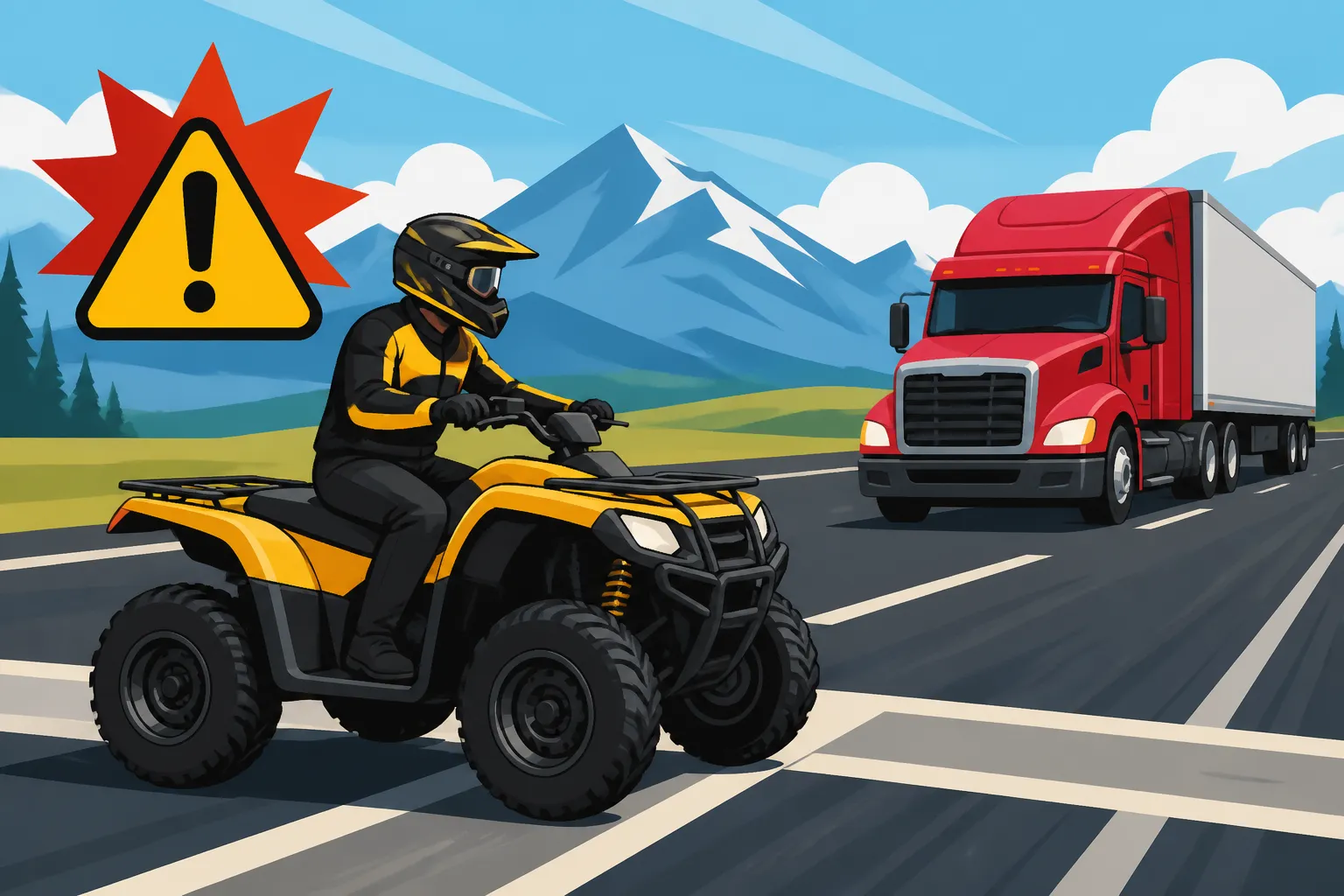
Think about the nature of an interstate highway. These are roads designed for high-speed, high-volume traffic – cars, trucks, and semi-trailers moving at 70 to 80 miles per hour, sometimes even faster. The sheer difference in speed between your average OHV and the flow of interstate traffic creates an incredibly dangerous situation. Your side-by-side or quad, even a powerful one, simply isn't built to handle those speeds safely or to keep up with that pace. You'd be a slow-moving target in a fast-moving stream, and that's a recipe for disaster.
Beyond speed, interstates are federally regulated roadways, built to specific standards that exclude slower-moving vehicles like OHVs. These aren't your typical Montana county roads or forest service trails where you might sometimes encounter mixed traffic. The infrastructure, the signage, and the entire design are tailored for a specific type of vehicle and driving experience that OHVs simply don't fit into. It's a completely different world from the backcountry tracks and gravel roads we usually love to explore.
The "No OHVs on Interstates" Rule
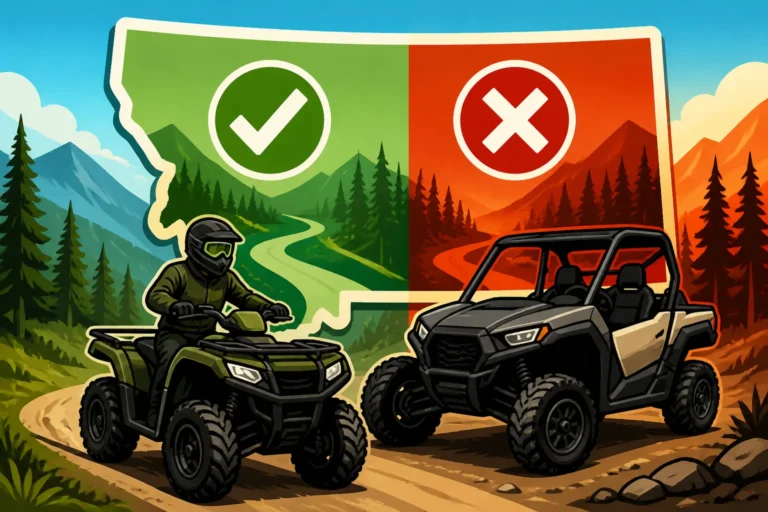
Montana law, in line with federal regulations, explicitly prohibits the operation of off-highway vehicles on interstate highways. This isn't just a suggestion; it's a hard and fast rule. This prohibition extends not only to riding on the interstate lanes but also to crossing the interstate at grade level. You cannot pull onto an interstate, drive across, and exit. It's universally forbidden across the country for these types of vehicles.
The core reason, as we touched on, is safety. The speed differential is immense. An OHV traveling at 30-45 mph would be an enormous hazard to vehicles moving at 70-80 mph. There's also the matter of vehicle design: OHVs lack the necessary safety features like crumple zones, advanced braking systems, and robust lighting required for interstate travel. They're built for agility and off-road capability, not for navigating high-speed, multi-lane highways. Trying to bypass these rules is not only dangerous for you and your passengers but also puts every other driver on that interstate at severe risk. This strict rule is in place to protect everyone on the road, including you.
Understanding Legal Alternatives and Permissible Crossings
While directly riding on or crossing an interstate with your OHV is a non-starter, that doesn't mean your adventure has to end if an interstate bisects your desired route. There are indeed legal and safe ways to navigate around or over these major arteries. It just requires a bit of planning and understanding of the local road network.
Designated Overpasses and Underpasses
The most common and safest way to cross an interstate on an OHV in Montana is by utilizing existing infrastructure specifically designed for other types of traffic: overpasses and underpasses. These are typically county roads, state highways, or even local streets that either bridge over the interstate or tunnel under it. When you're using one of these, your OHV is still on a legal, non-interstate road; you're simply using that road to physically traverse the space above or below the interstate.
For example, if you're riding a county road (where OHV access might be permitted, depending on local ordinances and the type of machine), and that county road takes you over an interstate via a bridge, that's a perfectly legal crossing. You're not actually on the interstate. The key is to ensure the road you're on, leading up to and over or under the interstate, is itself legal for OHV use. This is where local knowledge and good map-reading come into play. Many [Montana Towns That Allow OHVs on Their Streets] or certain county roads might provide these crucial connections.
Identifying Allowed Crossings vs. Illegal Entry Points
Knowing the difference between a permissible crossing and an illegal entry point is absolutely critical. An allowed crossing will be clearly marked as a separate road that simply intersects the path of the interstate. You'll see signs for county roads, state routes, or local streets. These roads will have their own speed limits, often much lower than the interstate, and will not have the distinctive green interstate shields.
An illegal entry point, on the other hand, is any ramp, merge lane, or direct access point that leads onto the interstate itself. These are usually clearly marked with "No Pedestrians," "No Bicycles," and implicitly, "No OHVs." The temptation to take a shortcut by hopping on an exit ramp and quickly crossing to an entrance ramp on the other side is incredibly high, but this is precisely what is forbidden and dangerous. Law enforcement, including the Montana Highway Patrol, watches these access points closely. They are acutely aware of the dangers and the potential for illegal activity, and the penalties for violation can be substantial. Remember, a paved frontage road running parallel to the interstate is generally not the interstate itself, but you still need to verify if OHV use is allowed on that specific frontage road.
Practical Advice for Navigating Montana's Roadways with Your OHV
Navigating Montana's vast network of roads and trails with your OHV requires a good understanding of the rules and careful planning. You want to make sure your ride is not only fun but also legal and safe. Since interstates are off-limits, focusing on alternative routes and being prepared for all other types of roads is key.
Planning Your Route to Avoid Interstates
The best defense against accidentally encountering an interstate with your OHV is proactive route planning. Before you even load your machine, study your maps. Motor Vehicle Use Maps (MVUMs) for national forests are invaluable for identifying legal motorized trails and roads. Digital apps like onX Offroad are also fantastic tools, often showing clearly designated OHV routes and allowing you to plot a course that avoids restricted areas. [Montana's National Forest Trail Systems] offer thousands of miles of incredible riding that keep you far away from high-speed highways.
When you're planning, always look for alternatives to interstates. These usually include secondary state highways, county roads, and forest service roads. Many of these roads offer scenic and enjoyable riding, and crucially, they are where OHVs are sometimes legally permitted, provided you meet all the requirements. It’s also wise to check local ordinances, especially if your route takes you through or near small towns, as [Montana City Streets and Municipal Ordinances] can vary widely on OHV access. Always plan for extra time if you're taking a longer, more circuitous route on an OHV-friendly road, as these will naturally be slower than a direct interstate shot.
What to Do If You Accidentally Approach an Interstate
Even with the best planning, sometimes you might find yourself heading toward an interstate exit or entrance ramp unexpectedly. Maybe you took a wrong turn, or a trail ended sooner than you thought, dropping you onto a connecting road. The most important thing is to not panic and not to continue onto the interstate.
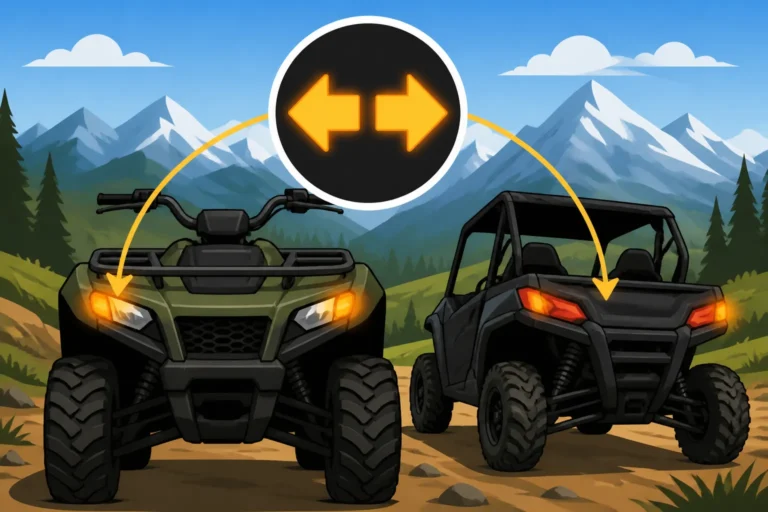
If you realize you're on an access road that will lead directly onto an interstate, safely pull over to the shoulder or a designated pull-off area if one is available. Do not attempt to merge into interstate traffic. Carefully assess your surroundings, use your maps (paper or digital), and find a safe, legal way to turn around or reroute. This might mean backtracking a significant distance, but it's infinitely safer and less costly than a citation or, worse, an accident. If you're equipped with proper mirrors and turn signals – like sturdy, vibration-resistant options often found through companies like SuperATV – it can make safely changing course on an unfamiliar road much easier. Remember, patience is a virtue in the backcountry, and it's equally important when navigating roads near major highways.
Equipping Your Machine for Any Legal Road Use
While your machine won't be hitting the interstate, many parts of Montana allow OHVs on certain county and secondary roads, particularly for purposes like getting from a trail to a trailhead, accessing services, or reaching private property. If you plan to ride your OHV on any public road where it's legally permitted, your machine needs to be street-legal for those specific routes. This means it must meet certain equipment requirements, which generally include:
- Headlights and Taillights: These must be functional and turned on.
- Brakes: Reliable and effective.
- Muffler and Spark Arrester: To control noise and prevent fires.
- Rear-view Mirror: For visibility.
- Horn: To alert others.
- Tires: DOT-approved tires are often required for significant road mileage.
- License Plate: Displayed correctly.
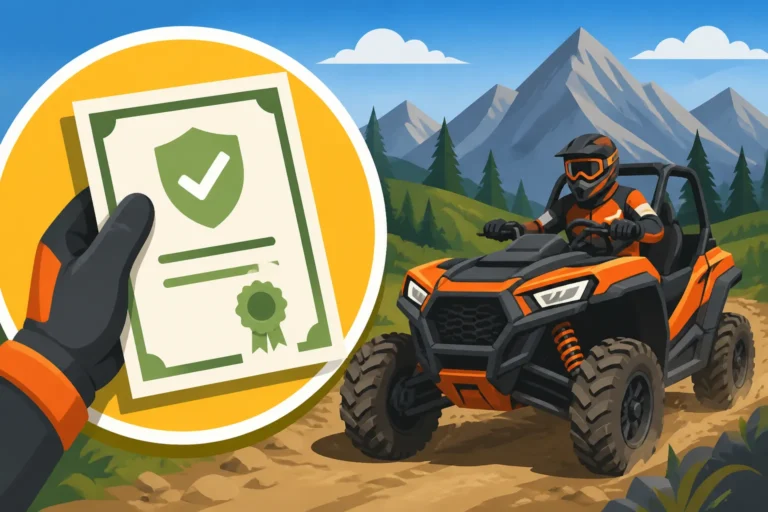
Beyond the machine itself, you, as the operator, need to be properly licensed. This usually means having a valid [Driver's License or a Safety Certificate], depending on your age and the specific road. Your OHV also needs to be properly registered with current decals. Understanding your [Montana OHV Registration Cost at the Treasurer] and ensuring your machine is up-to-date is crucial for legal road access. Investing in quality accessories from reputable brands, such as heavy-duty skid plates or a robust windshield from SuperATV, can also enhance the safety and durability of your machine for both on-road and off-road excursions, ensuring it can handle diverse Montana terrain.
Consequences of Illegal Interstate Operation
Attempting to ride your quad or side-by-side on an interstate in Montana, or any state for that matter, is a high-risk gamble that carries severe consequences. It's not just a minor infraction; it's a serious safety violation that can lead to immediate danger and significant legal repercussions. Understanding these potential outcomes should reinforce why interstates are strictly off-limits for OHVs.
The Immediate Risks and Dangers
The most terrifying consequence of taking an OHV onto an interstate is the immediate and extreme danger it poses. Imagine a scenario: you're trying to quickly cross an interstate, maybe just for a short distance. Your machine, designed for off-road trails and lower speeds, suddenly finds itself in a maelstrom of vehicles traveling 30-40 mph faster than you can safely achieve. The speed differential is colossal, making you incredibly vulnerable.
- High-Speed Collisions: Even a momentary lapse in attention from a driver or a sudden braking maneuver can lead to a catastrophic collision. OHVs offer minimal protection in such an impact.
- Limited Visibility: Your OHV is much smaller and lower to the ground than cars and trucks on the interstate, making it harder for other drivers to see you, especially at highway speeds where reaction times are already compressed.
- Breakdown Hazards: If your machine stalls or breaks down on an interstate, you become an instant, immovable obstacle in a high-speed lane, creating an extremely dangerous situation for yourself and everyone else. The shoulder, if one exists, offers scant protection. This isn't just a potential ticket; it's a potential fatality.
Legal Penalties and Enforcement
Beyond the life-threatening dangers, the legal penalties for operating an OHV on an interstate are steep and rigorously enforced by authorities like the Montana Highway Patrol. This isn't a situation where you might get a polite warning; it's a serious offense.
- Significant Fines: You can expect substantial fines for illegal operation of an OHV on a controlled-access highway. These aren't cheap tickets; they're designed to deter such dangerous behavior.
- Vehicle Impoundment: It's highly likely your ATV or UTV will be immediately impounded. This means not only will you be stranded, but you'll also incur towing, storage, and impoundment fees, which can quickly add up to hundreds or even thousands of dollars.
- Criminal Charges: Depending on the specific circumstances, such as reckless endangerment or if an accident occurs, you could face more severe criminal charges in addition to traffic citations.
- License Points and Suspension: Such an offense will likely add points to your driver's license, potentially leading to increased insurance rates or even a license suspension. This can have long-lasting impacts beyond the immediate incident.
- Insurance Issues: Your OHV insurance policy, even if you have comprehensive coverage, almost certainly will not cover any incidents that occur while operating the vehicle illegally on an interstate. This means you'd be personally responsible for all damages, injuries, and legal costs.
It's clear that the risks far outweigh any perceived convenience of trying to "just cross" an interstate. Adhering to the rules, planning your routes carefully, and using legal alternatives are the only sensible approaches when exploring Montana with your OHV.
Here's a quick reference to help you distinguish between road types:
| Road Type | OHV Access (Generally) | Examples | Considerations |
|---|---|---|---|
| Interstate Highway | NEVER ALLOWED. Illegal and extremely dangerous. No crossing at grade. | I-90, I-15, I-94 | High speeds, high volume, federal regulation. Do not attempt to ride or cross. Use designated over/under passes via other roads. |
| U.S. Highway | RARELY ALLOWED. Generally prohibited, but some very limited, signed exceptions might exist in certain rural areas. | US-93, US-2, US-12 | Higher speeds than county roads. Check local ordinances very carefully. Typically, [Crossing a Montana Highway on an OHV] is tightly restricted. |
| State Highway | RARELY ALLOWED. Similar to U.S. Highways, with very limited exceptions. | MT-200, MT-35 | High speeds, mixed traffic. Verify specific segments with local authorities. |
| County Roads | OFTEN ALLOWED. Many counties allow OHVs, especially on unpaved roads. Subject to county commissioner decisions. | "Forest Service Road 123," "Willow Creek Road" | Check local county ordinances. Usually requires machine to be street-legal and operator to be licensed. [Riding an OHV on the Road in Montana] is complex. |
| Forest Service Roads | FREQUENTLY ALLOWED. Designated routes often allow OHVs. | Roads marked on MVUMs | Must adhere to MVUM and Forest Service rules. [Montana Rules on Forest Service Roads] specify what's allowed. |
| City/Town Streets | SOMETIMES ALLOWED. Entirely dependent on local municipal ordinances, which vary greatly by town. | Main Street, Elm Street | Check town hall or police department for specific rules. Usually requires street-legal machine and license. |
| Private Land | ALWAYS ALLOWED. With landowner permission. No registration or permits needed on that private land. | Ranch roads, private trails | Get explicit permission from the landowner. Stay off public roads if unregistered. |
This article is for general informational purposes only and does not constitute professional advice. Laws, prices and regulations vary by location and change over time. Consult a qualified professional for guidance on your specific situation.