Montana Agricultural Road Exemptions
Navigating the rules and regulations for operating your ATV or UTV in Montana can feel like trying to rope a wild mustang – just when you think you've got it, there's another twist. For those of us who live and work the land, using these machines isn't just for recreation; they're vital tools for daily ranching, farming, and agricultural tasks. This guide is going to cut through the confusion and explain Montana's specific agricultural road exemptions, helping you understand when and where your work machine can hit the dirt roads without a full street-legal setup.
Understanding Montana's General OHV Road Rules and the Frustration of Exceptions
Before we dive into the specifics of agricultural exemptions, it's really important to grasp the baseline. Most folks, when they think about riding their ATV or UTV, picture tearing through trails, splashing through creeks, or cruising down a forest service road. What they often don't picture is trying to drive it to the next pasture down a paved county road or across a state highway. That's where the rules get sticky and the frustrations start to build.
Why OHV Road Access is Often Restricted
Generally speaking, off-highway vehicles (OHVs), which include ATVs and UTVs, aren't designed or legally permitted for general use on paved public roads in Montana. The reasons are pretty straightforward: safety and regulatory frameworks. These machines lack many of the safety features found on cars and trucks, like turn signals, rearview mirrors, and often full occupant protection. They're also not typically built to withstand the speeds and traffic of road use. Plus, there's the whole registration and licensing aspect. A regular OHV registration, while mandatory for trail use, doesn't automatically grant you permission to cruise down Main Street. This is why you'll find plenty of information about [Riding an OHV on the Road in Montana] outlining the very specific conditions under which it's allowed, and usually, those conditions are pretty limited, often requiring special equipment or only applying to very specific types of roads or towns. For most of us, the idea of having to trailer our UTV just to get it a half-mile down the road to check on a fence line feels completely impractical and inefficient.
The Need for Agricultural Exceptions
Now, imagine you're a rancher or farmer in Montana. Your side-by-side isn't a toy; it's a workhorse. You use it to haul hay, check on calving cows, mend fences, spray weeds, or get out to a remote pump house. Expecting you to register it like a car, get a special street-legal plate, and outfit it with all the bells and whistles of a standard vehicle, just to move it from one part of your operation to another, is simply unrealistic. It would genuinely cripple the efficiency of agricultural work across the state. This is precisely why Montana, recognizing the backbone of its rural economy, has carved out specific exemptions for machines used for agricultural purposes. These exemptions acknowledge that a utility vehicle is often the most practical, and sometimes the only, way to get certain jobs done on a working farm or ranch. It's not about giving a free pass; it's about common sense and supporting the industries that feed us all.
What Exactly Qualifies as an "Agricultural Exemption" in Montana?
So, if your machine is truly a tool and not just for weekend trail riding, Montana often offers some breathing room. It’s not a blanket pass, but rather a set of specific conditions designed to make farm and ranch work feasible without unnecessary bureaucratic hurdles. Understanding these nuances is key to staying on the right side of the law.
Defining Agricultural Use
At its core, "agricultural use" in Montana refers to operations directly related to farming, ranching, and the production of agricultural commodities. This isn't about using your UTV to go pick up groceries or to take a joyride with friends, even if you live on a farm. This is about using your machine to do the work. Think about tasks like:
- Livestock Management: Herding cattle, sheep, or horses; checking on their health; moving feed to remote pastures; checking water sources.
- Crop and Land Management: Transporting tools, seeds, fertilizers, or pesticides to fields; inspecting crops; accessing irrigation systems; performing light tillage or seeding with attachments.
- Infrastructure Maintenance: Repairing fences, checking power lines or water pipes across your property, hauling lumber or supplies for small repairs, accessing remote barns or sheds.
- Hauling and Towing: Moving hay bales, small trailers with equipment, or even game during hunting season if directly related to a ranching operation's needs (e.g., predator control or harvesting for personal consumption on the ranch).
If you’re debating whether your use qualifies, ask yourself: Is this activity directly and primarily related to the operation of my farm or ranch? Is this machine an essential part of that work? If the answer is a resounding "yes," then you're likely on the right track. For instance, many ranchers rely on their UTVs to move panels or carry fencing supplies across uneven terrain, a job made much easier with robust cargo beds and durable tires, perhaps even with aftermarket accessories from companies like SuperATV that specialize in utility enhancements.
Types of Roads Covered by the Exemption
The agricultural exemption doesn't mean you can drive your quad down I-90. It's much more specific. Generally, the exemption applies to roads that are integral to your farming or ranching operation:
- Private Ranch Roads: Any roads located entirely within your own property boundaries. These are always fair game, as they are private property.
- County Roads: This is where the exemption becomes most useful. You are typically allowed to operate an OHV on county roads adjacent to or crossing a farm or ranch for the purpose of carrying out agricultural duties. This means if your pastures are on both sides of a county road, or you need to access a different section of your property via a short stretch of public county road, you can often do so under this exemption.
- Crossing State Highways: While continuous travel on state highways is generally prohibited, the exemption often allows for crossing a state highway at an intersection, or even traveling a very short distance on the shoulder, if it's the only practical way to get from one part of your agricultural property to another. This is usually only allowed for the most direct route possible and requires extreme caution.
It’s crucial to remember that this exemption usually does not extend to:
- Interstate Highways: Absolutely never.
- Designated State or Federal Trails: If you're using a trail system maintained by the Forest Service or BLM, you'll need standard OHV registration and permits, even if you are a rancher.
- City Streets: Unless a specific municipal ordinance allows it, city streets are usually off-limits. You'll want to check [Montana City Streets and Municipal Ordinances] for any local exceptions.
The intent is to facilitate agricultural work, not provide a recreational loophole. Always exercise common sense and extreme caution when operating an OHV on any public roadway, even under an exemption.
Practicalities for Ranchers and Farmers: Making the Exemption Work
Alright, so you know what qualifies as agricultural use and generally which roads are covered. But what about the nitty-gritty details that ensure you’re not caught off guard? There are still some practical steps and considerations to keep in mind, because an exemption isn’t a free-for-all, it’s a privilege tied to responsibility.
Machine Requirements for Agricultural Exemption
Even when operating under an agricultural exemption, there are still basic expectations for the machine itself, especially if it’s going to touch a public road, even briefly. These aren't necessarily full street-legal conversions, but they are about basic safety and visibility.
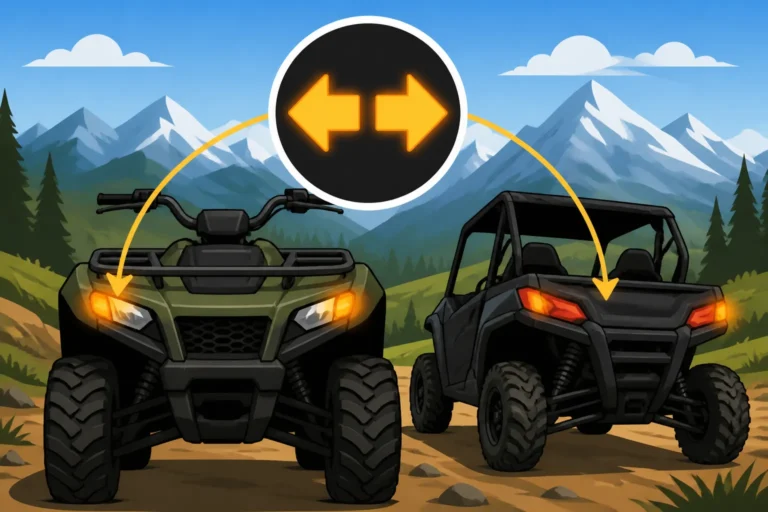
- Lights: Your UTV or ATV should have at least one headlight and one taillight, and these should be operational. You might consider adding brighter LED lights, perhaps from SuperATV, for better visibility during dawn, dusk, or adverse weather conditions, which are common during ranch work. While not always legally mandated for exempted use, it's a smart safety measure. Remember that [Headlight and Taillight Rules in Montana] are usually quite strict for general road use, and while exemptions exist, visibility is paramount.
- Brakes: Functional brakes on all wheels are a must. You need to be able to stop safely, especially when hauling loads or encountering unexpected situations on a county road.
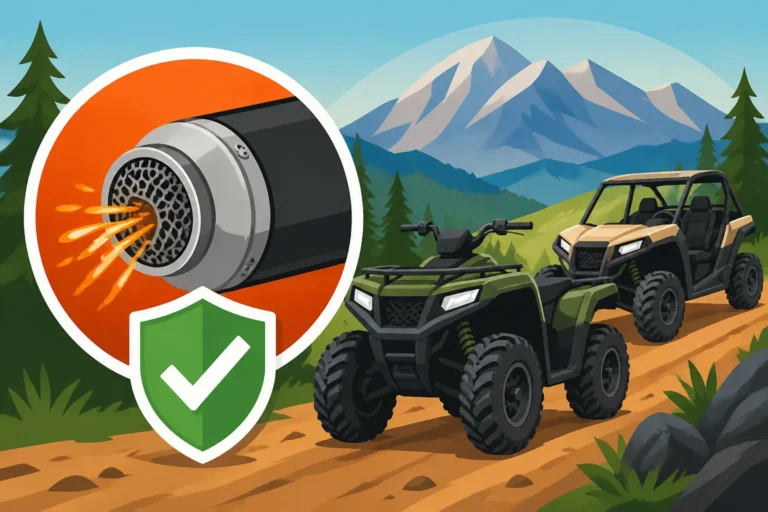
- Muffler and Spark Arrester: While noise limits for agricultural machines might be a bit more lenient than for recreational use, your machine should still have a functional muffler to keep noise to a reasonable level. A spark arrester is crucial for fire prevention, especially when working in dry fields or forests.
- Registration and Decals (Usually Still Required for Public Land Access): This is a point of frequent confusion. While the agricultural exemption might allow you on some public roads without full street-legal plates, it typically doesn't exempt you from the standard Montana OHV registration requirements if you also use the machine on any public lands or designated trails. In Montana, most OHVs need to be registered and display the proper decal. Your county treasurer handles this, and you can find more information about [Registering an OHV in Montana] or [Montana OHV Rules for Ranch Machines]. Even if your machine is mostly used on private land, if it occasionally crosses public county roads or accesses remote parts of your property via public easements, getting that basic OHV registration is usually a good idea. The fee is quite minimal and it can save you a headache.
Documentation and Proof of Agricultural Use
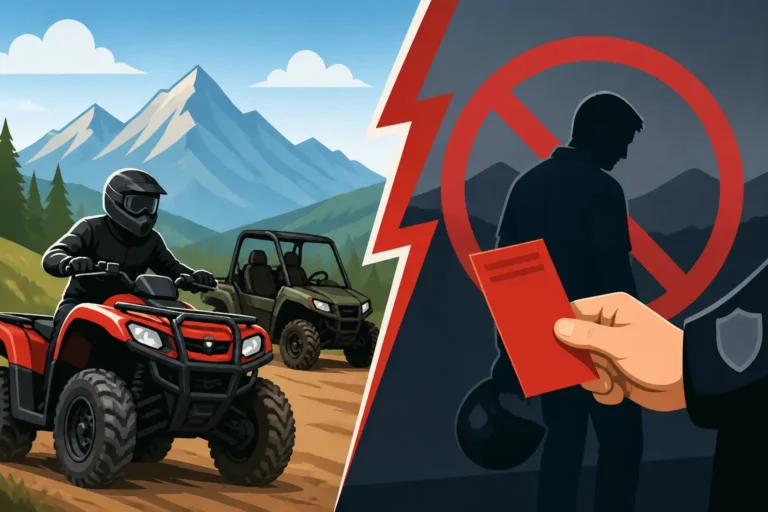
When you're operating an OHV on a public road under an agricultural exemption, you're essentially making a claim that your use is legitimate and falls within the legal parameters. This means you should be prepared to back that claim up if a sheriff's deputy or game warden stops you.
- Proof of Ownership: Always carry your proof of ownership, such as the title or a bill of sale. This is standard practice for any vehicle.
- Proof of Agricultural Operation: This can be a bit trickier. Carrying something that clearly identifies you as a farmer or rancher in the area can be helpful. This might include:
- Business cards for your ranch or farm.
- Documents showing your property boundaries or land leases.
- A letter on your ranch's letterhead explaining the use of the OHV for agricultural purposes.
- Your Montana driver's license, which shows your local address.
- A simple explanation of what you're doing and why the OHV is necessary for that task.
- Hypothetical Scenario: Imagine you're moving a sprayer attachment from your barn to a field a mile down a county road. A warden pulls you over. You can explain, "Officer, I'm just moving this sprayer to my south pasture for weed control. This UTV is essential for getting the equipment there on this terrain." Being polite, clear, and having your ownership documents handy usually goes a long way. The officer is often trying to determine if you're legitimately working or just trying to sneak a joyride. Information on [What a Montana Warden Asks a Rider For] can help you prepare.
Limitations and Responsibilities
The agricultural exemption is a tool, not a loophole. It comes with important limitations and responsibilities that ranchers and farmers must respect.
- Speed Limits: Even on county roads, agricultural OHVs are typically expected to operate at slower, safe speeds. There’s no legal backing to race down a county road just because you’re a rancher. Common sense and caution are your best guides, especially since many rural roads can be quite rough.
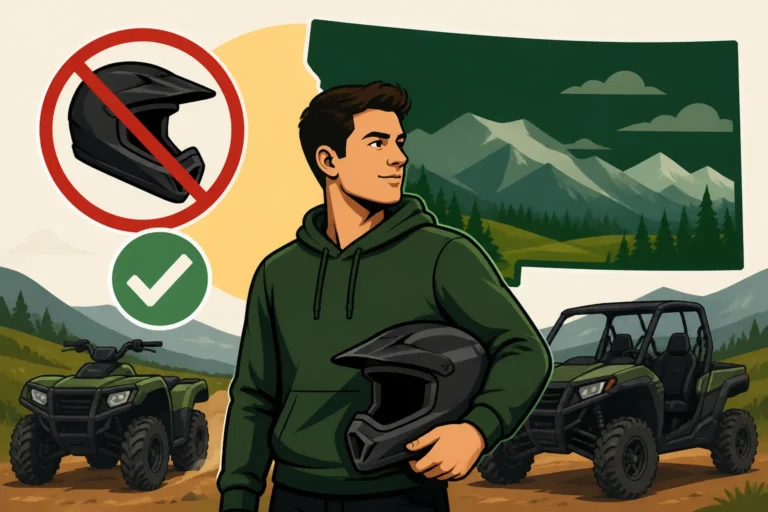
- Safety First: Just because you’re exempt from some road regulations doesn’t mean safety goes out the window. Wear appropriate safety gear, don’t overload your machine, and be incredibly aware of other vehicles. Farmers often ride in conditions of poor visibility, like dust, fog, or snow, and taking extra precautions is always advised.
- No Recreational Use: The exemption specifically applies to agricultural use. If you finish your chores and then decide to take the UTV for a spin on the same county road for fun, you are no longer operating under the exemption, and you could be subject to fines for an unregistered or illegally operated vehicle. It's a fine line, but one to be mindful of.
- Liability Insurance: While not always strictly mandated for agricultural use on private roads, if you are operating on any public roads (even briefly), having [Montana Liability Insurance for Riders] is a very good idea. Accidents happen, and protecting yourself and your assets is crucial.
Navigating County and Local Regulations
Montana is a big state, and what flies in one county might have a slightly different flavor in another. While state law provides the overarching framework for agricultural exemptions, local jurisdictions often have the authority to add their own layers, particularly concerning county roads. This means a bit of local legwork can save you a lot of grief.
The Role of County Commissioners
Your county commissioners play a significant role in determining how OHVs can be used on county-maintained roads. While the state gives broad allowances for agricultural use, individual counties can pass specific ordinances that might clarify or even restrict certain aspects within their jurisdiction. For instance, a county might have specific rules about maximum speed for OHVs on certain roads, or perhaps require specific signage on agricultural machines when crossing busy county arteries. This is a common area of discussion, and if you live in a rural area, you might be surprised how often [County Roads and the Montana Commissioners' Say] affects your daily operations.
- How to Find Local Rules: The best way to understand your county's specific take on agricultural exemptions is to contact your local county clerk's office or sheriff's department. They can direct you to any county ordinances related to OHV use on county roads. You might also find this information posted on the county's official website. Don't assume that because your neighbor does something, it's automatically legal in your specific area.
- Advocacy: If you find that local rules are unduly burdensome for your agricultural operation, don't be afraid to engage with your county commissioners. Many local governments are very receptive to feedback from the agricultural community and might be willing to clarify or adjust ordinances to better serve working farms and ranches, while still prioritizing safety.
Communicating with Law Enforcement
The relationship between rural landowners and local law enforcement is often one of mutual respect, but clarity on rules helps everyone. If you're stopped while operating your OHV under an agricultural exemption, how you communicate can make a big difference.
- Be Prepared and Polite: As mentioned earlier, have your documentation ready. Be polite and clearly explain what you're doing and why your machine is necessary for the task. Most officers are familiar with agricultural exemptions and understand the practicalities of rural life.
- Proactive Communication: If you anticipate an unusual movement, like moving a large piece of equipment with your UTV across a particularly busy county road, and you're unsure if it falls perfectly within the exemption, consider calling the local sheriff's department ahead of time. A quick call to say, "Hey, I'm Bob down on the Smith Ranch, and I'll be moving some equipment with my side-by-side across County Road 12 around noon today. Just wanted to give you a heads-up," can often prevent a stop altogether. It shows good faith and responsibility.
- Understand Their Perspective: Law enforcement officers are primarily concerned with public safety and ensuring compliance with the law. They want to prevent accidents and ensure people aren't misusing exemptions for recreational purposes. Approaching the interaction with this understanding can lead to a more productive conversation. If you’re ever in doubt about the specific regulations, especially regarding where you can or cannot ride, it's always best to err on the side of caution and consult with your local authorities.
| Feature / Rule | General OHV Road Use in Montana | Agricultural Exemption on Roads |
|---|---|---|
| Registration | Mandatory for public land/trail use. | Usually still required for public land access; check local rules. |
| Street Legal Equip. | Generally required (turn signals, mirrors, horn, etc.) for road-legal status in specific towns/counties. | Basic safety equipment (headlights, taillights, brakes) recommended; full street-legal gear usually not required. |
| Driver's License | Often required for road use (check local ordinances). | Not always required for direct agricultural use on adjacent roads, but a good idea. |
| Allowed Roads | Very restricted; only specific towns/county roads with ordinances. | Private ranch roads, adjacent county roads, direct highway crossings for agricultural tasks. |
| Primary Purpose | Recreation (trails, designated routes). | Performing tasks directly related to farming or ranching. |
| Speed Limits | Strict adherence to posted limits. | Safe, responsible speed appropriate for conditions and task. |
| Liability Insurance | Highly recommended, often required for road use. | Highly recommended for all public road use. |
| Carrying Documentation | Recommended to carry registration/license. | Recommended: registration, proof of ownership, proof of agricultural use. |
Disclaimer
This article is for general informational purposes only and does not constitute professional advice. Laws, prices and regulations vary by location and change over time. Consult a qualified professional for guidance on your specific situation.