North Dakota Riders Coming to Montana
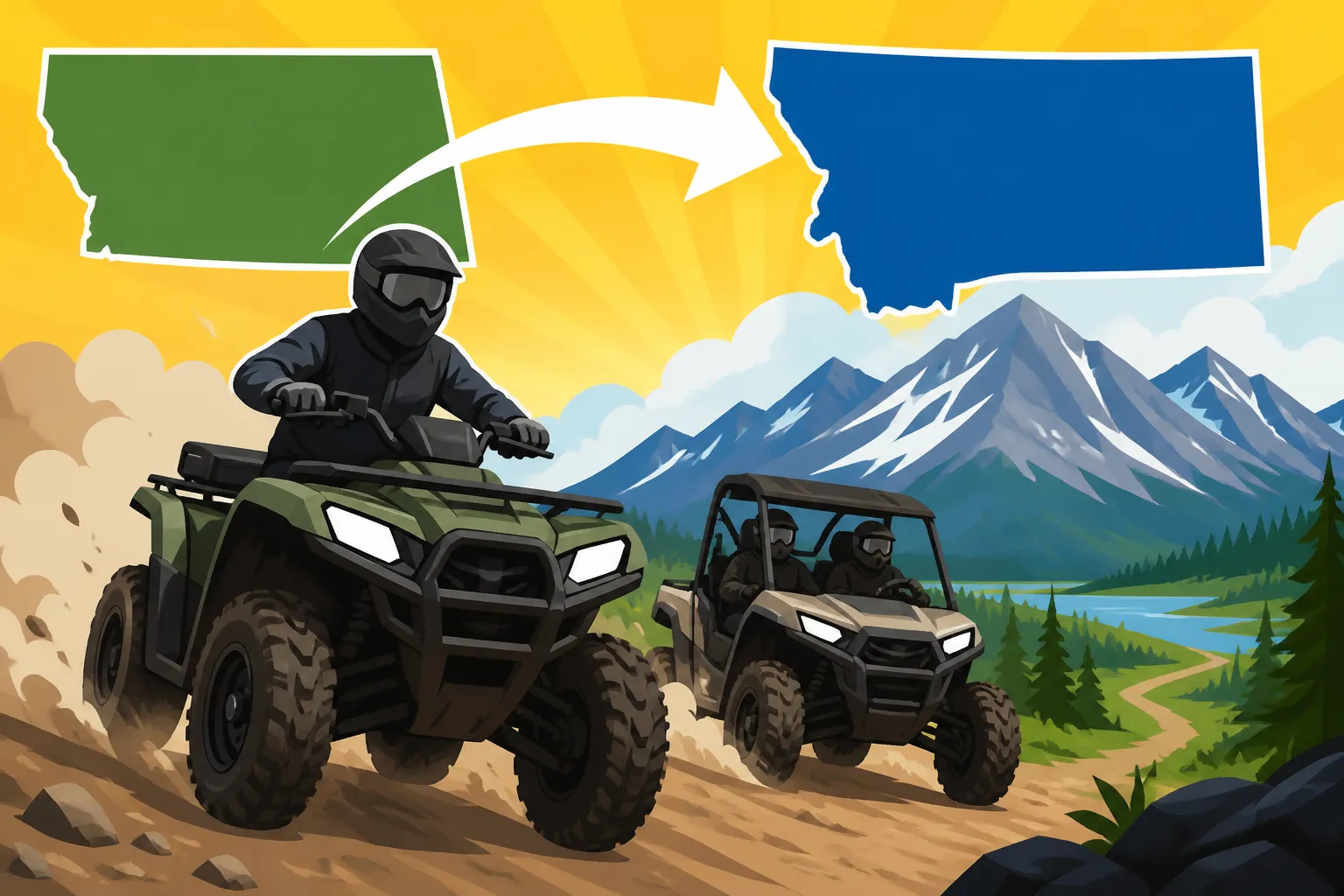
North Dakota registration may keep your ATV or UTV legal at home, but it does not automatically settle what you need to ride in Montana. The key is to separate your machine’s registration from Montana’s visitor permit and from the rules for each road or trail. Here’s how to plan, what to confirm, and which common assumptions can cause trouble.
Do North Dakota riders need a Montana permit?
If you’re bringing an ATV or UTV from North Dakota, don’t assume its home-state registration or decal is enough for Montana public riding areas. Montana has a nonresident OHV permit requirement for visiting riders. The exact requirement can depend on the machine and where you plan to operate it, so check current Montana Fish, Wildlife & Parks guidance before your trip.
This is a separate question from whether your machine is properly registered or titled in North Dakota. Keep your North Dakota registration and ownership documents with you, but treat them as proof for your machine—not as a substitute for any Montana permit that applies.
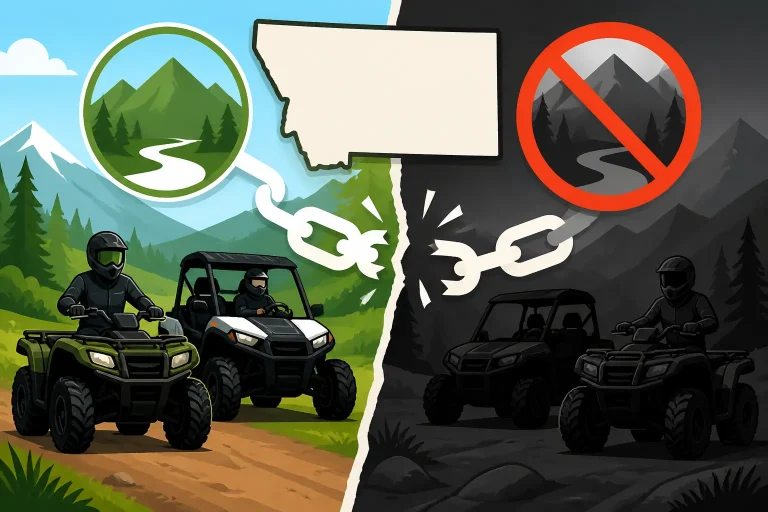
The rules can also differ based on where you ride. A route may include a national forest road, a county road, private land, or a designated OHV trail, and each can have different access conditions. A permit does not give you permission to ride on closed land or on a route that does not allow your type of machine.
Before leaving, confirm these details with the official Montana source:
- Whether your specific machine and planned use require a nonresident permit.
- How to obtain the permit and when it must be purchased.
- How long it remains valid and whether it is tied to a particular machine.
- How and where the permit or decal must be displayed.
- Whether separate registration, safety, or road-use requirements apply.
The visitor permit is often discussed as a trail permit, which is a useful reminder: it is not a universal road-use license. For a broader overview of the visitor requirements, see Montana’s Non-Resident Temporary Use Permit and What Montana Charges an Out-of-State Rider. For the limits of the permit itself, Why the Non-Resident Permit Covers Trails Only is also relevant.
| What you’re checking | What it answers | What it does not answer |
|---|---|---|
| North Dakota registration | Whether the machine is registered under its home-state rules | Whether Montana requires a visitor permit |
| Montana nonresident permit | Whether you have met an applicable Montana visitor requirement | Whether a specific trail or road is open to you |
| Route and land-management rules | Whether the route allows your machine and intended use | Whether the machine’s paperwork is in order |
| Road equipment and operator rules | Whether a road section can be ridden legally and safely | Whether you may leave the road onto a trail |
What the permit covers—and what it doesn’t
Think of the permit as one part of your ride plan, not a pass that overrides every other rule. It may satisfy a visitor permit requirement for eligible riding, but it does not by itself determine which routes are open, whether your machine fits a trail, or whether you can ride a road section.
A permit is not route permission
Montana trails and roads are not all open to every vehicle. Some trails have limits on machine width or type, and some routes are closed seasonally or temporarily. Land managers may also restrict travel to signed routes. Check the route’s current status and map before unloading, especially if you are following an app route or a track shared by another rider.
For national forest routes, look for the forest’s current motor vehicle use map and any closure notices. A line on a general-purpose map does not necessarily mean an OHV may use it. Reading a Montana Motor Vehicle Use Map explains what to look for, while Checking Montana Trail Status Before You Drive can help you make a last check before heading to a trailhead.
Private land requires separate permission from the landowner. A Montana permit does not authorize you to cross private property, even when doing so would connect two public routes. If you are uncertain about a boundary or access point, choose a route with clear public access rather than assuming the road is open.
Road riding is a different question
A visitor permit does not automatically make an OHV street legal. Whether you may ride on a road depends on the road’s designation, local rules, and the equipment and operator requirements that apply. A road that reaches a trailhead may be closed to OHVs, or it may allow riding only on a defined section. A town ordinance may also differ from the rules on a nearby county road.
Check each road segment instead of relying on a general statement that Montana allows road riding. Start with Does the Non-Resident Permit Allow Road Riding?, then review What Montana Requires on an OHV Road Ride if your route includes a public road. If your trip depends on riding through a town, confirm that town’s current ordinance and the specific streets it allows.
Other permits and rules may still apply
A permit for your machine does not automatically cover every other machine in your group. Confirm the requirement for each ATV or UTV you bring, including a borrowed or rented machine. Passengers generally do not need a vehicle permit of their own, but they must follow applicable safety and passenger rules.
Operator age and safety education can matter as well. If a young person will ride, check the current requirements for that rider and the type of riding planned. Montana’s Safety Education Requirement and Montana Age Rules for Riders Under 16 are useful starting points.
How to prepare before leaving North Dakota
A little paperwork and route checking at home can prevent an avoidable delay at a trailhead. Use this sequence for each machine and planned riding area.
-
Identify the machine and how you’ll use it. Write down whether it is an ATV, UTV, dirt bike, or another type of OHV, and whether you plan to ride trails, public roads, private land, or a mix. A machine used only on private property raises different questions from one taken onto public routes.
-
Check its North Dakota paperwork. Bring the documents that establish the machine’s registration and ownership, as applicable. Make sure the vehicle identification information on the documents matches the machine. Montana’s visitor requirements and your home-state paperwork are separate issues; having one does not necessarily replace the other.
-
Confirm Montana’s current permit instructions. Use Montana Fish, Wildlife & Parks as the authority for current visitor permit requirements, validity, purchase options, and display instructions. Rules and fee amounts can change, so don’t rely on an old receipt, an online discussion, or a previous trip as proof that the same terms still apply. For purchase options, see Where Visitors Buy a Montana Permit and Buying a Non-Resident Permit Before You Drive.
-
Check route access and current closures. Find the official map for the area and confirm that each road or trail is open to your vehicle type. Check for seasonal restrictions, fire closures, weather-related closures, and temporary work restrictions. If your planned route crosses multiple land-management areas, check each one rather than assuming a single map covers the entire trip.
-
Review the machine’s fit and equipment. A full-size side-by-side may not be allowed on a narrow trail, even if the trail is open to OHVs generally. Check width limits, route signs, and road requirements. If you plan to ride on a road, review the equipment rules before you go rather than trying to adapt the machine at the last minute.
-
Keep records accessible. Carry the permit as required, along with your home-state registration and ownership paperwork. Store digital copies as backup, but don’t rely on a phone with no signal or a dead battery. Do You Carry Paperwork on a Montana Trail? and What a Montana Warden Asks a Rider For offer more detail on being ready for a check.
A simple trip folder can include the permit confirmation, registration documents, route maps, and emergency contacts. Make sure everyone in the group knows which machine the permit applies to and where the paperwork is kept. If machines are being transported separately or riders may switch vehicles, clarify the rules before the group leaves.
Common mistakes North Dakota visitors can avoid
The most common planning problems come from treating registration, permits, and access as interchangeable. They are related, but each answers a different question.
Assuming a North Dakota decal replaces a Montana permit
A home-state registration can be valid and still leave a separate Montana visitor requirement to meet. Confirm Montana’s current rule for your machine and use; don’t infer the answer from the fact that the vehicle is legally registered at home. For related background, see Reciprocity Montana Does Not Offer and Do Idaho Riders Need a Montana Permit?. The state-specific details differ, but the general lesson is to check Montana’s rule rather than assume another state’s paperwork carries over.
Buying a permit but skipping the route check
Having a permit does not make every road or trail legal for your machine. A permitted visitor can still ride into a closure, use a route that excludes wider vehicles, or cross land without permission. Review the map and signs, and turn around when access is unclear.
Treating a forest road like an OHV trail
Some roads are open to motor vehicles but may have different rules from a designated OHV trail. Other roads may be closed to your vehicle, even if cars or trucks use them. Check the controlling map and signs for the specific route, and don’t assume that a road shown on a navigation app is open to OHVs.
Leaving paperwork until the trailhead
A remote staging area may have limited or no cell service, and it may not be a place to resolve a permit question. Confirm the purchase process and display instructions in advance. If you have already arrived without the required item, contact the appropriate official source rather than guessing or riding first and sorting it out later.
Relying on last year’s rules
Permit details, fees, validity periods, and access conditions can change. Even if you have visited Montana before, recheck the current requirements before each trip. The same goes for maps: closures and seasonal restrictions can affect a route that was open on an earlier visit.
Confusing trail permission with road legality
A permit associated with public-land riding does not mean you may use any public road to connect trails or reach town. Check the road’s status and applicable local requirements independently. If your trip includes a county road, town street, or highway crossing, verify the rules for that specific segment before planning around it.
North Dakota riders can make the trip simpler by handling the permit question early, carrying their home-state documents, and checking route access separately. Confirm current instructions with Montana Fish, Wildlife & Parks, and treat road rules, landowner permission, and machine restrictions as additional checks—not details the permit settles for you.
Disclaimer
This article is for general informational purposes only and does not constitute professional advice. Laws, prices and regulations vary by location and change over time. Consult a qualified professional for guidance on your specific situation.